
Review · DAY TRIPS
Mendoza: Aconcagua, Uspallata & Puente del Inca Day Trip
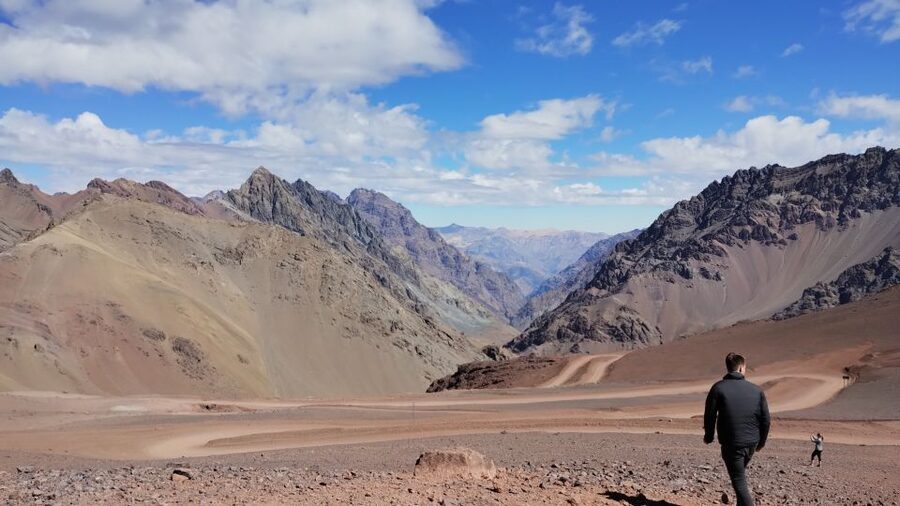
The best part of this day is the steady climb from Mendoza into the high Andes, where the scenery changes from river valleys and dam waters to enormous peaks, hot springs, and thin mountain air. You reach viewpoints near Aconcagua, the highest mountain in the Americas, then continue to the border village of Las Cuevas.
I like the sheer variety packed into one outing, especially Puente del Inca and the Aconcagua viewpoint. I also like that pickup, transport, and a bilingual guide are included for $65, which is a fair price for such a long route. The tradeoff is the 12-hour day: long pickup times and generous stops can make the return to Mendoza feel late.
I would choose this tour if you want a broad introduction to Mendoza Province without renting a car. Guides including Hugo and Federico have been praised for warm, clear help, while English speakers should know that some commentary may run longer in Spanish.
Key points before you book
- A full Andes sampler: See Potrerillos, Uspallata, Picheuta, Polvaredas, Punta de Vacas, Puente del Inca, Aconcagua, and Las Cuevas in one day.
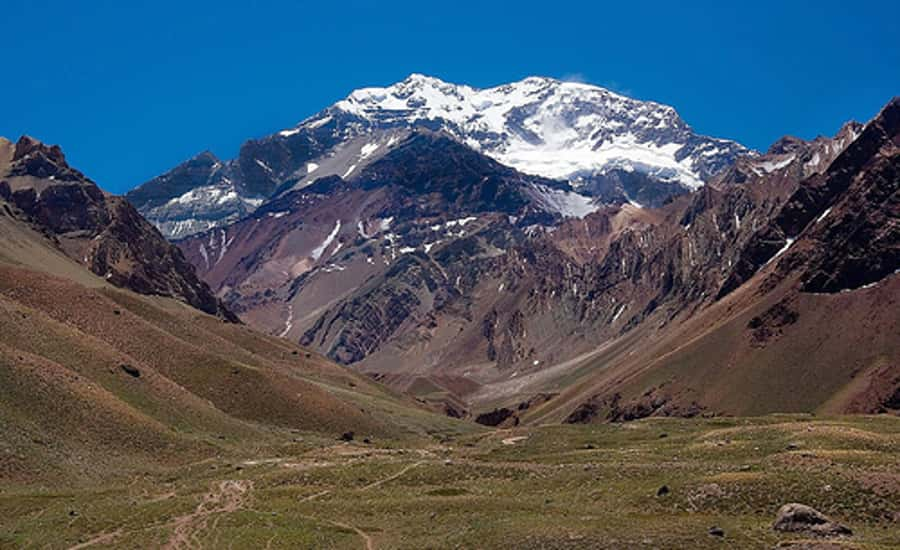
- Aconcagua at 6,959 meters: The viewpoint gives you a close look at one of the world’s great mountain peaks without requiring a serious mountain trek.
- Cristo Redentor is seasonal: The monument sits at about 4,200 meters and is visited only during the summer months.
- High-altitude stops matter: Las Cuevas is at 3,200 meters, so bring comfortable clothes and be ready for a noticeable change from Mendoza.
- Lunch costs extra: You have about 90 minutes in Las Cuevas for lunch and free time, but meals are not included.
- Bilingual guiding varies by timing: Spanish and English are offered, though some departures may include longer Spanish explanations.
Why this Mendoza day trip is worth your time
Mendoza is famous for wine, but its eastern foothills are only part of the story. Follow the Mendoza River west and you reach a much wilder province, where bare rock, snow-colored peaks, narrow valleys, and old mountain settlements replace vineyards.
This excursion gives you a useful overview of that route. You are not simply driven to one viewpoint and brought back. The day links several places with different stories and settings, from the engineering of Potrerillos Dam to the old Inca route near Uspallata and the natural rock formations at Puente del Inca.
At $65 per person, the value is strongest if you want transportation and interpretation handled for you. The route covers too much ground for a relaxed self-guided day unless you are comfortable planning carefully and driving mountain roads. The included pickup and drop-off from local Mendoza hotels also remove the need to arrange transfers before an early start.
The cost does not include food, so allow extra money for lunch. One recent departure also involved a small difference between the price quoted by the guide and the amount charged at the restaurant, so confirm the lunch price before ordering.
A few more day trips around the world worth a look
- Tuscany Day Trip from Florence: Siena, San Gimignano, Pisa and Lunch at a Winery
★ 5.0 · 21,634 reviews - From Amsterdam: Zaanse Schans, Volendam & Marken Day Trip
★ 4.4 · 18,501 reviews - From Munich: Neuschwanstein & Linderhof Castle Full-Day Trip
★ 4.6 · 14,646 reviews
Potrerillos Dam and the first mountain views
The first major stop is Potrerillos, reached while following the Mendoza River toward the Cordón de Plata range. You get about 25 minutes here for photographs, free time, and views of the reservoir.
The dam is useful to understand, not just pretty to photograph. Its water supports irrigation and generates hydropower, so it plays a practical role in Mendoza Province. The broad reservoir also gives you one of the first clear contrasts with the city: open water, dry mountain slopes, and high ridges rising beyond.
Do not expect a long walk at Potrerillos. This is a short orientation stop, designed to let you stretch your legs and take in the view before continuing west. If you are hoping for a quiet morning beside the reservoir, the limited time may feel brief.
Your best strategy is to keep your camera ready as you ride. Some of the most appealing views appear between formal stops, especially along the river and below the Cordón de Plata.
Uspallata, the Huarpe settlement, and the Inca route
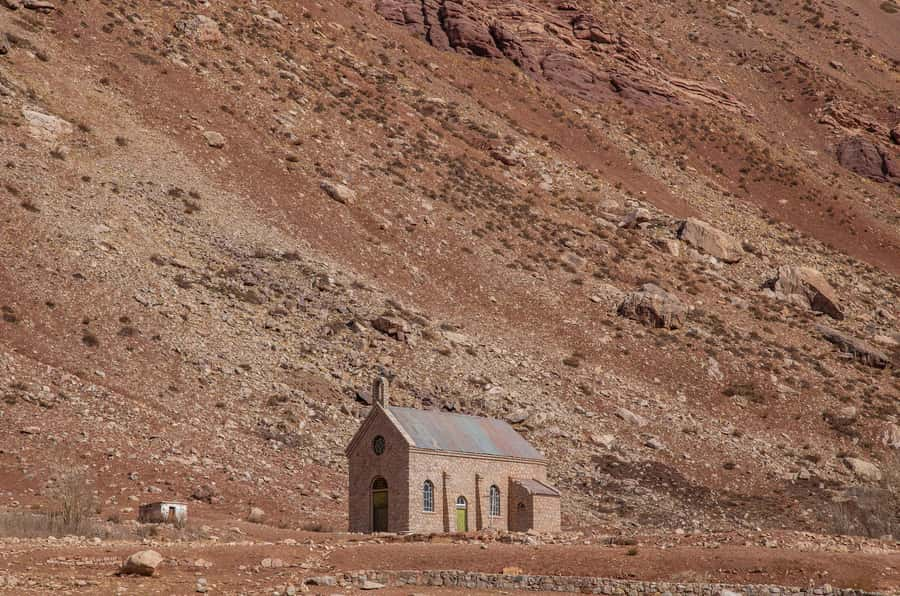
Uspallata is more than a convenient place to stop. It has links to the Huarpe people, who lived in this region before European arrival, and to the southern end of the Inca Empire’s route from Peru.
You have around 30 minutes here for a break, photographs, and a look at the settlement. The time is short, but the stop adds important context to the mountain scenery. This corridor was not simply an empty route through the Andes. People used it, crossed it, and connected it to a much larger network long before modern roads and tour buses.
I like this part of the day because it gives the route a human story. The large peaks can easily dominate the excursion, but Uspallata reminds you that the valley has long been a place of movement and settlement.
The stop is not designed as a full archaeological tour. Think of it as a brief introduction, with your guide providing the historical frame before the road continues through Picheuta, Polvaredas, and Punta de Vacas.
Picheuta, Polvaredas, and Punta de Vacas
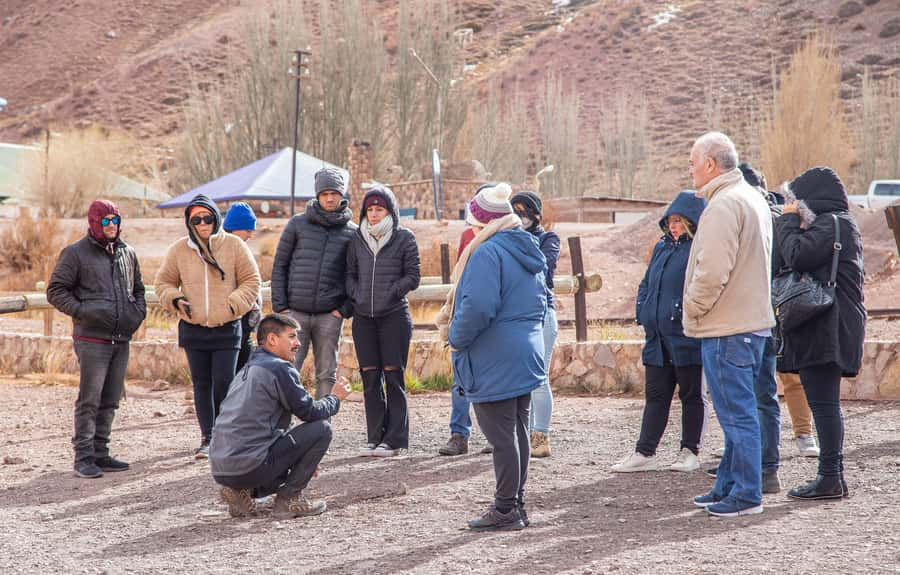
These smaller stops help break up the drive toward the border and the higher Andes. You pass through mountain communities and see how the character of the route changes as the road climbs.
The supplied schedule gives the main stops specific time, but not separate durations for every village. That means you should treat Picheuta, Polvaredas, and Punta de Vacas as part of the scenic drive rather than expect a long independent visit at each one.
This is one reason the 12-hour duration matters. You spend substantial time on the road, but the road itself is part of the experience. The mountains appear from different angles, and the route gradually reveals the scale of the Andes.
If you prefer a tour with one central attraction and little time in a vehicle, this will feel too spread out. If you want to understand how the valley leads toward the Chilean border, the succession of villages makes the journey more interesting.
Same base, a completely different day out:
- Lisbon: Pena Palace, Sintra, Cabo da Roca, & Cascais Daytrip
★ 4.7 · 9,981 reviews - Florence: Pisa, Siena and San Gimignano Day Trip with Lunch
★ 4.6 · 9,771 reviews - From Marrakech: Day Trip to Ouarzazate and Ait Benhaddou
★ 4.7 · 9,447 reviews - Cinque Terre Day Trip with Optional Hiking or Pisa
★ 5.0 · 8,486 reviews
Puente del Inca and its mineral-colored rock
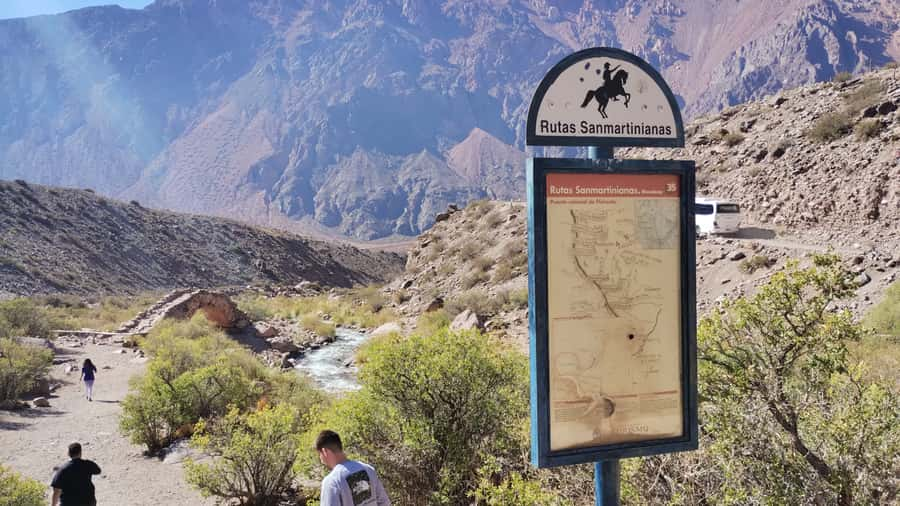
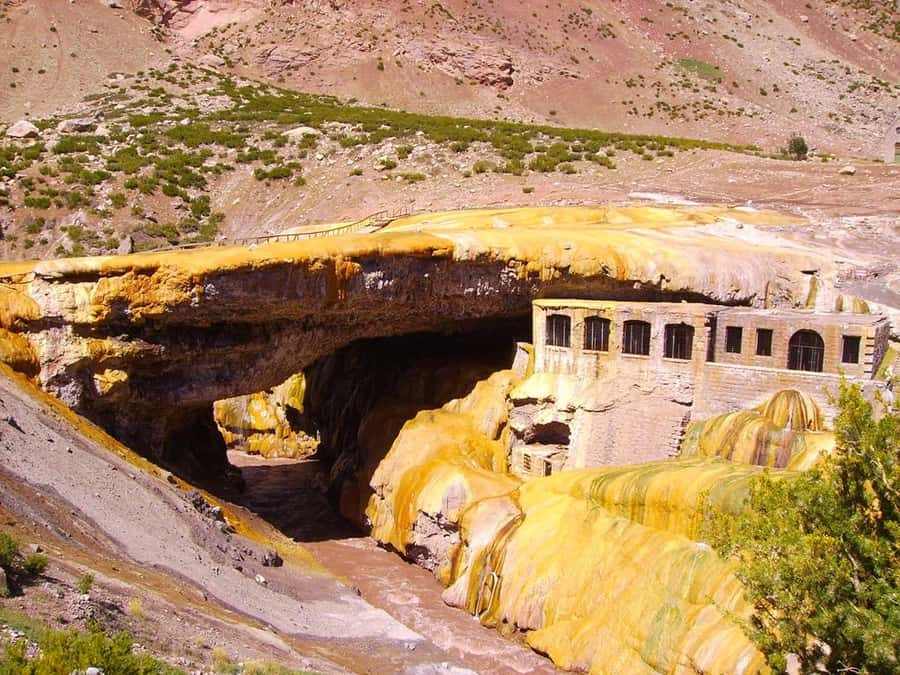
Puente del Inca is one of the day’s most memorable stops. The natural rock formation looks like a bridge shaped by geology rather than construction, and hot springs add unusual colors and textures to the setting.
You have about 35 minutes to visit, take photographs, and enjoy some free time. The stop is compact, so you do not need a large block of time to appreciate it. The unusual formations give you something different from the broad mountain views at Potrerillos and Aconcagua.
The site is especially valuable for anyone who likes places that feel tied to local geology. Here, the Andes are not only distant peaks. They are mineral deposits, sculpted rock, and warm water emerging in a cold high-altitude setting.
Stay aware of the schedule. It is easy to spend the whole stop taking photographs, but you will want a few minutes simply to look at the formation and hear the explanation. The road still has its highest points ahead.
Meeting Aconcagua at 6,959 meters
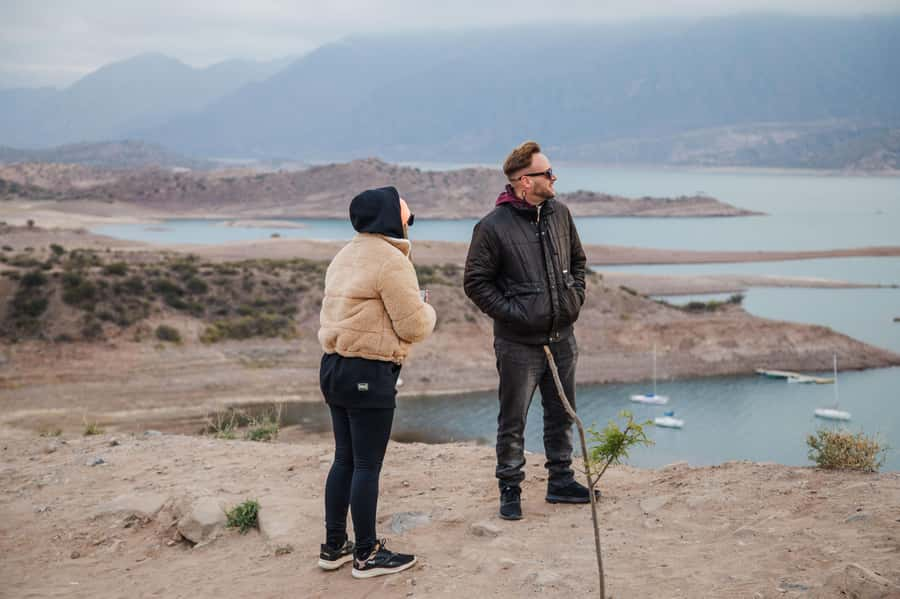
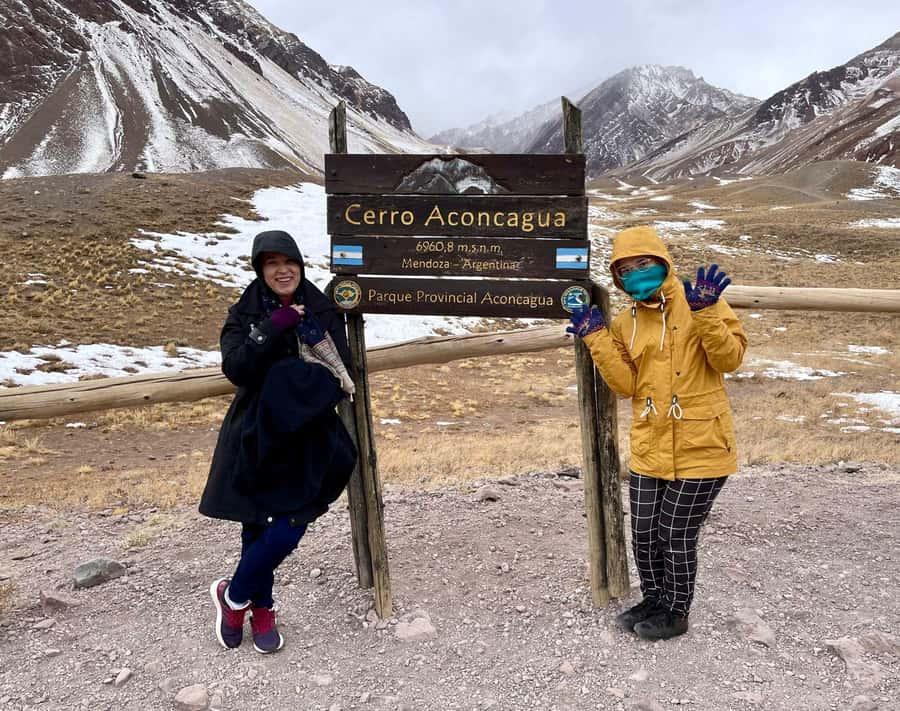
The Aconcagua viewpoint is the main natural attraction of the outing. Aconcagua rises to 6,959 meters, making it the tallest mountain in the Americas. You do not climb it on this tour. Instead, you visit a viewpoint and walk in the area around Laguna Horcones and Aconcagua Provincial Park.
The planned stop lasts about 40 minutes. That is enough for photographs, sightseeing, and a short walk, but not a full park exploration. You will want sturdy, comfortable footwear and clothing that can handle changing conditions.
The view can feel surprisingly quiet after the long drive. The mountain’s size is hard to judge in a photograph, so give yourself time to look beyond the first frame. The surrounding peaks and the lagoon help provide scale.
This is also where altitude becomes a practical issue. You have been climbing throughout the morning, and the air at the higher stops may feel different from Mendoza. The information only asks you to bring comfortable clothes and identification, but I would also carry water and take the walking portion at an easy pace. Those are sensible precautions for any high-altitude outing.
Aconcagua Provincial Park gives the visit more meaning than a roadside photograph. You are seeing the mountain in a protected setting, with the surrounding terrain kept as the main feature rather than covered by development.
Las Cuevas at 3,200 meters
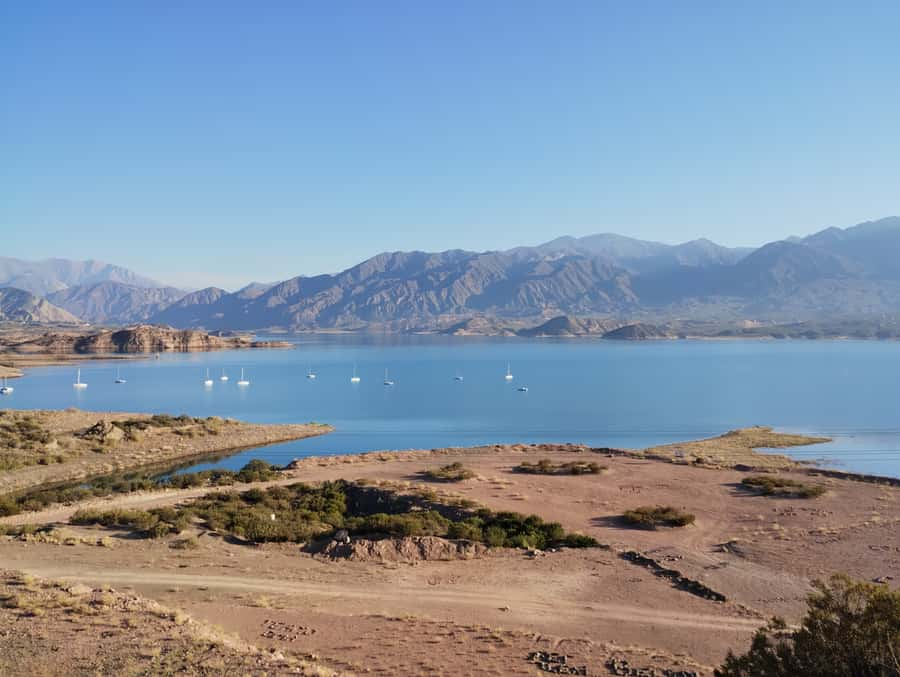
Las Cuevas is the final major stop before the trip back to Mendoza. This small European-style village sits at about 3,200 meters and gives you 90 minutes for a break, photographs, lunch, and free time.
The longer pause is welcome. After several shorter stops and hours in the vehicle, you can eat and walk around without feeling rushed. Since meals are not included, lunch here is an additional expense. Confirm the restaurant price before you sit down, particularly if the guide has quoted a per-person amount.
Las Cuevas is also the base for the route to Cristo Redentor, the monument honoring unity between Argentina and Chile. The statue is at about 4,200 meters, well above the village, and the visit is offered only in summer. Do not assume it will be part of your departure if you are visiting at another time of year.
The monument adds a symbolic finish to the mountain route. It is not only a scenic lookout. It represents cooperation across the border, which gives the final climb a clear purpose.
The tour description does not promise a separate, long stop at the monument, and conditions can affect access. Treat the Cristo Redentor visit as a summer feature rather than the sole reason to book the excursion. The route remains worthwhile because Aconcagua, Puente del Inca, and Las Cuevas are central parts of the day.
The long ride back to Mendoza
After Las Cuevas, you return along the same general route to Mendoza. The scenery remains attractive, but the return can feel long after an early pickup and a full schedule.
This is where the tour’s main weakness appears. One recent passenger felt that pickup time and some layovers added unnecessary length, suggesting that the day could be shortened by an hour or two with a tighter plan. That is useful advice, especially if you have evening plans in Mendoza.
At the same time, the stops are not pointless. You are covering a wide stretch of the province, and the breaks allow you to see more than you would from a single direct drive. I would keep your evening free rather than schedule a winery dinner or another fixed activity immediately after the return.
Guides, language, and the comfort of the vehicle
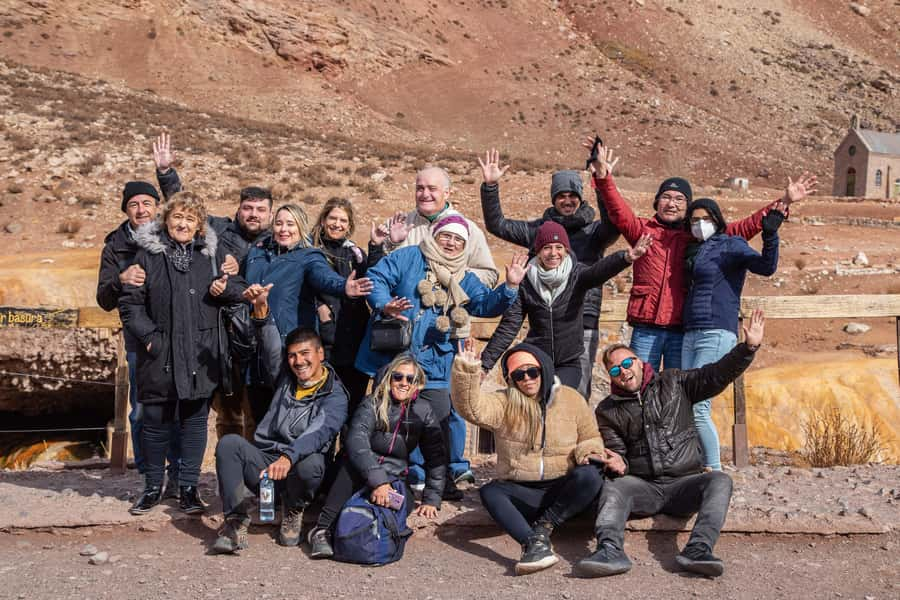
Air-conditioned transportation is included, along with hotel pickup and drop-off in Mendoza. For a 12-hour mountain route, that matters. You can watch the scenery instead of concentrating on the road, and the vehicle gives you a place to rest between walks.
The tour operates in Spanish and English. Guides such as Hugo and Federico have received strong praise for being personable and helpful, while driver Matias has also been singled out positively. English support may include translation from the guide or driver, but the balance between languages can vary.
If you need every explanation in English, ask about the language arrangement before booking. One recent passenger found that the guide spoke too long in Spanish for a bilingual tour. This does not cancel out the value of the guide, but it is a fair consideration for English-only speakers.
The positive side is that a live guide can explain why the places matter. Without that context, Uspallata could seem like a simple town stop and Potrerillos just another reservoir. The interpretation connects the scenery to Indigenous history, the Inca route, irrigation, hydropower, and the Argentina-Chile border.
Who should book this $65 excursion?
I would recommend it to you if:
- You have one free day in Mendoza and want to see the Andes.
- You do not want to rent a car or plan a long mountain route.
- You enjoy a mix of scenery, history, villages, and short walks.
- You want to see Aconcagua without taking a demanding trek.
- You are comfortable spending about 12 hours away from your hotel.
- You can handle a full schedule with several brief stops.
I would hesitate if you want a slow, quiet day at one site. The tour covers a lot of ground, and several stops last only 25 to 40 minutes. It also may not suit you if high altitude makes you uncomfortable or if you need a tightly timed bilingual presentation.
Bring your passport or ID card, comfortable clothes, and sensible walking shoes. Keep water, sun protection, and an extra layer close at hand, since the day moves from Mendoza’s lower elevation into the colder, thinner air of the Andes.
Should you book the Aconcagua and Puente del Inca trip?
Book it if you want the largest possible taste of Mendoza’s mountain country for $65. The combination of Potrerillos, Uspallata, Puente del Inca, Aconcagua, and Las Cuevas gives you far more variety than a simple Aconcagua transfer.
Just set the right expectations. This is a long sightseeing day, not a relaxed mountain retreat. The route includes plenty of driving, lunch costs extra, language balance may vary, and Cristo Redentor is a summer-only addition.
For most first-time visitors with limited time, I think the range of scenery and the included transport make the price worthwhile. Keep your evening open, confirm lunch costs, and book with the understanding that the road between the stops is a major part of the experience.
FAQ
How long is the Mendoza to Aconcagua day trip?
The activity lasts 12 hours, including pickup from Mendoza, the mountain stops, and the return to the city.
Is hotel pickup included?
Yes. Pickup and drop-off from local hotels in Mendoza are included.
What language is the tour offered in?
The live guide service is available in Spanish and English.
Is lunch included in the price?
No. Meals are not included. You have about 1.5 hours in Las Cuevas for lunch and free time.
Does the tour visit Cristo Redentor?
The route to Cristo Redentor is visited only during the summer months. The monument is located at about 4,200 meters above sea level.
What should I bring?
Bring comfortable clothes and a passport or ID card.
Can I cancel the booking for a full refund?
Yes. You can cancel up to 24 hours in advance for a full refund. You can also reserve now and pay later.
Just added around the world
- River Kwai Day Tour from Bangkok – History, Scenery & Culture★ 4.5 · 206 reviews
- Dali Museum and Costa Brava Small Group Day Trip from Barcelona★ 5.0 · 77 reviews
- Amazon Tour in Ecuador: Puyo Day Trip from Baños★ 5.0 · 84 reviews
- The Ultimate Ancient city of Ayutthaya Private Day Trip★ 5.0 · 139 reviews
- Highlights of Bangkok (Private Day Trip)★ 5.0 · 127 reviews
- Private Tour: Floating Markets and Bridge on River Kwai Day Trip from Bangkok★ 3.5 · 35 reviews
- Kawah Putih tour – Day trip Ticket etc all including★ 5.0 · 66 reviews
- Floating Markets Day Trip from Bangkok★ 3.5 · 672 reviews