
Review · DAY TRIPS
From Phnom Penh: Angkor Wat, Bayon, and Ta Prohm Day Trip
Angkor Wat is one of those places worth a very long day. This private trip gets you from Phnom Penh to the three major temples at Angkor, then back again, all without changing hotels or arranging transport in Siem Reap. I especially like the private car and flexible pacing, plus the chance to have a guide such as Siyan explain the carvings, religion, and royal power behind each site. The catch is simple: this is a 14-hour day with about 11 hours on the road, so you must be comfortable trading sleep and rest for one grand burst of temple sightseeing.
I also like the care built into the transport. Drivers such as Vuthy, Heng Thearak, Om, and John Black have been praised for safe driving, clean cars, cold water, bathroom stops, and comfortable reclining seats. The $179 price is not cheap, and the $37 park ticket and lunch are extra, but for a solo visitor or a couple with very little time, this can be a practical way to see Angkor without paying for a flight and another hotel night.
Key points at a glance
- A 4 a.m. start can improve the day: You can sleep during the drive and reach Angkor earlier, before the worst heat.
- Three headline temples are included: Angkor Wat, Bayon, and Ta Prohm give you three very different views of Angkor architecture.
- The ride is private: You travel with your own driver rather than in a large shared group.
- Guides add the meaning: English-speaking guides such as Siyan, Sovann, Sam Neng, and Woo explain religion, kingship, carvings, and Cambodian culture.
- The price needs a full calculation: The $179 tour price does not include the $37 Angkor Archaeological Park entrance fee or lunch.
- Expect uneven, active temple visits: Comfortable shoes, modest clothing, sun protection, and a fair level of mobility matter.
Why this Phnom Penh to Angkor trip makes sense
Siem Reap is the natural base for visiting Angkor, but not every Cambodia trip allows time for an overnight stay there. If you have only a few days in the country, this outing lets you keep your Phnom Penh hotel and still see the site most visitors put at the top of their list.
The key advantage is not speed. You cannot make Phnom Penh and Angkor close together. The road journey takes about 5.5 hours each way, and traffic or rest stops can affect the timing. The advantage is simplicity: a driver meets you at your hotel, handles the long road section, and returns you there in the evening.
For a solo visitor, the cost may feel steep because you pay the full private transport price yourself. For two or more people, the value improves. You are also saving the time and expense of arranging a separate flight, airport transfer, Siem Reap hotel, and local temple driver. If Angkor is a must-see and your schedule is tight, that convenience has real value.
The experience receives a 4.9 rating from 104 reviews, with transport and guide service receiving the strongest praise. That does not change the length of the day, but it does tell you where the experience works best: careful logistics, a comfortable vehicle, and personal attention.
A few more day trips around the world worth a look
- Tuscany Day Trip from Florence: Siena, San Gimignano, Pisa and Lunch at a Winery
★ 5.0 · 21,634 reviews - From Amsterdam: Zaanse Schans, Volendam & Marken Day Trip
★ 4.4 · 18,501 reviews - From Munich: Neuschwanstein & Linderhof Castle Full-Day Trip
★ 4.6 · 14,646 reviews
The 4 a.m. departure from Phnom Penh
The earliest departure is the sensible choice. Your driver meets you in the hotel lobby with a nameplate, often around 4 a.m., and the first stretch of the drive gives you a chance to sleep. Several drivers have used roomy cars or vans with reclining seats, and one vehicle was even described as having a massage function.
Do not expect a full sightseeing tour of the road to Siem Reap. This is mainly a transfer, though drivers may answer questions about Cambodia and the countryside. Bathroom and coffee stops can be arranged, and cold bottled water is included. Some drivers also provide refreshing towels, a small but welcome touch after temple walks.
The early departure does mean a very early alarm and a long return at the end of the day. You should not book this plan before a demanding evening event or an early flight the next morning. Still, the road time is less punishing when you can sleep in a clean, private car.
The drive can also give you a useful sense of Cambodia beyond the capital. You pass from Phnom Penh toward Siem Reap, and the driver may discuss local life, culture, or current events. Treat this as added value, not as a formal sightseeing program.
Arriving at Angkor Archaeological Park
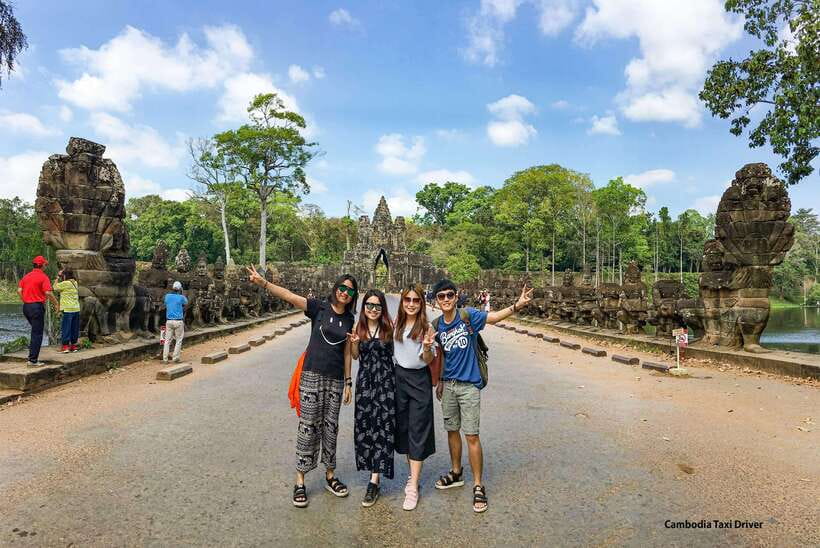
The driver brings you to the Angkor area, where you meet your temple guide. In many arrangements, the long-distance driver remains responsible for the vehicle while the local guide leads the walking portion. This division works well. Your road driver can focus on timing and comfort, while the guide concentrates on the temples.
The entrance fee is not included. Budget an additional $37 per person for the Angkor Archaeological Park ticket. Lunch is also extra, usually at a local Khmer restaurant. The food stop is part of the day’s rhythm, but you should still allow for the additional cost when comparing this option with a longer Siem Reap package.
The park is large, and the three main stops are not identical. You will walk over uneven ground, climb steps in places, and spend time in open sun as well as shaded corridors. A hat, sunscreen, water, and comfortable shoes are not optional extras here. Modest clothing is also important because these are active religious sites, not simply photo backdrops.
Angkor Wat and the five-tower design
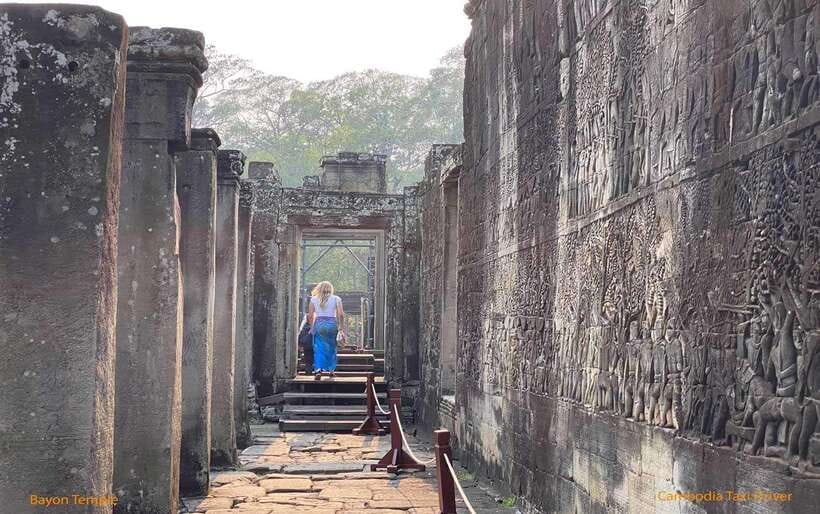
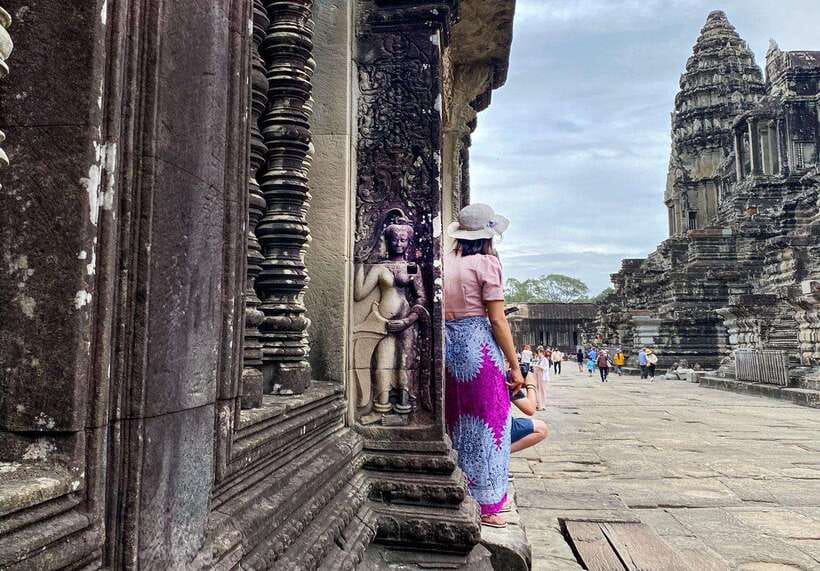
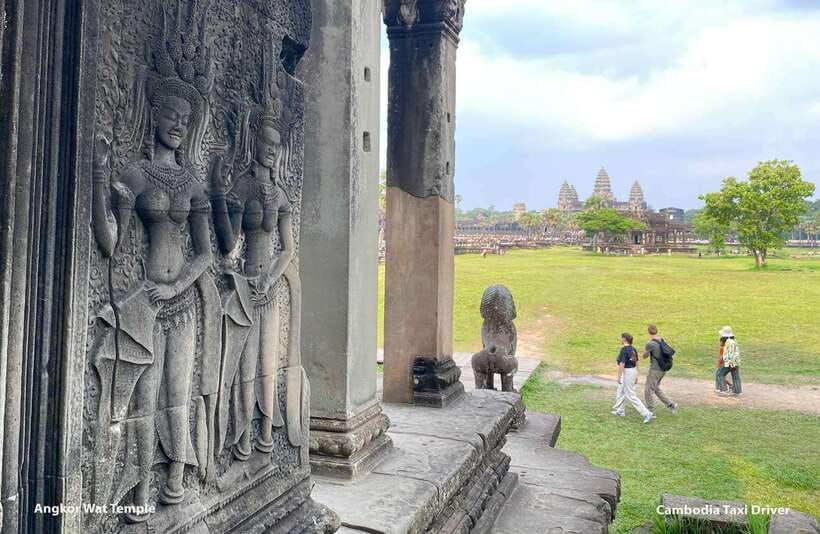
Angkor Wat is the first major temple and the one most people picture before arriving. Built in the 12th century as a Hindu temple, it later became a Buddhist temple. That change gives the site a layered religious identity, and a good guide can help you see both traditions in the buildings and carvings.
The five towers represent Mount Meru, the cosmic mountain at the center of Hindu belief. The design is not just a pleasing skyline. It expresses how the builders understood the universe, with the temple arranged as a symbolic route from the human world toward the divine.
Give yourself time to look beyond the famous front view. The scale of the complex becomes clearer as you move through its galleries, courtyards, and stone passages. Your guide can point out details that are easy to miss when you are focused on getting the perfect photograph.
The open setting makes Angkor Wat especially hot later in the morning. This is one reason the early start matters. You may arrive after sunrise depending on the exact departure and road conditions, but you will still benefit from reaching the temple before the midday heat grows strong.
Siyan, one of the guides frequently assigned to this trip, is praised for explaining the temple history in clear English and for finding good photo positions. That can be useful at Angkor Wat, where the scale and crowds can make it hard to know where to pause.
Same base, a completely different day out:
- Lisbon: Pena Palace, Sintra, Cabo da Roca, & Cascais Daytrip
★ 4.7 · 9,981 reviews - Florence: Pisa, Siena and San Gimignano Day Trip with Lunch
★ 4.6 · 9,771 reviews - From Marrakech: Day Trip to Ouarzazate and Ait Benhaddou
★ 4.7 · 9,447 reviews - Cinque Terre Day Trip with Optional Hiking or Pisa
★ 5.0 · 8,486 reviews
Bayon and its famous stone faces
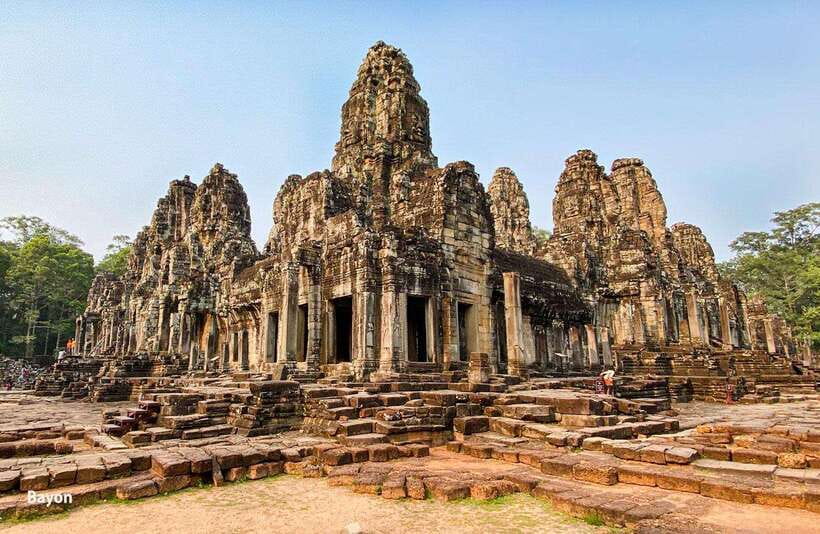
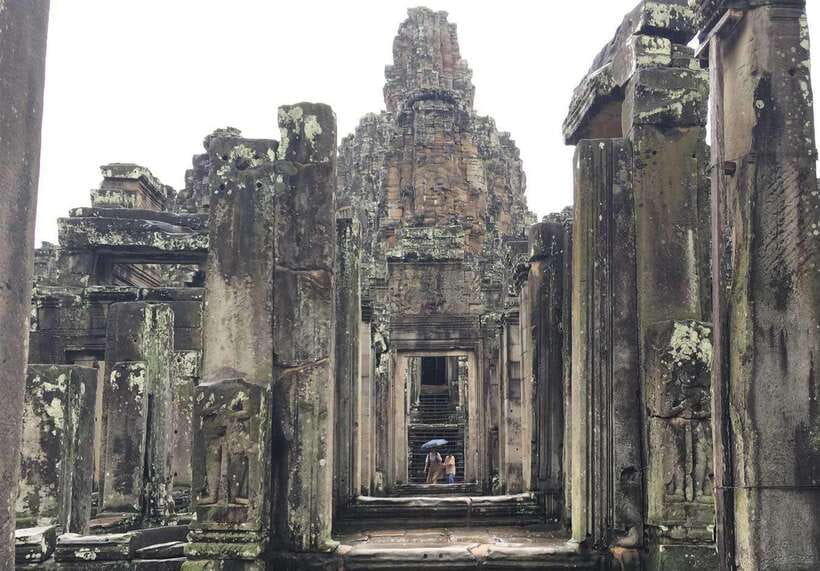
Bayon gives you a sharp contrast with Angkor Wat. Instead of one dominant five-tower silhouette, you enter a maze of towers and narrow corridors covered with large stone faces. The temple was completed in the late 12th or early 13th century and was the last state temple built at Angkor.
The 216 faces are often linked to the bodhisattva Avalokiteshvara, though some interpretations connect them to the king himself. Your guide can explain how Buddhist belief and royal authority overlap here. That context makes the calm expressions more interesting than a simple count of how many faces you can spot.
Bayon is a place where a local guide adds real value. The corridors can feel confusing, and the temple’s structure is less immediately clear than Angkor Wat’s. You will climb stairs and pass through tight spaces, so take care with your footing and allow time to stop rather than rushing from one face to the next.
This is also one of the strongest photo stops. Guides such as Siyan and Sovann are praised for knowing where to place visitors for temple portraits. You should still ask before handing over your phone or camera, but the private format makes it easier to pause for photographs without holding up a larger group.
Ta Prohm, where the forest meets the stone
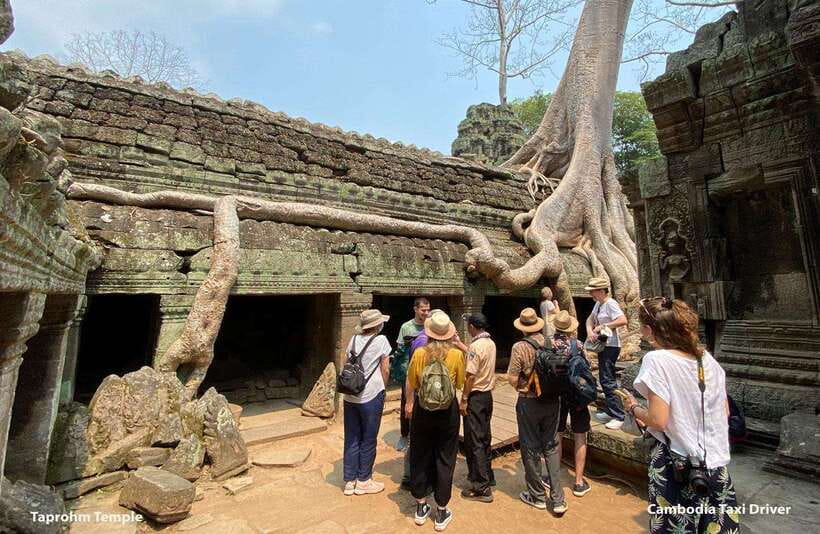
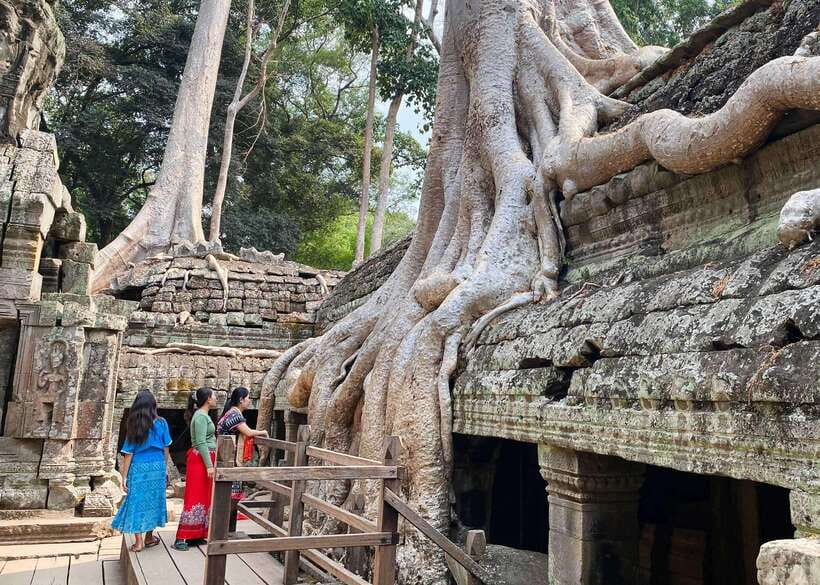
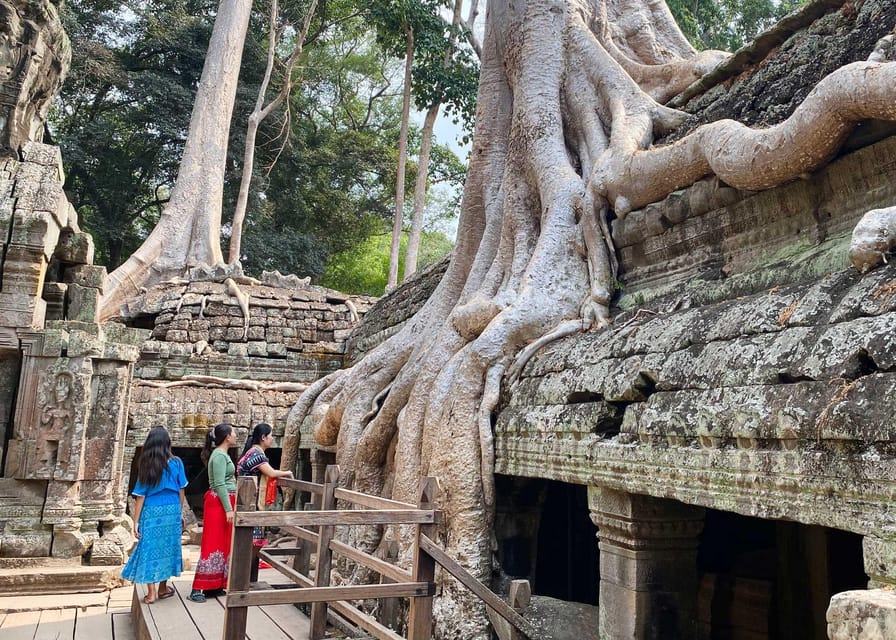
Ta Prohm is the most atmospheric stop. Built in the late 12th century as a Buddhist monastery and university, it has been left largely unrestored. Trees push across walls and roots grip the stone, creating the look that earned it the nickname Tomb Raider temple.
The appeal here is the tension between nature and architecture. Angkor Wat shows planning on a grand scale, while Ta Prohm shows what happens when a monumental site is not fully cleared and repaired. The result feels less formal and more mysterious, though that also means uneven paths and tighter spaces.
You should not expect to wander through a completely untouched ruin. Ta Prohm is a major attraction, and the best-known sections can be busy. Your guide can help you move through the temple in a sensible order and point out less obvious details when the main photo areas are crowded.
Ta Prohm often comes after lunch, when the heat is at its strongest. Bring water back from the car and use the shaded sections as natural rest points. The temple rewards a slower look, but fatigue may be catching up with you by this stage of the day.
Lunch, extra stops, and room for small changes
Lunch is not included, and the restaurant is generally a local Khmer option. Several guides and drivers have helped arrange enjoyable meal stops, and one itinerary included a restaurant that visitors found particularly good. The exact restaurant can vary, so treat this as a practical food break rather than a fixed culinary tour.
The private format gives you some room to make reasonable requests. A few visitors have added a village stop, local food tasting, souvenir shopping, or a smaller temple not listed in the main plan. One guide included Baphuon Temple for an additional look at Angkor’s wider collection.
That flexibility is useful, but time is limited. Every extra stop takes time from the road or the three principal temples. I would prioritize Angkor Wat, Bayon, and Ta Prohm first, then ask about an added stop only if the schedule allows.
The itinerary also includes time around the outer temples and grounds before the return journey. Do not expect to cover the whole Angkor Archaeological Park in one day. Angkor is far too large for that. This trip is best understood as a carefully chosen introduction to the three headline sites.
The return drive and the real cost of the day
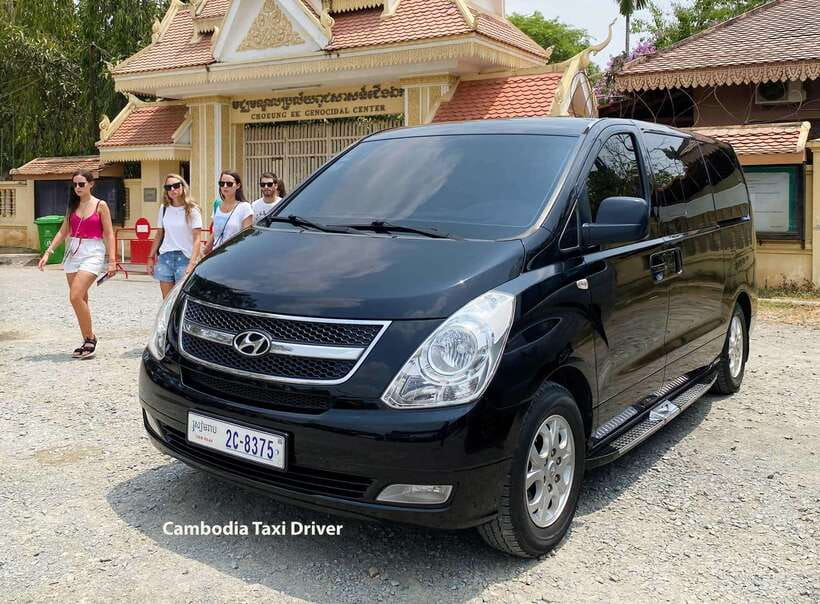
After the temple visits, you begin the 5.5-hour drive back to Phnom Penh. This is when the private vehicle matters most. You can sleep, stretch during stops, and travel at your own pace rather than following a large group’s fixed bus routine.
Drivers have been praised for arriving early, driving safely, providing water, and checking when passengers need a break. Some have also shared information about Cambodia during the road journey. Those small acts cannot shorten the road, but they can make the final hours much easier.
The advertised price is $179 per person. Add the $37 entrance fee and the cost of lunch, plus personal expenses. For one person, this is a high-cost day, and one solo booking was described as costing more than 300 euros after conversion. For a couple or small private group, the price becomes easier to justify.
You are paying for more than admission and transport. The package includes a private driver, an English-speaking live guide, transport from and back to Phnom Penh, and water. You are also avoiding the work of building the day yourself. Still, if you have enough time to stay in Siem Reap, a slower visit over several days will be less tiring and may offer better value.
Who should book this day trip
I would recommend this trip most strongly to:
- People staying in Phnom Penh who have only one available day for Angkor
- Solo visitors who value a private car and personal attention
- Couples who want to avoid flights, hotel changes, and separate transfers
- First-time visitors who want the three best-known temples with historical explanation
- People comfortable with an early start, long road travel, and active walking
I would not choose it for young children under eight, anyone with heart problems, or wheelchair users, as the activity is specifically listed as unsuitable for those groups. It is also a poor match if you dislike long drives or need a relaxed schedule.
Wear modest clothing that covers the shoulders and knees, bring a hat and sunscreen, and use comfortable shoes with good grip. Flash photography is not allowed. Keep your camera ready, but do not let the search for a photograph replace looking carefully at the carvings and stonework.
Free cancellation is available up to 24 hours before departure, and you can reserve now and pay later. Check the available start times carefully, since the exact departure affects how much heat and crowding you face.
Final verdict: a worthwhile shortcut with a very long day
I would book this tour if Angkor is essential to your Cambodia trip and Phnom Penh is your only practical base. The combination of a private vehicle, early pickup, local temple guide, and three major sites removes much of the stress from a difficult day.
The strongest part is the human service. Drivers such as Vuthy, John Black, Heng Thearak, Om, and Phat have helped make the road journey comfortable, while guides such as Siyan, Sovann, Sam Neng, and Woo have added history, humor, and useful photo help at the temples.
The main warning is not a minor detail: this is a long day. You will spend more time traveling than walking through the temples. But if you accept that trade, this is an efficient and well-supported way to meet Angkor Wat, Bayon, and Ta Prohm without rearranging your whole Cambodia itinerary.
FAQ
How long does the Angkor Wat day trip from Phnom Penh last?
The activity lasts about 14 hours. The drive to Siem Reap and back takes roughly 5.5 hours each way, with the remaining time spent at Angkor Archaeological Park and at lunch or rest stops.
Which temples are included?
The main temple visits are Angkor Wat, Bayon, and Ta Prohm. The schedule may also allow time around other outer temples and grounds, depending on the day’s timing.
Is transportation private?
Yes. The activity includes a private driver and private transport from Phnom Penh to Angkor Archaeological Park and back to Phnom Penh.
Is the Angkor entrance ticket included?
No. The Angkor Archaeological Park entrance fee is listed as $37 per person and must be paid separately.
Is lunch included?
No. Lunch at a local restaurant is not included in the tour price.
What language does the guide speak?
The live tour guide speaks English. A local guide at the Angkor temples is also included.
Is the tour suitable for children or wheelchair users?
The activity is not suitable for children under eight, people with heart problems, or wheelchair users.
Can I cancel the booking?
You can cancel up to 24 hours in advance for a full refund. The activity also offers a reserve now and pay later option.
Just added around the world
- River Kwai Day Tour from Bangkok – History, Scenery & Culture★ 4.5 · 206 reviews
- Dali Museum and Costa Brava Small Group Day Trip from Barcelona★ 5.0 · 77 reviews
- Amazon Tour in Ecuador: Puyo Day Trip from Baños★ 5.0 · 84 reviews
- The Ultimate Ancient city of Ayutthaya Private Day Trip★ 5.0 · 139 reviews
- Highlights of Bangkok (Private Day Trip)★ 5.0 · 127 reviews
- Private Tour: Floating Markets and Bridge on River Kwai Day Trip from Bangkok★ 3.5 · 35 reviews
- Floating Markets Day Trip from Bangkok★ 3.5 · 672 reviews
- Private Tour: Ayutthaya Day Trip with Boat tour★ 5.0 · 75 reviews