
Review · DAY TRIPS
Belgrade Sightseeing Half-Day Trip Old and New Belgrade
Belgrade’s story is written in layers, and this private half-day tour lets you read several of them in one sweep. You’ll walk through the fortress where Roman, medieval, Ottoman, and modern traces meet, then ride across the Sava to see socialist New Belgrade, leafy Dedinje, and the immense Saint Sava Temple.
I like the private format, which gives your guide room to adjust the pace, answer questions, and help with mobility concerns. I also like the sharp contrast between old and new Belgrade, from the two-river view at Kalemegdan to brutalist towers and the modern sports district.
The main drawback is time. Three hours is enough for a strong orientation, but not for long visits inside every landmark. One person found the tour closer to two hours, so confirm the schedule and treat this as a city overview rather than a deep museum day.
Key points to know before booking
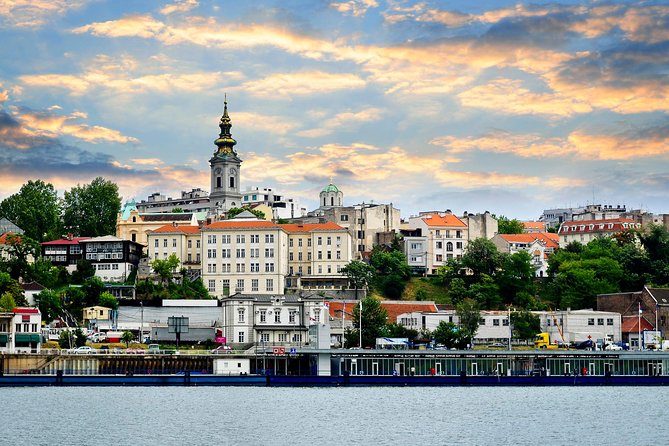
- Kalemegdan comes first: Expect a real walk through fortress gates, churches, towers, and the Upper Town.
- New and old Belgrade share one itinerary: The tour connects Roman and medieval sites with socialist architecture, sports venues, and modern business districts.
- The private vehicle saves time: Transport is by sedan for one to three people or air-conditioned minivan for four to seven.
- Saint Sava Temple is the main interior visit: The huge Orthodox church includes a decorated crypt beneath the main floor.
- Guides make a big difference: Aleksandar, Ivan, Stefan, Vladimir, Milosh, and Alexander are among the guides praised for clear English and flexible pacing.
- The price works best for a small group: At $150.85 per person, the value improves when you share the private vehicle with family or friends.
A fast, useful introduction to Belgrade
Belgrade can be hard to grasp during a first visit. Its sights are spread across several districts, and the city’s past is not tidy. Roman foundations sit below medieval walls, socialist buildings face modern glass towers, and grand royal streets lead toward neighborhoods shaped by Yugoslavia and its later breakup.
This tour gives you a practical map. You start in the historic center, cross into New Belgrade, continue through Dedinje and Vračar, then finish around the central squares. I like that the route does not treat Belgrade as only an old European capital. You see the city as it is: old, rebuilt, political, athletic, religious, and still changing.
The tour begins with pickup at your hotel, Airbnb, pension, or the Belgrade port. Pickup is free within 5 kilometers of Republic Square. A location between 5 and 10 kilometers costs an extra 10 EUR, and airport pickup costs 15 EUR. The listed start time is 9:30 a.m.
Your group stays together in a private sedan if there are one to three people, or an air-conditioned minivan for four to seven. Fuel, parking, hotel pickup, and drop-off are included. That matters in Belgrade because the route covers too much ground to make sense as one long walk.
A few more day trips around the world worth a look
- Tuscany Day Trip from Florence: Siena, San Gimignano, Pisa and Lunch at a Winery
★ 5.0 · 21,634 reviews - From Amsterdam: Zaanse Schans, Volendam & Marken Day Trip
★ 4.4 · 18,501 reviews - From Munich: Neuschwanstein & Linderhof Castle Full-Day Trip
★ 4.6 · 14,646 reviews
Kalemegdan and the fortress: where Belgrade begins
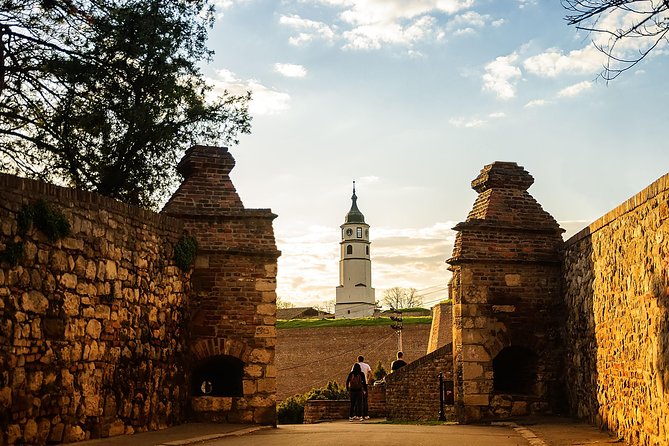
The first stop is Kalemegdan Park and Belgrade Fortress, the strongest part of the walking section. You leave the vehicle early, so you are not trapped in a long drive before seeing anything important.
The walk starts near Leopold’s Gate and moves through remains linked to Singidunum, the Roman settlement that occupied this strategic point. You then pass the Zindan Gate, Despot’s Gate, and Jakšića Tower, with their medieval walls and defensive history.
The fortress is not a single building with one grand entrance. It is a broad collection of walls, gates, open spaces, churches, towers, and military remains. That makes a guide useful. Without context, the stones can blur together. With an explanation, you begin to see how each power reused the same high ground.
Two small Orthodox churches are included in this section: the Chapel of Saint Petka and Ružica Church, also called the Church of the Virgin Mary. The itinerary allows about 30 minutes here, though the actual pace can depend on walking speed, weather, and how much your guide explains.
Wear shoes suited to uneven ground. The tour requires a moderate level of physical fitness, and the fortress portion is the clearest walking segment. If you have a bad knee or cannot walk far, say so when booking. Aleksandar was specifically praised for adjusting the route for a parent with limited mobility, while another guide helped a person with a bad knee.
The Victor Monument and the two-river view
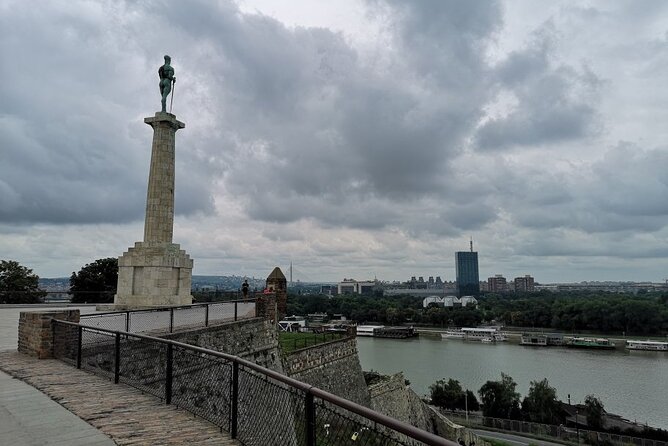
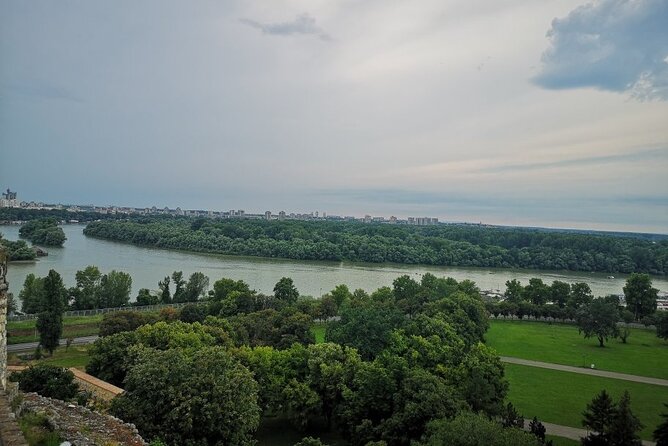
The walk continues into the Upper Town, where Belgrade’s famous Victor Monument looks over the meeting point of the Sava and Danube. The statue, by sculptor Ivan Meštrović, has become one of the city’s defining symbols.
This is one of the best photo stops because the view explains Belgrade’s location better than a lecture can. The city grew here for a reason: the rivers created a natural crossroads, while the high ground offered defense and control.
The route also passes the Roman Well, King’s Gate, the Sava Promenade, the Damat Ali Pasha Tomb, Clock Gate, and Clock Tower. You see the Military Museum and leave through Istanbul Gate, also known as Stambol Gate.
Back in Kalemegdan Park, you pass the Monument of Gratitude to France, another work by Meštrović, along with busts honoring Serbian writers and cultural figures. After this walk, you return to the vehicle.
I would not expect time for a slow museum visit at the Military Museum or a long pause at each monument. The value here is the sequence: gates, walls, churches, river views, and monuments form a readable introduction to the city’s past.
New Belgrade: concrete, politics, and a different city
The next section shows you a completely different Belgrade. New Belgrade was built after the Second World War during the socialist period, and its wide avenues and large-scale buildings reflect a government that wanted to create a new capital district from scratch.
You pass the former Central Committee of the Communist Party and the Federal Executive Council, now known as the Palace of Serbia. The Genex Tower, often called the Western Gate of Belgrade, gives you one of the district’s most recognizable examples of brutalist design.
The Sava Center is another major sight. It was built as a large congress venue and remains one of the most important buildings of its kind in this part of Europe. New Belgrade’s architecture became important enough to receive a special exhibition at New York’s Museum of Modern Art, titled Toward a Concrete Utopia.
I like this part because it prevents the tour from becoming a parade of old churches and royal buildings. You see the physical result of Yugoslavia’s socialist ambitions, then compare it with newer offices and commercial buildings built in recent decades.
You also pass the Belgrade Arena, the city’s major sports venue, and a restaurant owned by the family of tennis player Novak Đoković. The sports references continue in Dedinje, where you see Rajko Mitić Stadium, home of Red Star Belgrade, and the nearby stadium of rival club Partizan.
If football matters to you, ask your guide about the rivalry, which has lasted more than 70 years. If it does not, the stadiums still help explain how strongly sport shapes local identity.
Same base, a completely different day out:
- Lisbon: Pena Palace, Sintra, Cabo da Roca, & Cascais Daytrip
★ 4.7 · 9,981 reviews - Florence: Pisa, Siena and San Gimignano Day Trip with Lunch
★ 4.6 · 9,771 reviews - From Marrakech: Day Trip to Ouarzazate and Ait Benhaddou
★ 4.7 · 9,447 reviews - Cinque Terre Day Trip with Optional Hiking or Pisa
★ 5.0 · 8,486 reviews
Dedinje and the political memory of Yugoslavia
After crossing the Gazela Bridge, the route enters Dedinje, one of Belgrade’s most exclusive residential districts. Large villas sit among the greenery of Topčider Hill, and the guide uses the houses to explain the people and events connected with them.
This is not a mansion tour in the formal sense. You view the area from the vehicle and hear about its owners and its role during Serbia’s turbulent twentieth century. The contrast with New Belgrade is useful: one district reflects collective socialist planning, while Dedinje suggests private wealth, political influence, and old power.
The tour also passes the Museum of History of Yugoslavia and the House of Flowers, where Josip Broz Tito is buried. The schedule does not promise an interior museum visit, so think of this as an important exterior stop and a chance to ask questions about Tito and the second Yugoslavia.
This is one place where a strong guide matters. Aleksandar, Vladimir, Ivan, Stefan, Milosh, and other guides are described as clear, friendly, and able to explain Serbia’s difficult past without losing the thread. One guide also adjusted the experience for very hot weather by choosing shaded spots and reminding the group to drink water.
Saint Sava Temple and the Vračar district
From Dedinje, you continue to Vračar for the Temple of Saint Sava. This is the tour’s principal church visit and one of Belgrade’s most impressive sights.
The temple is built in the Serbian Byzantine style at the place where Ottoman forces burned the relics of Saint Sava, the founder and first archbishop of the independent Serbian Orthodox Church. Construction began in the 1930s and continued over many decades.
The scale is difficult to judge from photographs. The church covers about 3,500 square meters at floor level, with another 1,500 square meters in three galleries. Its dome reaches 70 meters, and the gilded cross adds another 12 meters, making the full height 82 meters.
You enter the church and also see the decorated crypt beneath the main floor. The tour includes the entrance fee, so there is no separate ticket to arrange. Allow about 30 minutes here. That gives you enough time to look around, hear the basic story, and take in the scale, but not necessarily enough time for a slow architectural study.
I like this stop because it is more than a large building. Saint Sava is a central figure in Serbian religious and national life, and the temple helps you understand why the church occupies such an important place in Belgrade’s public identity.
Government buildings, royal palaces, and Republic Square
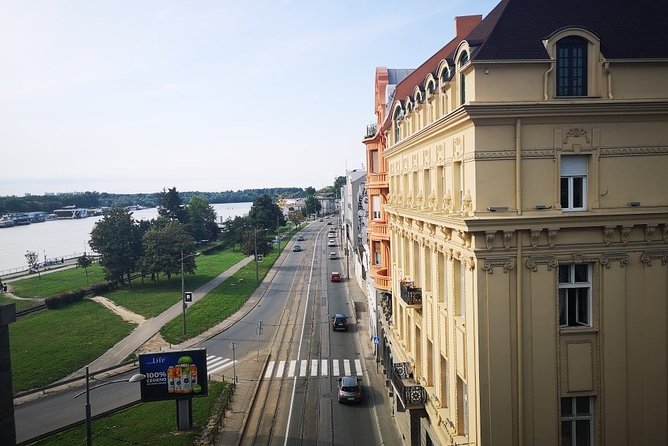
After Saint Sava Temple, you return to the vehicle and pass through Slavija Square into Nemanjina Street. The street is lined with government institutions, including the Government Building, Ministry of Foreign Affairs, General Staff of the Serbian Army, Ministry of Railways, Ministry of Finance, and State Court.
These buildings provide a good look at Belgrade’s prewar architecture. You do not stop at each one, so listen closely as the vehicle moves. Traffic can affect how long you have to look, and the tour is designed more for orientation than detailed architectural inspection.
Kralja Milana Street brings you past the Old and New Royal Palaces. At Nikola Pašić Square, you hear about the prime minister commemorated by the monument and about the two royal dynasties that ruled Serbia in the nineteenth and twentieth centuries.
There is a short photo stop outside the Parliament Building. The pause lasts about 10 minutes, enough for pictures and a concise explanation. You then continue to Terazije Square, known for its nineteenth-century white stone fountain and the elegant Hotel Moskva.
The tour ends at Republic Square, the central meeting point of modern Belgrade. Here you learn about the National Museum, National Theatre, and Prince Mihailo, an important figure in Serbia’s modern history. The end point is practical because it leaves you near major city sights, though the tour does not include transport beyond Republic Square unless separately arranged.
What the $150.85 price really buys you
At $150.85 per person, this is not a budget group bus ride. You are paying for a private experience, an English-speaking guide, a vehicle, fuel, parking, hotel pickup and drop-off, water, and entry to Saint Sava Temple.
The value depends heavily on group size. For one person, the price is high for three hours. For a couple, family, or group of friends splitting the private booking, it becomes easier to justify, especially if you have only one morning in Belgrade or are arriving on a short stopover.
I would compare it with the cost of arranging several taxis, trying to understand the fortress without help, and losing time between districts. The guide’s local knowledge is most useful in the transitions, particularly when the route shifts from Ottoman and medieval remains to socialist architecture, royal avenues, and Tito’s Yugoslavia.
The tour is also a sensible first-day choice. Several people used it as an introduction before spending more time in Belgrade, and one person booked it during a layover to see as much as possible before an afternoon flight. If you want long museum visits, extended church time, or a slow food-focused walk, the price will not solve that limitation. You need a longer or more specialized tour.
Timing, comfort, and guide style
The advertised duration is about three hours, but one booking felt closer to two. I would allow a full three hours in your planning and avoid placing a tight airport connection immediately afterward.
Pickup is offered from central accommodations, and the driver-guide arrangement keeps the route easy. The vehicle is air-conditioned, which matters on a hot day, while the included bottle of water is a small but useful touch.
The strongest part of the experience depends on the person leading it. Aleksandar is repeatedly described as friendly, clear, and considerate, while Ivan, Stefan, Vladimir, Milosh, and Alexander are also praised for explaining Belgrade and Serbia in understandable English. Expect a guide who can discuss history, politics, football, and basketball, rather than someone who only recites dates.
The tour is private, so you can ask for more detail about subjects that interest you. One guide adapted the route to a parent’s walking limits, and another tailored the explanation to a visitor’s particular interests. That flexibility is a major reason to choose this over a large coach tour.
Who should book this half-day tour?
I would choose this tour if you are visiting Belgrade for the first time and want a broad view before exploring independently. It also fits a short stay, a layover, or a morning when you want to cover districts that are too far apart for a simple walking tour.
It suits you especially well if you enjoy history but want it tied to visible places. The route makes Serbia’s past easier to follow because you move from Roman foundations to medieval walls, Ottoman traces, royal institutions, socialist planning, Tito’s memorial, and modern sports culture.
Families can benefit from the private format, particularly if children need a flexible pace. The supplied information says the child rate applies when a child shares with two paying adults. Service animals are allowed, and public transportation is nearby, though the tour itself uses private transport.
I would hesitate if your priority is independent exploration. You will see many landmarks, but most stops are short. You may want extra time at the fortress, Saint Sava Temple, or the Museum of History of Yugoslavia, and this route does not promise it.
Should you book it?
Book it if you want a well-paced first look at Belgrade, especially with limited time, older relatives, children, or a small private group. The combination of fortress walking and vehicle touring gives you much more ground than a standard city walk.
Skip it if you want a slow, specialist visit focused on museums, architecture, or religious art. For everyone else, the tour offers a sensible introduction, strong historical context, and a useful sense of how old and new Belgrade fit together. Free cancellation is available until 24 hours before the start time, which gives you some room to adjust your plans.
FAQ
How long does the Belgrade sightseeing tour last?
The advertised duration is approximately three hours. One booking found the experience closer to two hours, so allow the full three-hour window when planning your day.
What time does the tour start?
The listed start time is 9:30 a.m.
Is hotel pickup included?
Yes. Free pickup and drop-off are available from hotels, Airbnbs, and pensions within 5 kilometers of Republic Square, as well as from the Belgrade port.
Is pickup available outside central Belgrade?
Yes. Pickup between 5 and 10 kilometers from the city center costs an additional 10 EUR. You can contact the provider about addresses farther than 10 kilometers from Republic Square.
Can I start the tour at Belgrade Airport?
Yes. Airport pickup is available for an additional 15 EUR.
Is this a private tour?
Yes. Only your group participates.
What vehicle is used?
Groups of one to three people use a private sedan. Groups of four to seven use an air-conditioned minivan.
Is Saint Sava Temple included?
Yes. Entry to Saint Sava Temple is included, and the tour allows about 30 minutes for the visit.
How much walking is involved?
The main walking section is at Kalemegdan Park and Belgrade Fortress. Travelers should have a moderate level of physical fitness, though the private format allows the guide to adjust the pace.
What is included in the price?
The price includes hotel pickup and drop-off, private transport, an English-speaking guide, fuel, parking fees, Saint Sava Temple admission, and one bottle of water per person. Gratuities are optional.
Can I cancel the booking?
You can cancel up to 24 hours before the experience starts for a full refund. Cancellations or changes made less than 24 hours before the start time are not accepted for a refund.
Just added around the world
- Šargan Eight Railway, Wooden Town & House on Drina river day trip from Belgrade★ 5.0 · 107 reviews
- Day Trip from Belgrade: Gems of Eastern Serbia★ 5.0 · 424 reviews
- Private Day Trip to Timisoara from Belgrade★ 5.0 · 22 reviews
- Sidon, Tyre & Maghdouche Day Trip – With Lunch (4G on Board)★ 4.5 · 44 reviews
- Anjar, Baalbek & Ksara Day Trip – With Lunch (4G on Board)★ 4.5 · 181 reviews
- Along the Danube: Golubac Fortress & Iron Gate Gorge day trip from Belgrade★ 4.5 · 185 reviews
- Private Day Trip to Jinshanling Great Wall with English Speaking Driver★ 5.0 · 39 reviews
- Byblos, Jeita Grotto & Harissa Day Trip -With Lunch (4G on Board)★ 4.5 · 145 reviews