
Review · TBILISI
Day Trip to Mtskheta Gori and Uplistsikhe
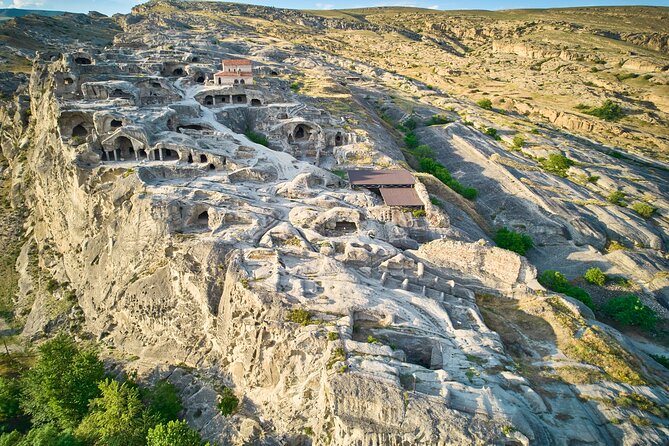
Uplistsikhe is the star here: an ancient town carved into rock above the Mtkvari River, with rough paths, open views, and rooms shaped by people over many centuries. Add Stalin’s birthplace and two major Georgian churches, and you get a remarkably full introduction to the country beyond Tbilisi. I especially like the wide mix of places and the chance to see them without hiring a car.
I also like the strong guiding. Names such as Nini, Dimitri, Tako, Tota, Niko, and Nene appear often in the tour team, and the best guides explain both facts and legends without turning the day into a lecture. The main drawback is pace: ten hours is a long day, and Uplistsikhe means uneven ground, steps, and some walking. Lunch can also affect how much time you have in Gori.
Key points to know before booking
- Uplistsikhe comes first: Explore an Iron Age rock-cut town with caves, chambers, paths, and river views.
- Four very different historical stops: You move from ancient pagan and Christian sites to medieval Georgia and the Soviet period.
- Gori gives you a choice: Pay for the Stalin Museum, or use free time for the fortress and city streets.
- The optional lunch costs extra: The listed price is 45 GEL, about $17, and experiences with the meal can vary.
- The $29 price is strong value: Round-trip transport and a professional English-speaking guide are included.
- Dress for churches and rough ground: Women need a head covering in church, shorts are not allowed, and sensible shoes matter.
Why this day trip works so well from Tbilisi
This is a smart choice if you want to see several major sights in central Georgia but do not want to arrange a private car. The route links three very different chapters of the country. Uplistsikhe reaches back to the Early Iron Age, Gori brings you into the Soviet century, and Mtskheta connects you with Georgian Christianity and royal history.
The order also makes practical sense. You leave Tbilisi at about 9:00 am, travel first toward the farthest major stop, then work back toward the capital. The return is normally around 7:00 to 7:30 pm, though the exact day can run longer. One reported departure began before the listed time because the group had arrived early, so I would follow the meeting instructions closely and avoid cutting it fine.
Transport is included in the $29 price. The vehicle may be a small Mercedes coach or a minibus, with reported group sizes ranging from about 12 people in a 16-seat van to a maximum of 100 for the activity. In practice, the experience described by many participants used a smaller vehicle. Drivers such as Giorgi, George, and Omari received praise for safe, smooth driving on busy Georgian roads.
You meet near Avlabari metro station at the Traveler’s Meeting Point, about 50 meters from the station. That is a useful location for anyone staying in central Tbilisi, and the tour returns to the same place.
A few more day trips around Tbilisi worth a look
- Tbilisi: Day Trip to Kazbegi, Gudauri, Gergeti, and Ananuri
★ 4.9 · 3,203 reviews - Day Trip to Kakheti Wine Region Including 9 Wine Tastings
★ 5.0 · 2,774 reviews - Day Trip to Kazbegi and Gudauri
★ 5.0 · 2,009 reviews
Uplistsikhe: Georgia’s unforgettable cave town
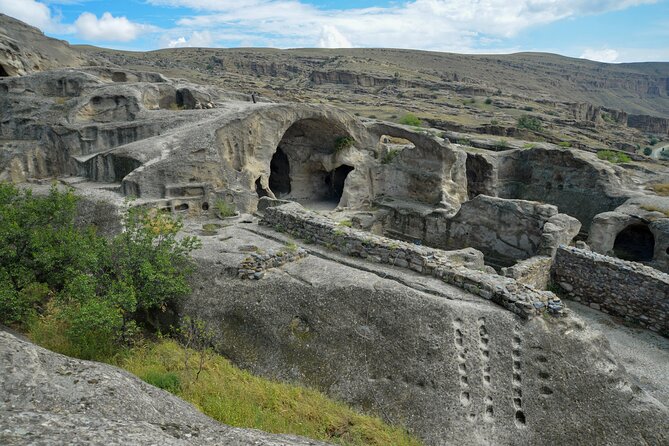
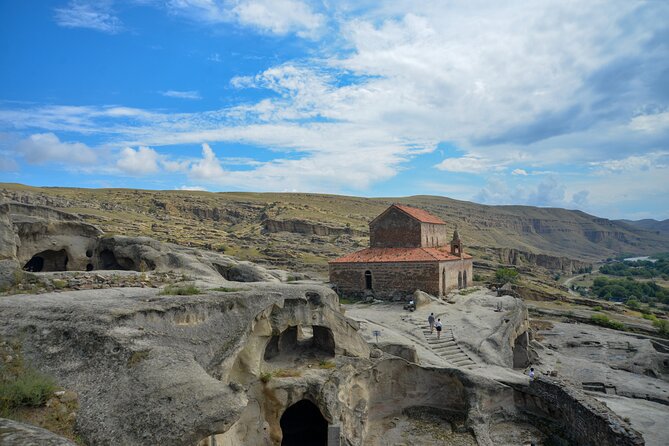
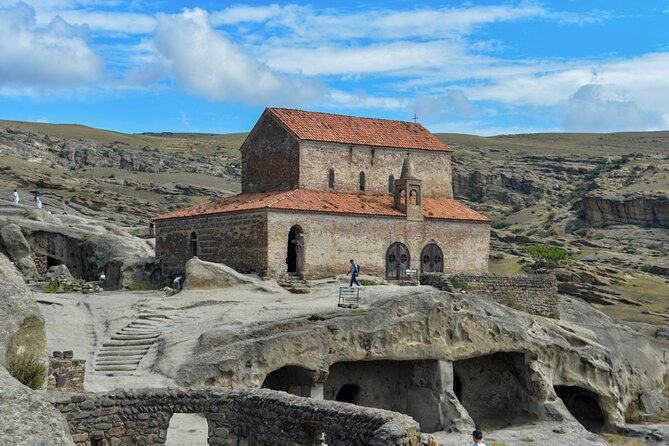
The first major stop is Uplistsikhe, reached at about 11:00 am. The name means Fortress of the Lord, and the site is one of the most unusual places you can visit near Tbilisi. Rather than a single cave or a small group of rooms, it is a broad rock-carved settlement with spaces cut into the hillside above the Mtkvari River.
The site contains structures from the Early Iron Age through the Late Middle Ages. You can see how pagan spaces and later Christian buildings existed side by side, reflecting the long changes in Georgian life and belief. The setting also shows why people chose this spot: the high rock gives strong views over the river and surrounding countryside.
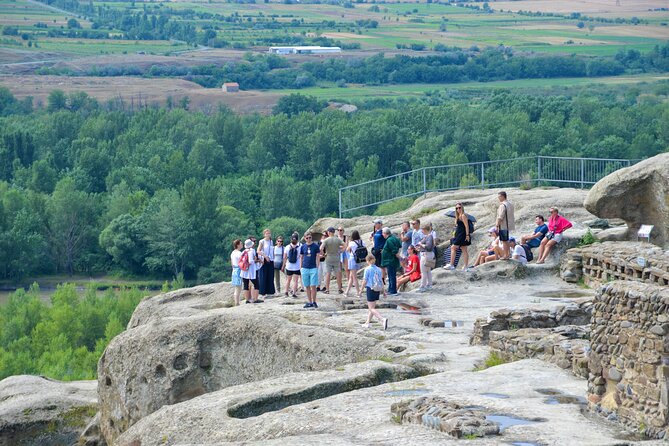
Plan for about 90 minutes here. That is enough to see the main areas with a guide, but not enough for a slow, wandering exploration of every corner. The ground is uneven, and there are many steps. This is not a polished museum route with flat flooring, so wear shoes with a firm grip and bring water. A cafe and toilets are available near the entrance and exit, but water is not supplied as part of the tour.
I would make Uplistsikhe a deciding factor when booking. It is visually striking, but it asks more from you physically than the churches do. If you have difficulty with steps or uneven ground, you should consider how comfortable you will be moving through an exposed archaeological site.
The guide makes a real difference here. A good explanation helps you understand which chambers served practical purposes, how the settlement changed over time, and why the mixture of rock-cut and built structures matters. Several guides, including Dimitri, Nini, Tako, and Nene, are praised for making the history lively rather than simply pointing at stones.
Gori, lunch, and the Stalin question
Around 1:00 pm, the group reaches Gori for lunch or free time. The optional meal at a local restaurant costs 45 GEL, about $17, and gives you a chance to try Georgian food with the group. Several people found the meal plentiful and enjoyable, and it can be a pleasant social part of the day.
Still, I would treat lunch as a choice, not an automatic upgrade. One account described a poorly organized meal with food arriving cold and the price feeling unreasonable. That does not mean every meal will be disappointing, but it does mean you should ask the guide how the lunch is arranged on your departure day. If you prefer control over your time and food, take the free-time option instead.
Free time in Gori can be useful. You might visit Gori Fortress, a medieval stronghold with broad views over the town, or find a quick meal independently. Some departures spend extra time driving to a restaurant outside the center and then returning, which can make the stop feel less efficient if you are not eating.
Gori is also the birthplace of Joseph Stalin. The town has ancient roots, but its main tourism draw for many people is the Stalin Museum. The museum retains a distinctly Soviet-era feel and includes Stalin’s original house and his railway carriage. The entrance fee is 15 GEL, around $6, and is not included.
The museum is an important but complicated stop. It is not simply a celebration of a famous Georgian figure, and it is not presented like a modern, sharply critical museum in every respect. Its old-fashioned presentation is part of what makes the visit thought-provoking. Your guide’s explanation is especially useful here. Several guides are praised for adding context that makes the museum more interesting than it might be on your own.
If Stalin does not interest you, Gori Fortress offers a more open-air alternative. You will not get the same focused account of the Soviet period, but you can enjoy the town and views. The schedule allows roughly an hour for Gori, though the exact balance between lunch, museum, and free time can vary.
Jvari Church above the river junction
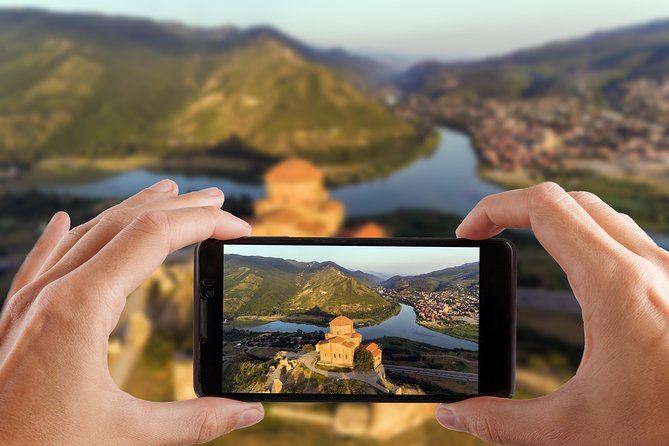
At about 4:35 pm, the tour reaches Jvari Monastery. The name translates as Monastery of the Cross. This sixth-century Georgian Orthodox church sits on a rocky hill above the meeting point of the Mtkvari and Aragvi rivers.
The location is the main event. From the hill, you look toward Mtskheta below and across the river valleys. It is easy to understand why this was chosen as a sacred site, and the setting gives you one of the clearest visual introductions to the old Georgian capital.
You have about 30 minutes here. That is enough to enter the church, take in the views, and hear the main story, but it is not a leisurely architectural study. Weather matters more at Jvari than at the lower sites. Wind, rain, or cold can make the exposed hill uncomfortable, so bring a layer even in mild weather.
Jvari is part of the UNESCO-listed historic monuments of Mtskheta. The visit is brief, but it gives the day a strong transition from ancient settlement and Soviet history to the religious traditions that shaped Georgia.
Remember the church dress rules. Shorts are not permitted, and women need to cover their heads. Carrying a scarf is the simplest solution.
Same base, a completely different day out:
- Day Trip to Armenia Including Homemade Lunch
★ 5.0 · 1,162 reviews - From Tbilisi: Diamond Bridge and Dashbashi Canyon Day Trip
★ 4.9 · 740 reviews - From Tbilisi : Mtskheta, Jvari, Gori & Uplistsikhe Day Trip
★ 4.8 · 432 reviews - From Tbilisi: Day Trip to Armenia with Homemade Lunch
★ 4.9 · 345 reviews
Svetitskhoveli and the old capital of Georgia
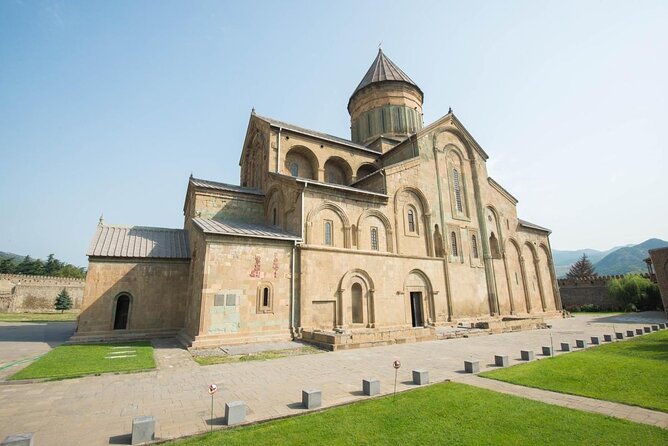
The final major stop is Svetitskhoveli Cathedral in Mtskheta, reached at about 5:25 pm. Mtskheta served as the capital of the early Georgian Kingdom of Iberia from the third century BC to the fifth century AD. It later remained a coronation and burial place for many Georgian kings.
Svetitskhoveli means Cathedral of the Living Pillar. It is currently Georgia’s second-largest church, after Holy Trinity Cathedral in Tbilisi, and it is one of the country’s most venerated religious sites. Georgian tradition also connects it with the robe of Christ, which helps explain its importance as a place of pilgrimage.
The cathedral is more than an impressive building. It helps you understand why Mtskheta remains central to Georgian identity even though Tbilisi became the modern capital. Inside, the atmosphere is quieter and more devotional than the open rock town at Uplistsikhe. Outside, the old streets give you a chance to slow down after a long day.
The scheduled visit lasts about 90 minutes, but the amount of free exploration can depend on the guide and the day’s timing. One useful tip is to check whether the itinerary has been rearranged to avoid the busiest period at the cathedral. Some departures adjust the order for this reason, which can make the final stop more comfortable.
Several people wanted slightly more time to explore Mtskheta, and I understand why. The cathedral is the highlight, but the town has more to offer than one church courtyard. If Mtskheta is your main interest, a separate half-day visit would allow more unhurried wandering. On this tour, though, you are trading that depth for a much broader day.
The guide is a major part of the experience
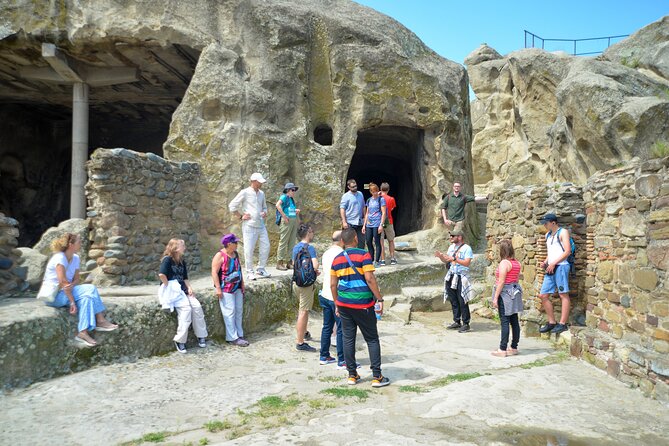
The tour includes a professional English-speaking guide, and the guide can shape the whole day. The strongest descriptions mention clear storytelling, humor, patience, and a talent for connecting facts with legends.
Dimitri is repeatedly praised for explaining Georgian history with energy and for answering questions. Niko is described as calm and thoughtful, with a quiet passion for the past. Nini, Tako, Tota, Nene, Maria, Paata, and Shoti are also associated with friendly, well-organized departures.
You should know that this is partly a guided sightseeing day and partly a self-directed outing. The guide explains the sites and keeps the group moving, but you will not have a private lecture at every monument. That balance suits people who want useful context but also some time to look around alone.
A good group can add to the experience. People often meet over lunch or during the rides, and the social side is one reason this inexpensive format works. The tradeoff is that departure times and stops must suit the whole group, not just you.
What the $29 price really covers
At $29 per person, this is one of the better-value ways to reach Uplistsikhe, Gori, and Mtskheta from Tbilisi. You get round-trip transport and a professional guide, with no need to negotiate a driver or plan the route yourself.
Budget at least another $6 for Uplistsikhe and another $6 for the Stalin Museum if you want both paid sights. Add around $17 for the optional lunch, and the full day can reach roughly $58 before any personal spending. That is still reasonable for transport, guiding, and several major attractions, but the advertised price is not the final cost if you choose every extra.
The value is strongest if you want variety. A private car would give you more control and perhaps more time at each stop, but it would cost more. This group trip gives you a practical route, an English-speaking guide, and a chance to meet other people at a low base price.
Who should book this day trip
I would recommend it to first-time visitors based in Tbilisi who want a broad taste of Georgian history in one day. It suits history fans especially well, since the route moves from Iron Age archaeology to medieval Christianity and twentieth-century political history.
It also works for solo visitors who would rather join a group than arrange transport alone. The optional lunch can make it easier to meet people, while free time in Gori gives you more independence.
I would hesitate if you dislike long days, group schedules, or uneven walking. Uplistsikhe is physically more demanding than the listing price and simple transport details might suggest. I would also choose a private tour if your main goal is slow photography, extensive time in Mtskheta, or a detailed visit to every part of Gori.
FAQ
Where does the tour start?
The tour starts at the Traveler’s Meeting Point near Avlabari metro station in Tbilisi, about 50 meters from the station.
What time does the tour begin?
The scheduled start time is 9:00 am. You should arrive at the meeting point early because some departures may leave before the listed time if the whole group is ready.
How long does the tour last?
The advertised duration is about 10 hours, with return to the meeting point around 7:00 to 7:30 pm. The exact length can vary.
Is transportation included?
Yes. Round-trip transportation from Tbilisi and the professional guide service are included.
Is lunch included?
No. Lunch is optional and listed at 45 GEL, about $17 per person.
How much are the entrance fees?
Uplistsikhe costs 15 GEL, about $6. The Stalin Museum costs 15 GEL, also about $6. These fees are not included.
Can I skip the Stalin Museum?
Yes. You may use the available time in Gori to explore the town or visit Gori Fortress instead.
Is Uplistsikhe difficult to walk through?
The site has uneven ground, steps, and exposed paths. Sensible footwear and your own bottled water are recommended.
What should I wear for the churches?
Shorts are not allowed inside the churches, and women need to cover their heads. Dress for the weather because the tour operates in all conditions.
Who can join the tour?
The minimum age is five, and most people can participate. The activity can have up to 100 participants, although some departures use smaller vehicles.
Should you book it?
Book this tour if you want maximum variety for a low price and are comfortable with a full day on the road. Uplistsikhe is the unforgettable stop, while Gori adds a challenging modern chapter and Mtskheta supplies the grand religious finale.
I would bring water, sturdy shoes, a head covering, and a little extra money for entrances. Choose lunch if you want Georgian food and group company, but keep free time in Gori in mind if you prefer flexibility. For a first trip beyond Tbilisi, this is a practical and rewarding choice, provided you accept the busy schedule and the walking.
Just added around Tbilisi
- Tbilisi: Vardzia, Khertvisi, Rabati & Borjomi Day Trip★ 4.8 · 24 reviews
- From Tbilisi: Guided Day Trip to Ananuri, Gudauri, & Kazbegi★ 4.7 · 341 reviews
- From Tbilisi: Kakheti & Sighnaghi Guided Day Trip with Wine★ 4.3 · 103 reviews
- From Tbilisi to Armenia: Akhtala, Haghpat & Sanahin Day-Trip★ 4.8 · 276 reviews
- From Tbilisi: Mtskheta, Jvari, Gori & Uplistsikhe Day Trip★ 4.8 · 153 reviews
- From Tbilisi : Mtskheta, Jvari, Gori & Uplistsikhe Day Trip★ 4.8 · 432 reviews
- From Tbilisi: Day Trip to Armenia with Homemade Lunch★ 4.9 · 345 reviews
- From Tbilisi: Kakheti Wine, History & Traditions Day Trip★ 4.8 · 22 reviews
Tbilisi Day Trips, compared.
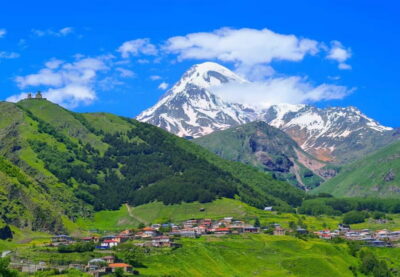
Tbilisi: Day Trip to Kazbegi, Gudauri, Gergeti, and Ananuri
Read our review →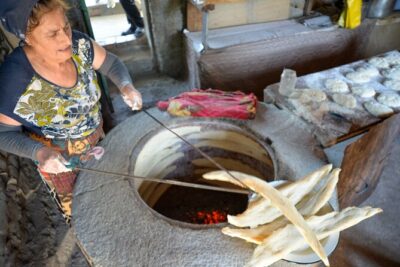
Day Trip to Kakheti Wine Region Including 9 Wine Tastings
Read our review →
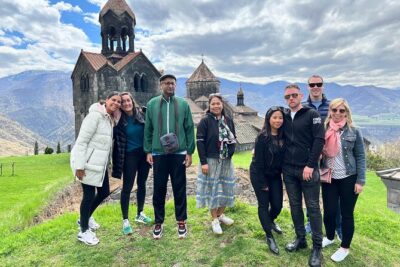
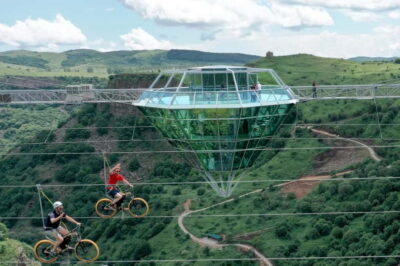
From Tbilisi: Diamond Bridge and Dashbashi Canyon Day Trip
Read our review →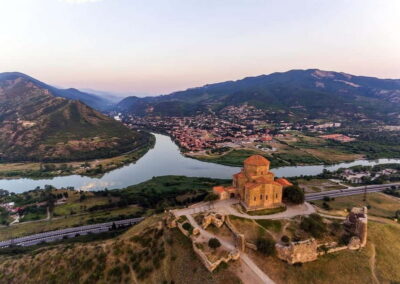
From Tbilisi : Mtskheta, Jvari, Gori & Uplistsikhe Day Trip
Read our review →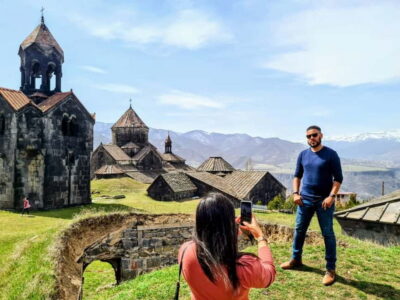
From Tbilisi: Day Trip to Armenia with Homemade Lunch
Read our review →
From Tbilisi: Guided Day Trip to Ananuri, Gudauri, & Kazbegi
Read our review →Browse the lists this tour appears in