
Review · ROMANIA
From Brasov: Sighisoara, Viscri, and Rupea Unesco Day Trip
Sighisoara’s colorful medieval streets are the star of this day, but the route earns its keep by pairing the famous citadel with quiet Saxon Viscri and the hilltop walls of Rupea. You get three very different views of Transylvania in one well-planned outing.
I like the small group of no more than seven and the hotel pickup, which remove much of the fuss from a long day. I also like the human details: a working organ in Viscri, a climb up the old church tower, and a taste of palinca at Walter’s distillery. The drawback is simple: nine hours is a full day, and Sighisoara gets only about three hours, so you will need to choose your stops carefully.
Key points to know before you book
- Sighisoara is the main event: Allow time for the clock tower, Vlad Tepes’s birthplace, the steep streets, and free exploration.
- Viscri feels rural and local: Its white fortified church, Saxon homes, old balconies, and working organ give the visit real character.
- Rupea makes a strong first stop: Three defensive walls and a hilltop position provide a clear lesson in Saxon military design.
- The small van matters: With hotel pickup, air conditioning, Wi-Fi, and a maximum of seven people, the road time is easier.
- Your guide shapes the day: Guides such as Claudiu, Dan, Traian, and Ray have been praised for clear explanations, humor, and help with practical details.
- Budget for entrances and lunch: Transport and guiding are included, but admission tickets and food are extra.
Why this route works from Brasov
Brasov is a fine base for Transylvania, but some of the region’s best sights sit beyond the city. This tour links three places that would be awkward to combine by public transport in a single day. You leave your hotel in Brasov, ride in an air-conditioned van, and return in the evening without changing buses or working out rural connections.
The drive takes about an hour to Rupea, then roughly 40 minutes to Viscri and another 45 minutes to Sighisoara. The final ride back to Brasov takes about two hours. That is a fair amount of road time, but the route is sensible and the van gives you a comfortable place to rest between walks.
A group limited to seven is a useful middle ground. You get more personal attention than on a large coach, but you are not paying the full cost of a private car. The guide stays with you at the sites rather than simply dropping you at an entrance, an important difference at fortresses and churches where a little context helps.
Several guides have received special praise for their approach. Claudiu has been noted for explaining the sites and answering questions. Dan has helped with practical matters, including finding an ATM, while Traian has connected the monuments with Romanian life, politics, geography, and culture. Ray has been praised for discussing subjects ranging from wildlife to history. The exact guide depends on the date, but the pattern is clear: the guide is a central part of the experience, not just the driver.
A few more day trips around Romania worth a look
- Bucharest: Dracula Castle, Peles Castle & Brasov Old Town
★ 4.6 · 10,891 reviews - Bucharest: Dracula’s Castle, Peleș Castle & Brașov Day Trip
★ 4.4 · 6,100 reviews - Bucharest: Day Trip to Dracula Castle, Peles Castle & Brașov
★ 4.4 · 3,049 reviews
Rupea Fortress and its three lines of defense
Rupea Citadel comes first, after about an hour on the road. You spend around an hour at the fortress with a guided visit. Set high above the surrounding area, it gives you the kind of broad view that explains why a defensive site was built here in the first place.
The most useful feature is the fortress’s three defensive walls. Rather than seeing one bare enclosure, you can understand how the site was arranged in layers. The design shows the care and skill of the Saxon colonists who built and maintained fortifications in this part of Transylvania.
I would treat Rupea as a strong opening chapter rather than the emotional peak of the day. It is dramatic, exposed, and easy to photograph, but the visit is relatively short. Wear shoes with a good grip, especially if the ground is uneven. Sunglasses and a sun hat are also sensible because the hilltop setting can feel open and bright.
The guide’s role is useful here. Without explanation, a fortress can become a quick walk around old walls. With context, the three defensive rings give you a clearer picture of how people protected settlements and trade routes. You also get an early sense of the Saxon influence that appears again at Viscri and Sighisoara.
Viscri, the white church, and a taste of palinca
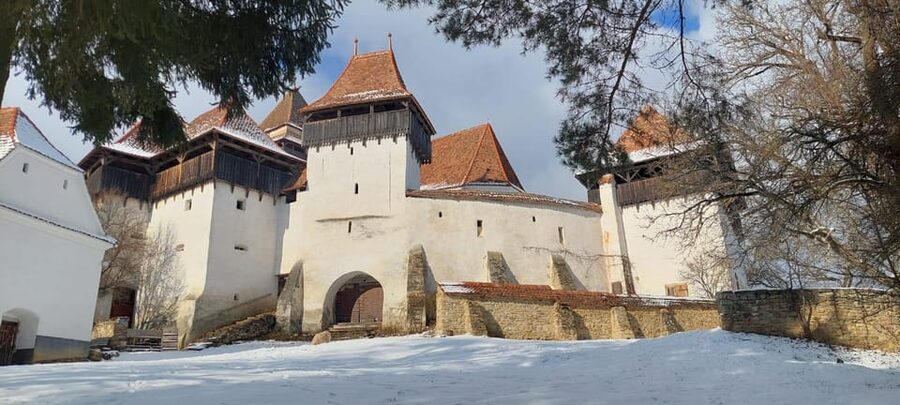
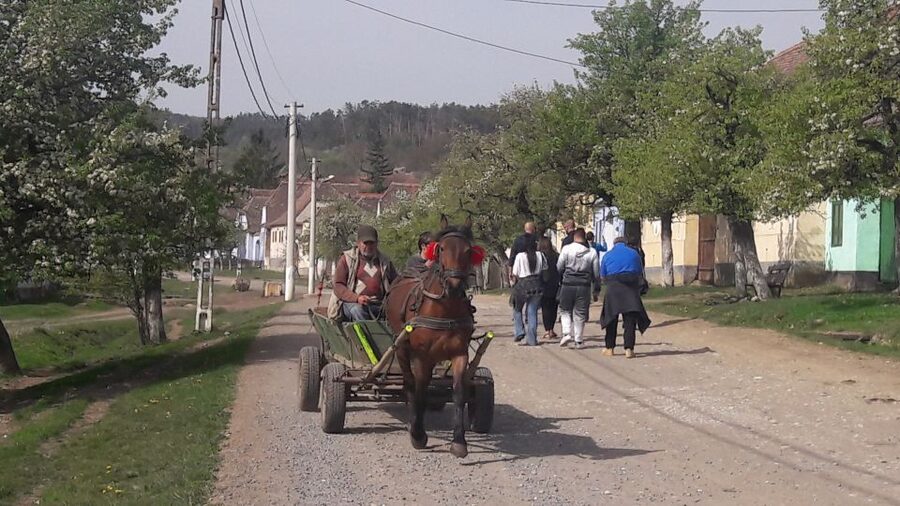
After the drive from Rupea, you reach Viscri for about 80 minutes. This is the most rural stop on the route, with rustic streets and traditional Saxon houses. The village gives the day a slower rhythm before Sighisoara brings you back into a more concentrated historic setting.
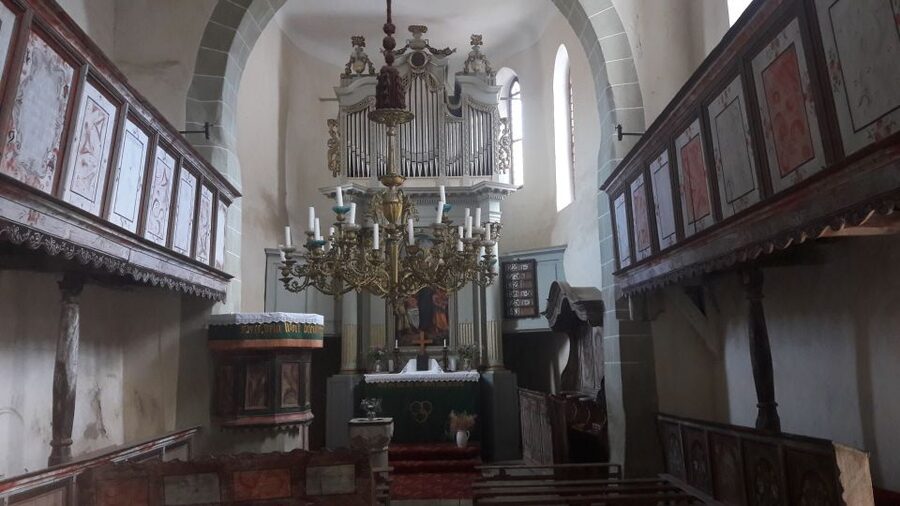
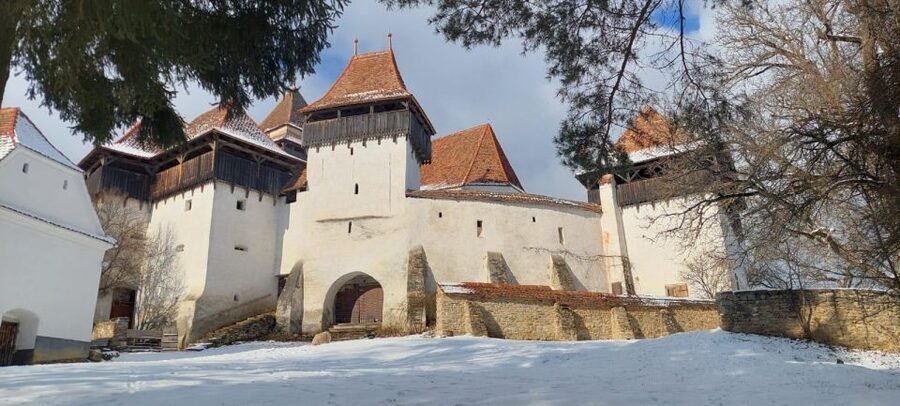
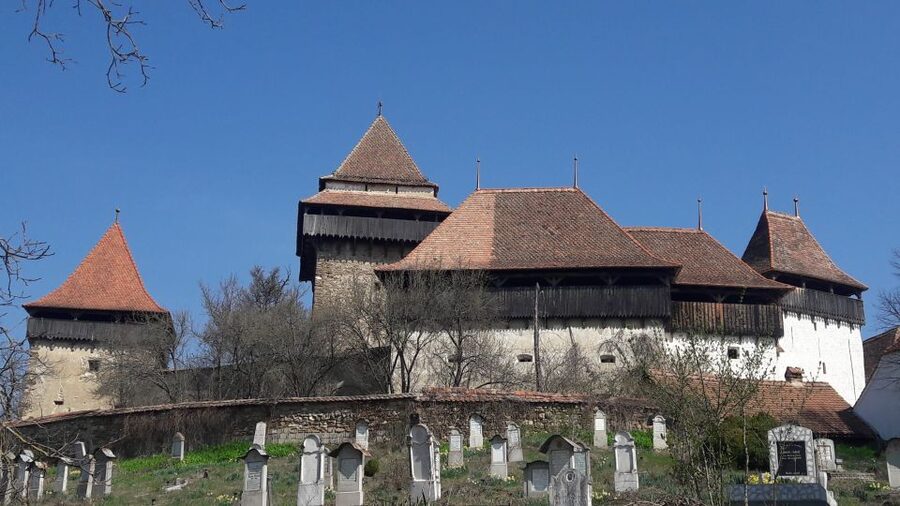
The name Viscri means the White Church, and the fortified church is the village’s focal point. You climb the hill to reach it, then look inside at the altar, walnut-wood sides, old balconies, and an organ that still works. These are small details, but they make the church feel like a living place rather than a monument reduced to a date and a photograph.
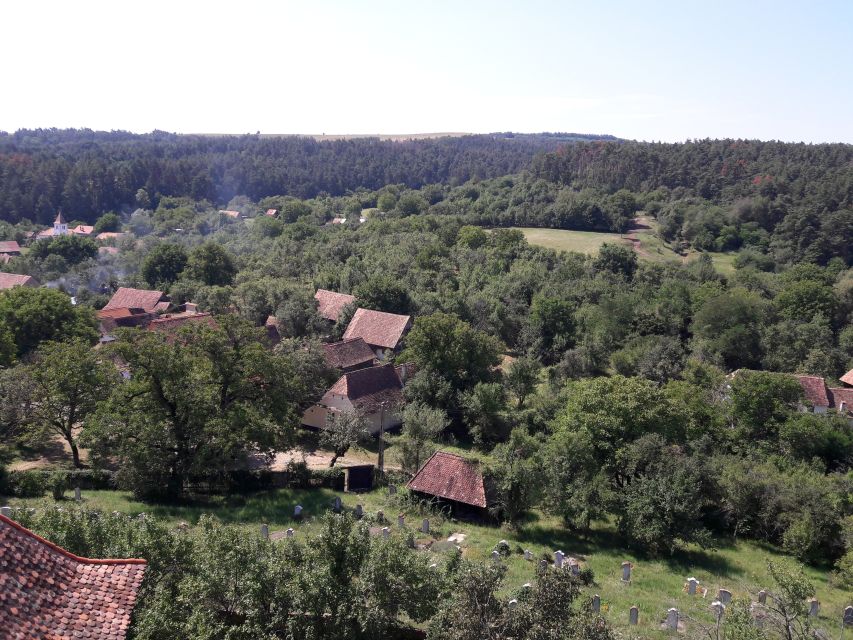
You can also climb the old tower for a panoramic view of the village and the hills around it. This is one of the tour’s best chances to see how the church relates to the settlement. From above, the rustic streets and Saxon houses make more sense as a village built around a protected religious center.
The stop may include Walter’s distillery and a taste of palinca, the strong fruit brandy associated with Romania. This is a brief cultural touch, not a full food tour, but it adds something personal to the visit. You are not just looking at buildings. You are getting a taste of a local tradition.
Some guides have added a stop at a traditional inn in Viscri for tea, though that should not be treated as a guaranteed part of every departure. The same applies to lunch arrangements later in the day. Ask your guide about the plan if food is important to you.
Viscri is also where the tour feels least polished in the commercial sense. Its appeal comes from its rustic streets and old homes, not from a long row of attractions. If you want a carefully staged museum visit, this may feel modest. If you like seeing a village with a strong sense of place, it is a valuable stop.
Sighisoara in three hours
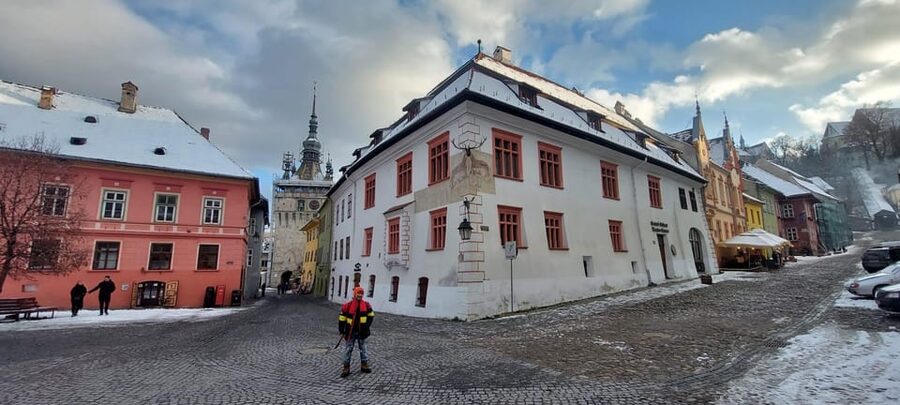
The final major stop is Sighisoara, with around three hours for a guided visit, walking, sightseeing, a break, and free time. This is the part of the day most people will remember, and it deserves your full attention.
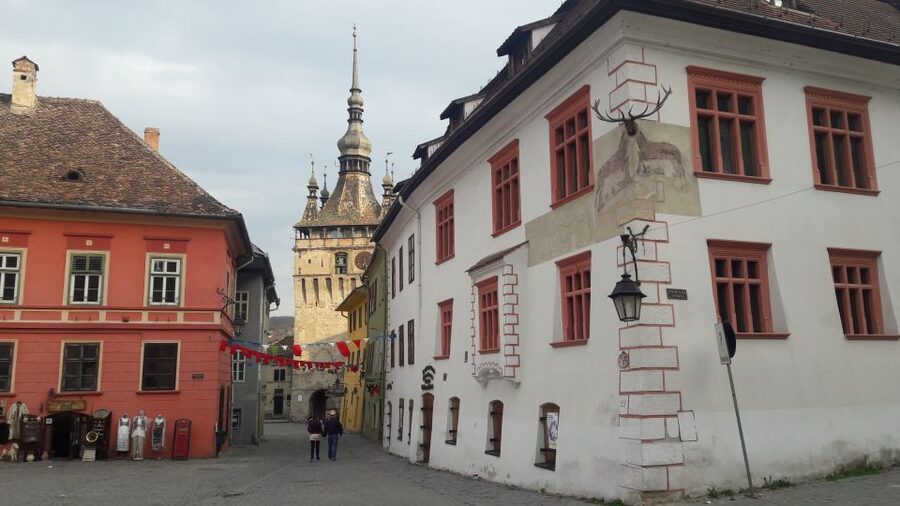
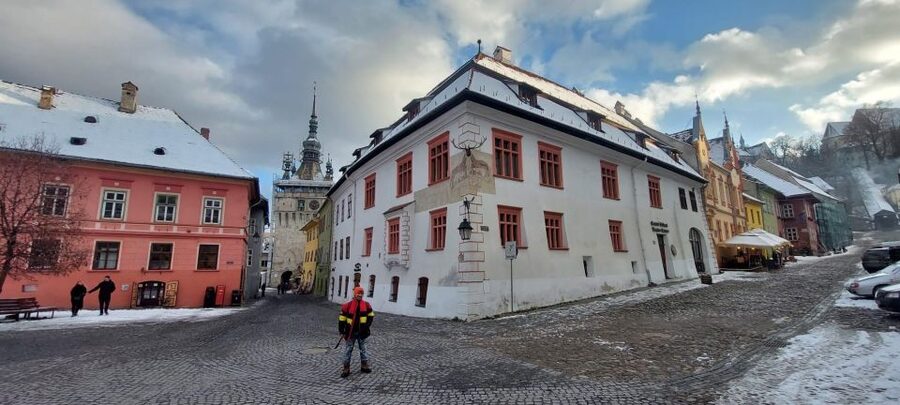
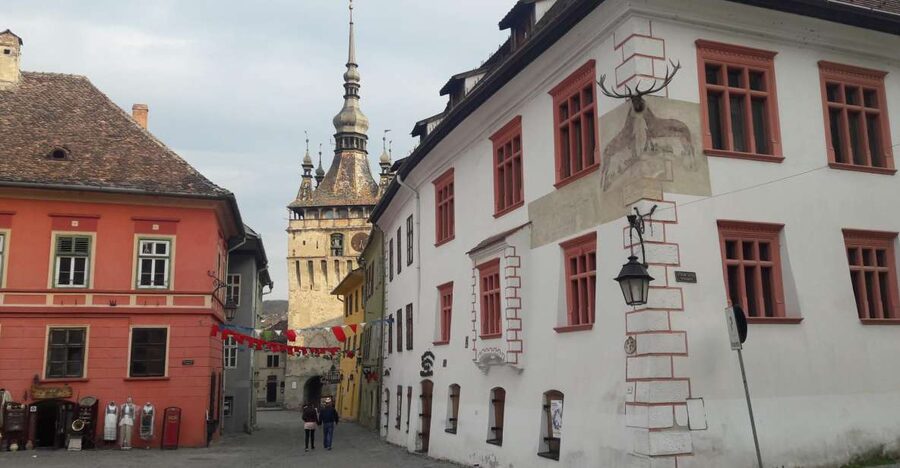
Sighisoara played an important strategic and commercial role at the edge of Central Europe for centuries. Its old fortress is compact enough to explore on foot, but its steep lanes and close-set buildings make every turn feel layered. The brightly colored houses are not mere decoration. They help give the citadel its particular character.
The clock tower is the obvious starting point. It is one of the city’s key landmarks and a useful place to orient yourself. From there, your guide can point out several historic buildings, including the Deer House, the Mayor’s House, and the Venetian House.
The house associated with Vlad Tepes, the figure linked with the Dracula legend, is another popular stop. The value here is not only the connection to Dracula. It places a famous name inside the real medieval town, where the narrow streets and fortified buildings provide the setting that later fed the legend.
You should leave room for independent wandering. The guided portion helps you understand what you are seeing, while free time lets you set your own pace. You might focus on the clock tower and the main streets, or pause for lunch in the historic center before the two-hour drive back to Brasov.
Three hours is enough for a useful introduction, but it is not enough to inspect everything slowly. If you want a long museum visit, an unhurried meal, and every viewpoint, you may feel pressed. I would make a short priority list before arrival: clock tower, Vlad Tepes’s house, the main square or streets, and a little time simply walking without a schedule.
This is also the stop where the guide’s storytelling matters most. Sighisoara can be reduced to Dracula references, but the city has a much broader story as a strategic and commercial center. A good guide, such as Claudiu or Traian on some departures, can connect the buildings to Romania’s wider past and present.
Same base, a completely different day out:
- Dracula’s Castle, Peles Castle and Brasov Day Trip from Bucharest
★ 4.5 · 1,804 reviews - Bucharest: Top Gear Road – Transfăgărășan Highway Day Trip
★ 4.7 · 948 reviews - Small-Group Day Trip to Dracula’s Castle, Brasov and Peles Castle
★ 4.5 · 935 reviews - Bucharest: Salt Mine Day Trip to Slănic
★ 4.6 · 869 reviews
Transport, timing, and the value of the price
At $138 per person, this is not the cheapest way to see Transylvania. The price makes more sense if you value convenience, a small group, and a guide who remains involved at each site.
You receive hotel pickup and drop-off in Brasov, transport in a luxury air-conditioned van, an English-speaking guide, maps, and Wi-Fi through a hotspot in the private vehicle. You also avoid piecing together several rural journeys, which can be difficult when three separate destinations are involved.
The luxury van is especially welcome on the return leg. After walking around a fortress, climbing at Viscri, and spending several hours on cobbled streets in Sighisoara, a comfortable seat matters. The road time is still road time, but it is easier to use for resting, looking out the window, or asking the guide questions.
Entrance fees and lunch are not included. That keeps the base price clear, but you should add those costs to your day’s budget. You may also want money for a drink, a snack, or the palinca tasting if an additional charge applies. The tour accepts reserve now and pay later bookings, and cancellation is free up to 24 hours in advance, which helps if your Brasov plans are still shifting.
The best value comes when you would otherwise need to hire a car, arrange a driver, or spend time solving transport connections. If you already have a rental car and prefer to set your own schedule, the fixed nine-hour format may feel less attractive.
Who will enjoy this day most
I would recommend this tour to a first-time visitor using Brasov as a base, especially if you want to see more of Transylvania without changing hotels. It suits people who prefer history, architecture, village life, and scenic drives over a packed list of indoor attractions.
It is also a good fit for solo visitors and couples who want company but not a large coach group. The maximum of seven allows questions and makes hotel pickup less cumbersome. The guide can also respond to practical needs, as Dan did for one passenger who needed an ATM.
You should be comfortable walking for much of the day. Rupea involves a hilltop fortress, Viscri includes a climb to the church and tower, and Sighisoara has narrow streets and uneven historic surfaces. Comfortable shoes are essential. Bring sunglasses and a sun hat as advised, particularly for the exposed fortress and tower views.
Families with older children may enjoy the variety, especially the fortress and tower climbs. Very young children may find the nine-hour schedule tiring, but the van provides a place to rest between stops. The tour is conducted in English, so it is best suited to people who can follow an English-speaking guide.
Practical tips for a better day
Keep breakfast simple but substantial, since lunch is not included and the first scheduled stop comes after a drive from Brasov. Ask the guide when and where lunch will fit into the Sighisoara portion.
Do not spend all your free time taking photographs at the first few buildings. Sighisoara is compact, and the most satisfying visit usually includes a little wandering beyond the main sights.
At Viscri, listen for the smaller details inside the church. The altar, walnut wood, balconies, and organ tell you more about the building than a quick look at its white exterior. Then climb the tower if conditions and your comfort allow.
Bring a small amount of local currency or another accepted payment method for personal expenses. The tour does not include entrance tickets or lunch, and one guide has helped a passenger find an ATM, but it is better not to rely on that.
Finally, use the road time. Guides have been praised for discussing Romanian culture, geography, politics, wildlife, and daily life between the stops. Those conversations can turn a sightseeing loop into a better understanding of the country.
Should you book it?
Book this tour if you want the main sights handled in one day, value a small group, and prefer a guide to explain the places rather than leave you at the gate. The mix is strong: Rupea provides the fortress, Viscri supplies village life and a working church, and Sighisoara delivers the most memorable medieval streets.
Skip it if you want a slow, independent day or plan to spend an entire day in Sighisoara alone. At $138, with admissions and lunch extra, it is a convenience purchase. For many people based in Brasov, that convenience is the point, and the route gives you far more variety than a simple city excursion.
FAQ
How long does the tour last?
The experience lasts about nine hours, including pickup in Brasov, visits to Rupea, Viscri, and Sighisoara, and the return drive.
Where does pickup take place?
Pickup and drop-off are available at all hotels in Brasov.
What language is the tour conducted in?
The tour is conducted in English with a live English-speaking guide.
How large is the group?
The group is limited to seven participants.
What transport is provided?
You travel in a luxury, air-conditioned van. Free Wi-Fi is available through a hotspot in the private vehicle.
How much time is spent at Rupea Fortress?
The guided visit at Rupea Fortress lasts about one hour.
How long is the visit to Viscri?
The Viscri stop lasts about 80 minutes and includes a guided visit, time for photographs, and the fortified church.
How much free time is available in Sighisoara?
The Sighisoara stop lasts about three hours, including a guided visit, walking, sightseeing, a break, and free time.
Are entrance tickets included?
No. Entrance tickets are not included in the tour price.
Is lunch included?
No. Lunch is not included, so you should budget separately for food.
Can I cancel the booking?
You can cancel up to 24 hours in advance for a full refund. You can also reserve now and pay later.
Just added around Romania
- Private Half Day Trip to Snagov Monastery & Mogosoaia★ 4.1 · 29 reviews
- From Bucharest: Castles, Carpathians, and Brașov Day Trip★ 4.6 · 153 reviews
- Bucharest: Day Trip to Danube Delta Small Group Premium Tour★ 4.6 · 24 reviews
- Minivan 8: Peles & Dracula’s Castle and Brasov Full-Day Trip★ 4.6 · 29 reviews
- From Cluj: Turda Salt Mine, Gorge, and Remetea Full-Day Trip★ 5.0 · 84 reviews
- From Bucharest: Peles Castle, Brasov & Bran Castle Day Trip★ 4.4 · 450 reviews
- Bucharest Minivan: Peleș Castle & Slănic Salt Mine Day Trip★ 4.9 · 21 reviews
- From Bucharest: Full-Day Trip to Dracula Castle★ 4.5 · 43 reviews
Romania Day Trips, compared.
Bucharest: Dracula Castle, Peles Castle & Brasov Old Town
Read our review →
Bucharest: Dracula’s Castle, Peleș Castle & Brașov Day Trip
Read our review →
Bucharest: Day Trip to Dracula Castle, Peles Castle & Brașov
Read our review →
Dracula’s Castle, Peles Castle and Brasov Day Trip from Bucharest
Read our review →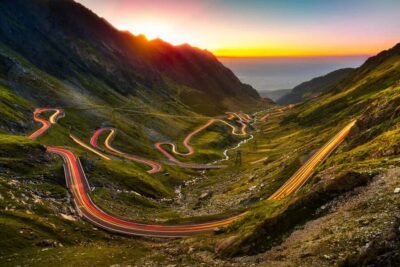
Bucharest: Top Gear Road – Transfăgărășan Highway Day Trip
Read our review →
Small-Group Day Trip to Dracula’s Castle, Brasov and Peles Castle
Read our review →
Bucharest: Dracula’s Castle, Peles Castle & Brasov Day Trip
Read our review →Browse the lists this tour appears in