
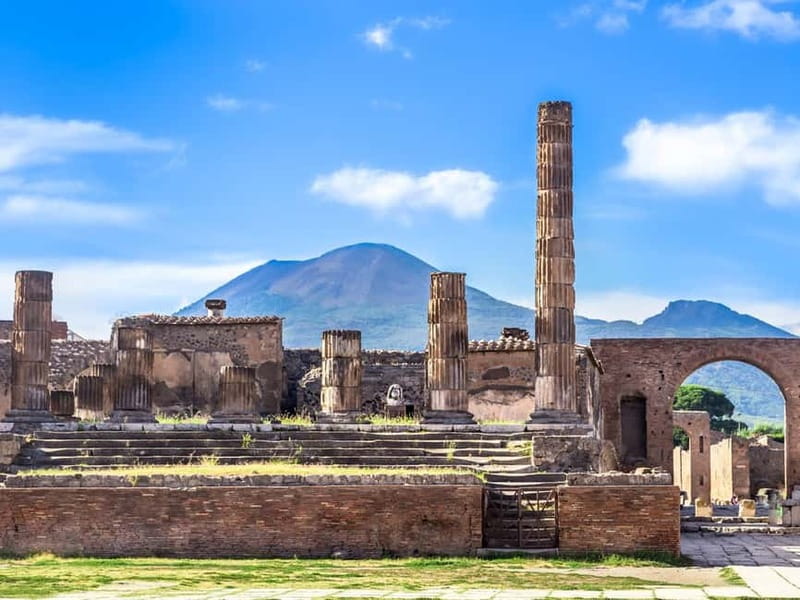
Review · NAPLES
From Naples Port: Pompeii and Mt. Vesuvius Day Trip
Mount Vesuvius and Pompeii make a natural pair: one shows the volcano that shaped Campania, while the other shows the Roman town it buried. This 6.5-hour trip handles the transport from Naples Port, leaving you to climb the final stretch of Vesuvius and explore Pompeii at your own pace.
I like the comfortable air-conditioned minibus and the clear split between the two major stops. You get about 90 minutes at Vesuvius and two hours at Pompeii, with tickets included and no need to arrange separate transfers. The drawback is just as clear: there is no live guide, so Pompeii depends on the supplied audio guide and your ability to follow an itinerary on your own.
Key points to know before booking

- The Vesuvius walk begins at 1,000 meters: You ride most of the way up, then walk to the crater rim.
- Pompeii time is self-guided: Choose from the available audio itineraries rather than following a guide through the ruins.
- Transport is the backbone of the day: The route includes roughly 45-minute rides between Naples, Vesuvius, and Pompeii.
- The Pompeii ticket is included: The listed entrance value is €20, along with Vesuvius entry and port transfers.
- Bring valid identification: You need ID to rent the audio guide, and large bags are not allowed.
- The timing is well controlled: The bus returns to the same meeting point outside Hotel Romeo near the port.
Why pair Pompeii with Mount Vesuvius?

Pompeii can feel like a large puzzle. You walk through streets, houses, public buildings, and entertainment spaces, but the volcano gives the whole site its setting and story. Visiting Vesuvius first helps you understand the force behind the disaster before you see its effects in the town below.
The two stops also offer a useful contrast. Vesuvius is open air, steep, and exposed, with wide views across the Gulf of Naples. Pompeii is flatter in places but demands more concentration, since you are reading an ancient town one building at a time.
I like this combination because it avoids spending a full day on only one archaeological site. You get a physical walk at the volcano, then a slower cultural visit at Pompeii. It is a busy outing, but the two experiences do not feel identical.
The main trade-off is depth. Two hours at Pompeii is enough to see selected highlights, not every street and building. If your main goal is detailed archaeology, a longer Pompeii visit with a live guide may suit you better. If you want the two essential sights from a port stop, the compact format makes good sense.
A few more day trips around Naples worth a look
- From Naples: Sorrento, Positano & Amalfi Coast – Small Group Tour
★ 5.0 · 8,643 reviews - From Naples: Amalfi Coast Full-Day Trip
★ 4.5 · 4,354 reviews - Pompeii & Mt.Vesuvius Day Tour from Naples with Pizza Lunch
★ 4.0 · 2,901 reviews
Meeting outside Hotel Romeo near Naples Port
The tour begins outside Hotel Romeo on Via Cristoforo Colombo, 45. This is an important detail for anyone arriving by cruise ship or ferry. You are not collected from every berth, so allow enough time to leave the port area and reach the stated meeting point.
The same spot is used at the end of the outing. That makes the return simple, especially if you have onward plans in Naples or need to get back to your ship. Still, I would avoid scheduling anything too close after the stated 6.5-hour duration. Road conditions can affect the 45-minute transfers.
The driver speaks English. This is a transport-led experience rather than a continuously narrated tour, so do not expect a running explanation during every road section. The strength is efficient movement between places that are awkward to connect by public transport in a single half-day.
The minibus is described as comfortable and air-conditioned. That matters in Campania, especially after the uphill walk at Vesuvius and during warmer months. The transportation also keeps you from having to arrange a taxi or manage separate tickets for each site.
Walking up to the crater at 1,000 meters
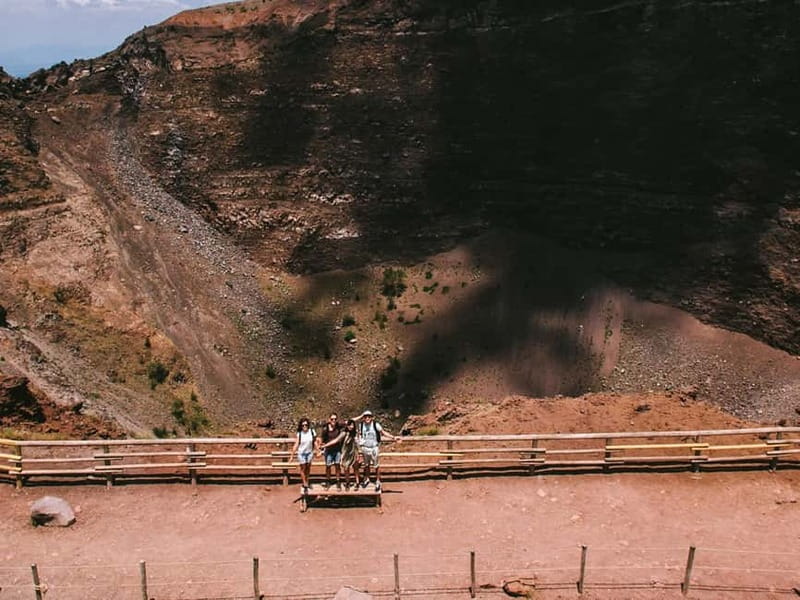
The first major stop is Mount Vesuvius. The minibus takes you to about 1,000 meters above sea level, where you leave the vehicle and continue on foot. You are not hiking from the base of the volcano, but the final approach still requires a steady uphill walk.
The reward comes quickly as the views open toward the Gulf of Naples, the coast, and nearby islands. The route is as much about looking outward as looking into the crater. From the rim, you can gaze down into the dark volcanic hollow and then turn back toward the water and settlements below.
You receive about 1.5 hours here. That window needs to cover the walk up, time at the crater, photographs, and the return to the bus. I would keep an eye on the clock rather than lingering too long at the first viewpoint. The return transfer to Pompeii is part of the planned schedule, so the minibus cannot wait indefinitely for a slow walker.
This stop requires more physical effort than Pompeii. The supplied details do not describe the trail surface or the exact gradient, so you should prepare for an uphill volcanic path rather than a flat paved promenade. Wear shoes suited to walking and bring water, even though water is not listed as an included item.
The visit is short enough to fit neatly into the day, but not long enough for a relaxed mountain outing. That is the right expectation. You are getting a focused crater visit and views over the Gulf, not a full hiking experience on Vesuvius.
The 45-minute ride to Pompeii

After Vesuvius, you return to the minibus for the journey to Pompeii. The planned transfer takes about 45 minutes. This break is useful: you can rest after the climb and reset before entering the archaeological site.
The order also works well from a practical point of view. The uphill walk comes first, while your legs are fresh. Pompeii then gives you two hours to move at a slower pace, listen to the audio guide, and focus on the remains of the Roman town.
Since there is no live guide, this is a good time to decide what you want from Pompeii. You can treat the visit as a broad introduction, moving between several types of buildings, or choose a smaller number of places and listen more carefully. Trying to cover every corner in two hours would make the visit feel rushed.
Same base, a completely different day out:
- Naples: Pompeii & Mt Vesuvius All-Inclusive Small Group w/ Lunch
★ 4.5 · 2,748 reviews - From Naples: Ravello & Amalfi Coast in Small Group
★ 5.0 · 2,406 reviews - From Naples: Pompeii & Amalfi Coast Full-Day Trip with Lunch
★ 4.5 · 2,155 reviews - From Naples or Sorrento: Amalfi Coast Full-Day Trip
★ 4.7 · 2,043 reviews
Choosing an audio itinerary inside Pompeii
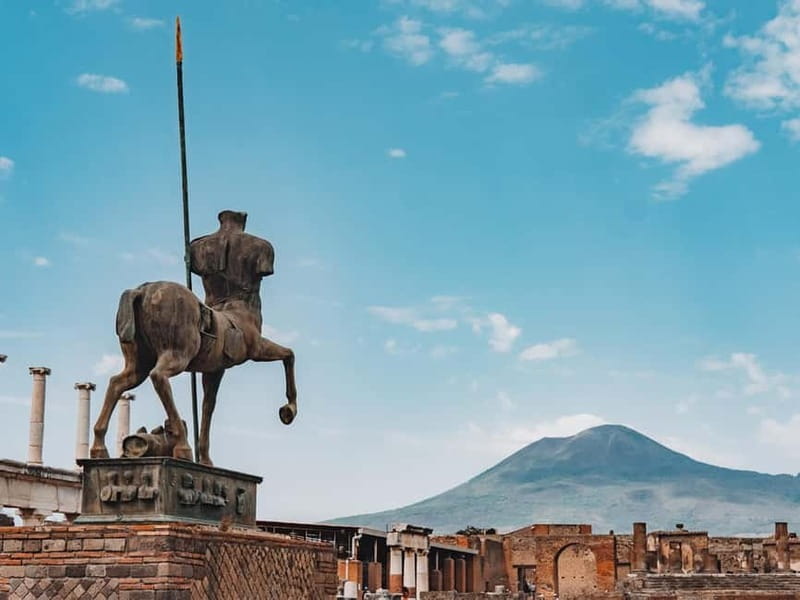
Before entering the ruins, you choose an itinerary for the audio guide. This is a useful feature because Pompeii can be confusing without a plan. Instead of wandering through a huge site with no sense of direction, you receive a route shaped around the available audio content.
The guide is offered in Chinese, Dutch, English, French, German, Hebrew, Italian, Portuguese, Russian, and Spanish. That range makes the visit more accessible for many people, though the driver and general tour language are listed as English.
You need a valid passport or ID card to rent the audio guide. This is easy to overlook, so keep your identification with you rather than leaving it in luggage. Large bags are not allowed, another reason to travel with only a small day bag.
The audio format gives you freedom. You can pause, move ahead, or spend extra time looking at a fresco or room that catches your attention. The cost is less personal than a live guide, however. You cannot ask a follow-up question or have someone point out a detail you might miss.
I would use the audio guide as a framework, not as a command to rush from stop to stop. Listen to the sections that interest you, then take a moment to look at the walls, street plan, and scale of the buildings without headphones.
What to see in two hours at Pompeii
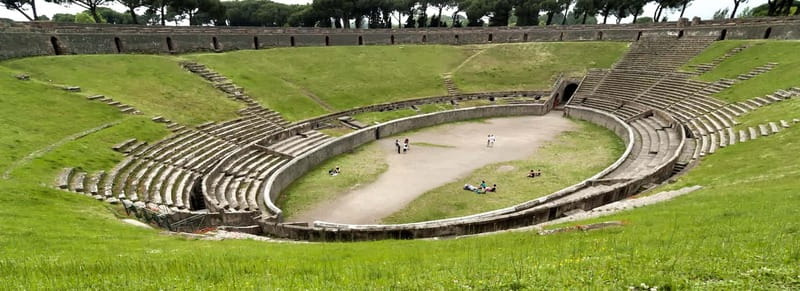
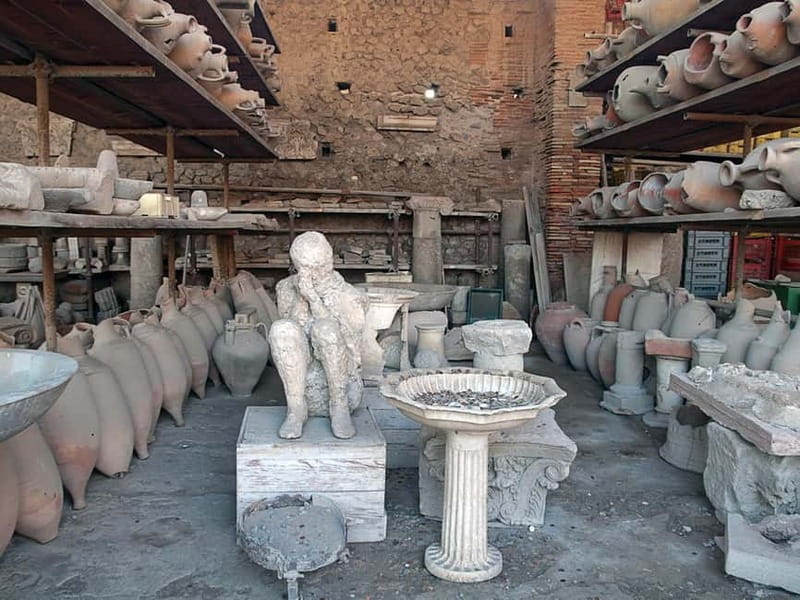
Pompeii preserves far more than a few broken columns. The visit includes frescoed domus, amphitheaters, houses, brothels, and other remains of daily and public life. These buildings help you picture a functioning Roman town rather than a single disaster frozen in time.
The frescoed homes are among the most rewarding stops. Their painted walls show how much care and money could go into private interiors. In an ancient town where many structures are incomplete, surviving decoration gives you a direct sense of the people who lived there.
The amphitheaters shift the focus from private life to public entertainment. Houses show how people lived, while the arenas reveal how the wider community gathered. The audio guide can help explain these different spaces and give the ruins a human scale.
The brothels are another reminder that Pompeii was a working town with ordinary, practical concerns. Seeing them alongside homes and public buildings helps you understand the site as a real community, not just a collection of famous ruins.
Two hours is enough for an introduction, but you need to make choices. I would not spend too long in the first group of buildings you encounter. Follow one of the audio itineraries, note the places you most want to see, and keep some time for simply walking the ancient streets.
The site can also be tiring because you are on your feet for both major visits. Vesuvius adds the uphill section, while Pompeii adds distance and uneven ancient surfaces. The tour works best if you are comfortable with a full morning or afternoon of walking.
Is the included price good value?

The total tour price is not provided here, so I cannot judge it against a precise amount. The listed Pompeii entrance ticket alone is €20, and the package also includes Vesuvius entry, transport to both sights, port pickup and drop-off, and the audio guide.
That bundle has real value if you are starting at Naples Port. The transfers remove the need to coordinate separate trains, buses, and entrance tickets. You also avoid spending time figuring out how to get from the volcano to Pompeii, which is the awkward part of arranging this combination independently.
The value is lower for someone who wants expert commentary throughout the day. A live guide is not included, and the experience leaves you responsible for following the audio itinerary and watching the time. You are paying for access and transport, not a private lesson in Roman archaeology or volcanology.
The ability to reserve now and pay later may help if your port schedule is still changing. Cancellation is free up to 24 hours before departure, according to the booking terms provided. Check the available starting times carefully, since a port visit gives you less flexibility than a stay in Naples.
Timing, comfort, and the small practical details
The published duration is 6.5 hours. The main blocks include a 45-minute ride to Vesuvius, about 1.5 hours at the volcano, a 45-minute ride to Pompeii, about two hours at the ruins, and a 45-minute return ride. The remaining time allows for meeting, boarding, entrance procedures, and movement between the vehicle and sites.
One of the strongest practical points is schedule control. The minibus keeps the day moving, and the stated plan gives you enough time to get a meaningful look at both places. You should still arrive at the meeting point early, since a late arrival can affect the entire route.
The air conditioning is a welcome feature, particularly after the exposed climb. There is no mention of food or drinks being included, so plan your own needs accordingly without relying on the tour for refreshments.
Do not bring large luggage. This outing is designed for a small day bag and identification, not suitcases or bulky shopping. Keep your passport or ID handy for the audio guide rental.
Who will enjoy this half-day combination?
I would choose this trip if you want the two headline sights near Naples but prefer organized transport. It is especially suitable for a port stop, when reliable timing matters and you do not want to spend your limited hours changing vehicles.
It also suits independent-minded visitors. You receive an audio guide rather than a live escort, so you can choose your pace and focus on the buildings that interest you most. The multilingual options are helpful if English is not your preferred listening language.
Families and mixed-interest groups may appreciate the variety. The volcano offers views and a physical challenge, while Pompeii provides streets, homes, arenas, and visual details. The format gives everyone something different to focus on.
I would think twice if you dislike uphill walking, need a slow archaeological visit, or want detailed explanations from a specialist. The Vesuvius portion is not simply a bus lookout, and Pompeii is not a quick photo stop. The day is manageable, but it asks you to stay active and keep to the timetable.
Should you book this Pompeii and Vesuvius trip?
Book it if you want a well-organized connection between Naples Port, Vesuvius, and Pompeii, with entry fees and a multilingual audio guide handled in one reservation. The comfortable, air-conditioned transport and reliable schedule are useful advantages, and the 4.5 rating from 24 reviews supports the impression of a well-run outing.
Choose another format if you want a live guide, a longer Pompeii visit, or a leisurely hike on Vesuvius. For most port visitors, though, this is a sensible way to see both the crater and the buried Roman town in one focused day. Bring ID, wear walking shoes, leave large bags behind, and treat the audio guide as a helpful route rather than a substitute for your own curiosity.
FAQ
Where does the tour start?
The meeting point is outside Hotel Romeo at Via Cristoforo Colombo, 45, near the Port of Naples.
Where does the tour end?
The activity ends back at the same meeting point outside Hotel Romeo.
How long does the experience last?
The listed duration is 6.5 hours. Check availability for the exact starting times.
Is transportation included?
Yes. Port pickup and drop-off are included, along with transfers to Mount Vesuvius and Pompeii.
How long is the ride to Mount Vesuvius?
The planned bus or minibus journey from the starting point to Vesuvius takes about 45 minutes.
How much time do you get at Mount Vesuvius?
You get about 1.5 hours at Mount Vesuvius, including the walk from approximately 1,000 meters to the crater area.
How much time do you get at Pompeii?
The planned visit to Pompeii lasts about two hours.
Is a live guide included?
No. A live tour guide is not included. An audio guide for the Pompeii ruins is provided.
Which languages are available for the Pompeii audio guide?
The audio guide is available in Chinese, Dutch, English, French, German, Hebrew, Italian, Portuguese, Russian, and Spanish.
Do I need identification?
Yes. You need a valid passport or ID card to rent the audio guide. Large bags and luggage are not allowed.
Just added around Naples
- From Naples: Procida Island Day Trip with Lunch★ 3.8 · 137 reviews
- Naples: Day Trip to Pompeii and Capri★ 4.4 · 272 reviews
- From Naples: Pompeii & Amalfi Coast Full-Day Trip★ 4.5 · 279 reviews
- Naples: Pompeii and Vesuvius Day Trip★ 4.1 · 90 reviews
- From Naples: Sorrento and Amalfi Coast Shared Day Trip★ 4.6 · 216 reviews
- From Naples: Herculaneum, Mount Vesuvius & Pompeii Day Trip★ 4.6 · 117 reviews
- From Naples: Pompeii and Vesuvius Guided Day Trip with Lunch
- From Naples: Day Trip to Mount Vesuvius★ 3.8 · 506 reviews
Naples Day Trips, compared.

From Naples: Sorrento, Positano & Amalfi Coast – Small Group Tour
Read our review →

Pompeii & Mt.Vesuvius Day Tour from Naples with Pizza Lunch
Read our review →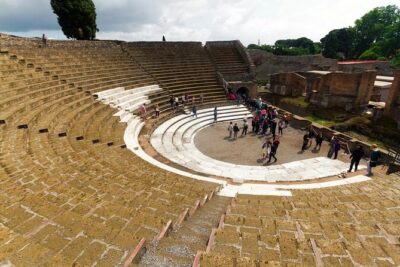
Naples: Pompeii & Mt Vesuvius All-Inclusive Small Group w/ Lunch
Read our review →
From Naples: Ravello & Amalfi Coast in Small Group
Read our review →
From Naples: Pompeii & Amalfi Coast Full-Day Trip with Lunch
Read our review →
From Naples or Sorrento: Amalfi Coast Full-Day Trip
Read our review →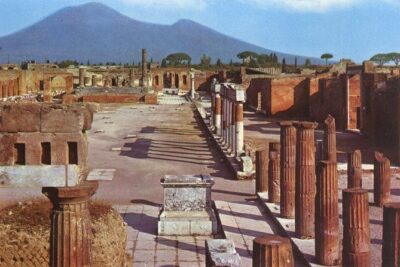
Explore Pompeii Half Day Highlights Tour with Pickup from Naples
Read our review →Browse the lists this tour appears in