
Review · FRANCE
From Strasbourg: Medieval Villages & Wine Tasting Day Trip
Alsace’s prettiest villages come one after another on this long day out from Strasbourg. You’ll walk cobbled streets in Ribeauvillé, Riquewihr, Kaysersberg, and Eguisheim, with vineyards and half-timbered houses filling the views between stops.
I like the generous free time, since you can skip the umbrella-following routine and choose your own cafés, shops, and photo spots. I also like the mix of village walks, wine tasting, and recorded history in your language. The drawback is the schedule: ten and a half hours is a lot, and some stops can feel short if you want a slow lunch or a detailed visit.
Key points
- Four principal medieval villages: Explore Ribeauvillé, Riquewihr, Kaysersberg, and Eguisheim at your own pace.
- Bergheim and Hunawihr add variety: See another walled village and stop for a photo at Hunawihr’s famous fountain.
- Wine tasting with a local producer: Taste traditional Alsatian wines, with non-alcoholic drinks available.
- Twelve audio-guide languages: Listen in English, Spanish, Chinese, German, Italian, and other languages while riding.
- Comfortable transport: The bus has USB ports, Wi-Fi, wide windows, and, on suitable days, an open roof.
- A full day for $147: The price makes sense if you want to reach several villages without renting a car or planning regional transport.
A full Alsace day from Strasbourg
This outing lasts 630 minutes, or about ten and a half hours. That sounds long because it is long, but the day is broken into short drives, village walks, a wine stop, lunch, and time to take in the vineyards.
You leave from Strasbourg’s Place de l’Étoile Gare Routière. Hotel pickup is not included, so allow time to reach the meeting point. The first drive takes about 45 minutes, giving you a useful transition from the city to the Alsace wine country.
The French-speaking driver handles the route, while the audio system supplies commentary in 12 languages. You receive a headset, so you can listen without trying to catch every word from the front of the bus. That setup suits an international group and lets you explore independently once you get off.
Martin is named repeatedly as a kind, patient, and organized driver, though the guide can vary by departure. One passenger had a less satisfactory experience with a guide named Sebastian, mainly because meeting instructions were not clear enough. The practical lesson is simple: listen carefully to the return time and meeting point at every stop, and repeat it back if you are unsure.
More Food Day Trips in France
- Normandy D-Day Small-Group Day Trip with Omaha Beach, Cemetery & Cider Tasting
★ 5.0 · 2,786 reviews - From Paris: Loire Valley Castles Day Trip With Wine Tasting
★ 4.6 · 1,727 reviews - Saint Emilion Half-Day Trip with Wine Tasting & Winery Visit from Bordeaux
★ 4.5 · 1,034 reviews
Bergheim, a quiet first look at the wine route
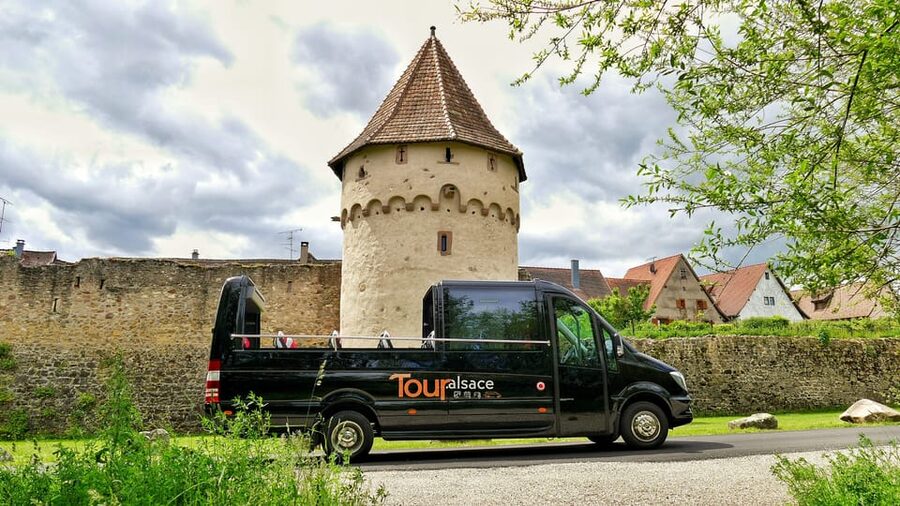
Bergheim comes early, mostly as a sightseeing stop and scenic drive. You pass through or around this handsome village, known for its medieval walls and less showy feel compared with Riquewihr.
This is not one of the four main free-time stops, so do not expect a long independent walk here. Still, Bergheim helps set the tone. You begin with a village that feels lived-in rather than built only for day visitors, then continue through vineyards and small communities on the way to Ribeauvillé.
The bus ride matters here. From the road, you see how tightly the villages sit against the vineyards, and the audio commentary explains what you are seeing. On a clear day, the wide windows make it easy to photograph the route without stopping every few minutes.
Ribeauvillé and the old Lords of Ribeaupierre
Ribeauvillé is your first substantial walk, with about an hour of free time. Its pedestrian streets once belonged to the Lords of Ribeaupierre, and the medieval connection is easy to feel in the old buildings and narrow lanes.
An hour gives you enough time to walk through the central streets, look into a few shops, and pause for photographs. It does not give you unlimited time for every side street, meal, and museum, so keep an eye on the clock.
I like having this first walk before the wine tasting. You get a sense of the region through architecture and street life, not only through a glass of wine. The village also helps you learn the rhythm of the day: the driver gives a clear return time, you wander alone, and you meet the group back at the coach.
Wear shoes with good grip. The route is not presented as suitable for people with mobility impairments or wheelchair users, and cobbled streets can make the walking more demanding.
Hunawihr and a fountain worth the camera
Hunawihr is primarily a sightseeing and photo stop. The coach passes through the village and pauses at its famous fountain, giving you a quick chance to take pictures before continuing to the winery.
This short stop adds a different pace. You are not trying to cover another full village, so you can simply look, photograph, and get back on board. If you prefer long walks at every stop, this part may feel rushed. If you like seeing more places without turning each one into a formal tour, it works well.
The drive through Hunawihr also keeps the focus on the wine route itself. You are not just hopping between isolated attractions. The villages, vines, roads, and old buildings make up one connected region.
More Wine Tasting Day Trips in France
- Loire Valley Castles Day Trip from Paris with Complementary Wine
★ 4.5 · 3,907 reviews - From Paris: Day Trip to Champagne with 8 Tastings & Lunch
★ 4.8 · 1,501 reviews - Saint Emilion Day Trip with Sightseeing Tour & Wine Tastings from Bordeaux
★ 5.0 · 1,120 reviews - Champagne Day Trip with 6 Tastings, Reims and Winery from Paris
★ 5.0 · 902 reviews
A local wine tasting with no sales pressure
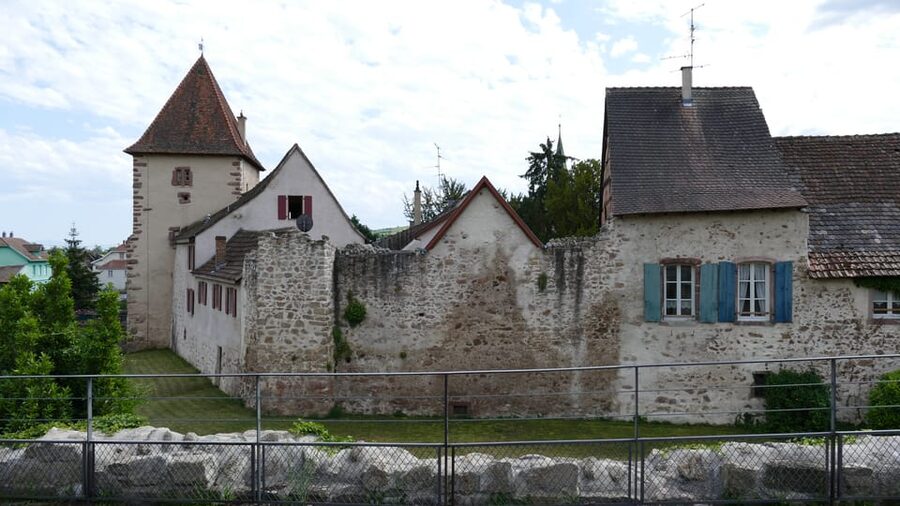
The winery visit lasts about an hour. You taste traditional Alsatian wines with a local producer, hear about the process, and have the chance to sample as much as you wish. A non-alcoholic option is available, so you do not need to drink wine to enjoy this part of the day.
The tasting is described as relaxed rather than pushy. There is no requirement to buy a bottle, which makes a difference if you want to learn rather than shop. You may also find this the most social part of the outing, since the group gathers in one place after exploring separately.
The main tradeoff is time. Some people would happily exchange the winery stop for another hour in Kaysersberg or Eguisheim. If wine is central to your visit, the stop adds real value. If your priority is architecture and quiet village wandering, it may feel like a compromise.
You are not provided with lunch or general drinks, so bring water and plan to buy food during the longer break in Riquewihr. One older account specifically noted that free water was not supplied. That remains useful advice for a full day, especially in summer.
Riquewihr gives you the longest village break
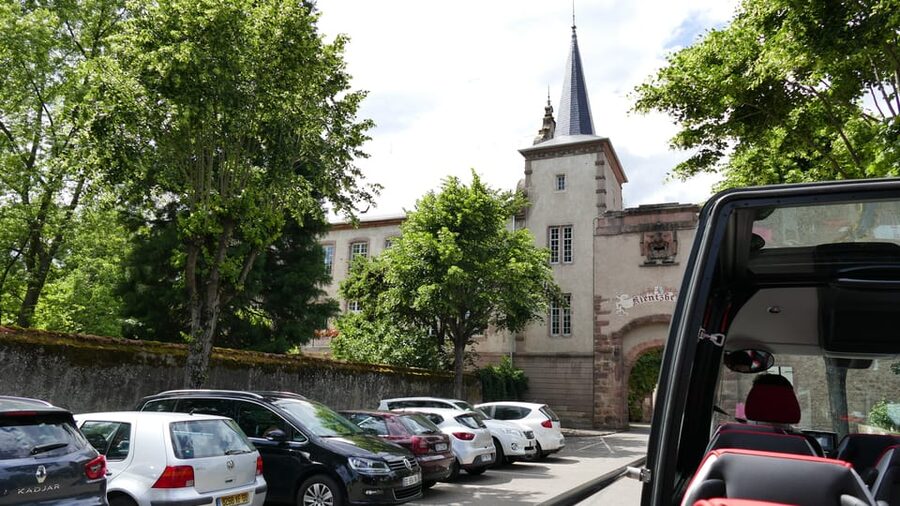
Riquewihr receives about 105 minutes, making it the best stop for lunch and a proper walk. This is one of Alsace’s most famous villages, set in the middle of the vineyards and packed with half-timbered buildings, colorful façades, small shops, and cafés.
The longer break is well judged. You can eat, explore, and still have time for photographs. It is also the busiest and most commercial-feeling stop of the day, so do not expect the same quiet mood as Bergheim or Hunawihr.
I recommend using the first few minutes to get your bearings, then choosing either lunch or a more focused walk. Trying to do a full meal, browse every shop, and cover every lane may leave you watching the clock. The village is compact enough for a good first look, but the schedule rewards a little planning.
Riquewihr is also where the tour’s self-guided format works best. You can choose a restaurant, look for regional specialties, or simply walk uphill and away from the main street. You are not tied to a group explanation at every doorway.
Scenic time on the Route des Vins d’Alsace
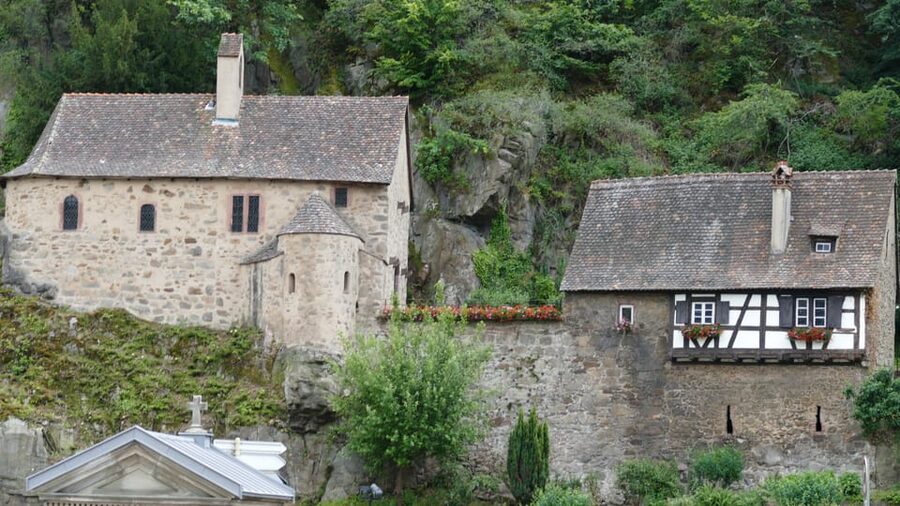
Several parts of the day are spent driving the Alsace Wine Route. This is not wasted time. The road connects the villages and gives you views of vineyards, church towers, wooded hills, and lines of old houses.
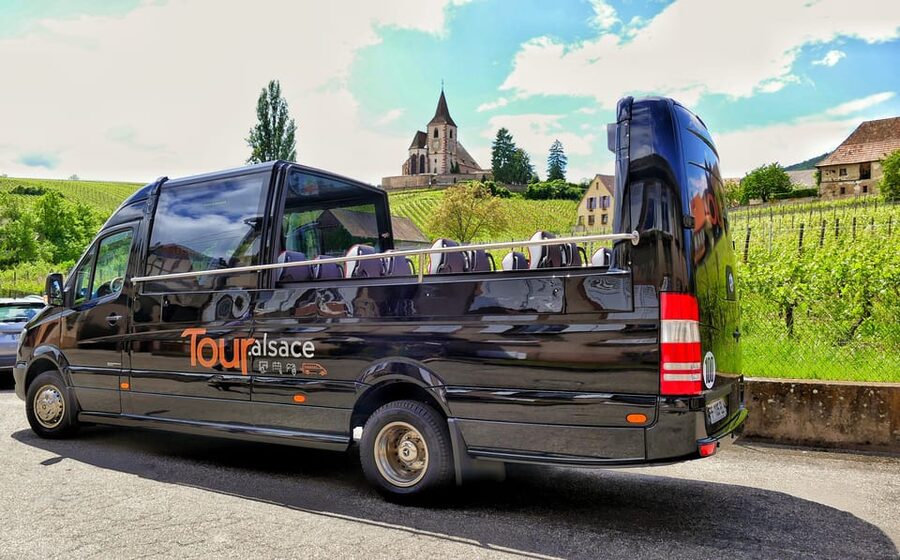
The coach has wide glass windows, and some departures use a roof that can open for a more open-air ride. In rain, the roof stays closed, but the large windows still provide good views. One practical warning: an open roof can feel cold and windy in the morning, so carry a light layer even in warmer months.
The vehicle has USB ports and free Wi-Fi. Those are useful on a long day, especially if you are taking many photos or need to conserve phone battery for navigation and pictures. The vehicle has been described as new, clean, and comfortable, though exact vehicle size may vary.
Kaysersberg, the 2017 favorite village
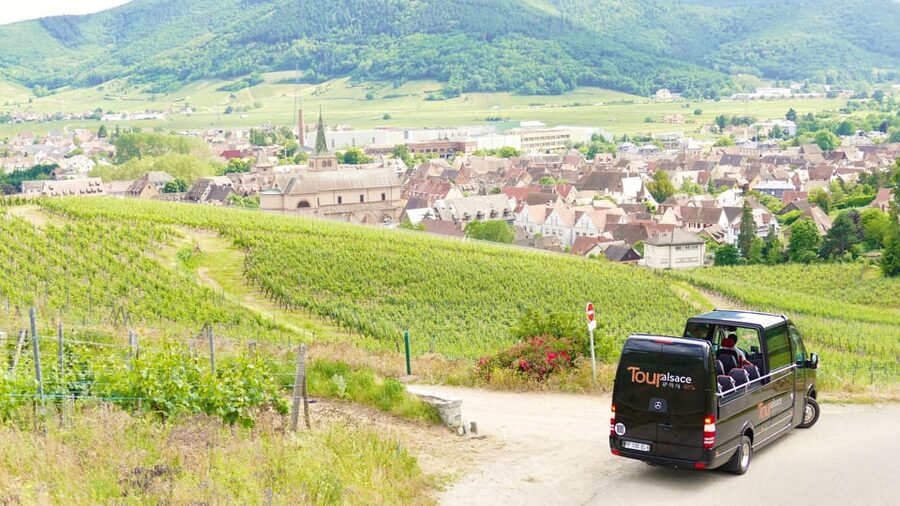
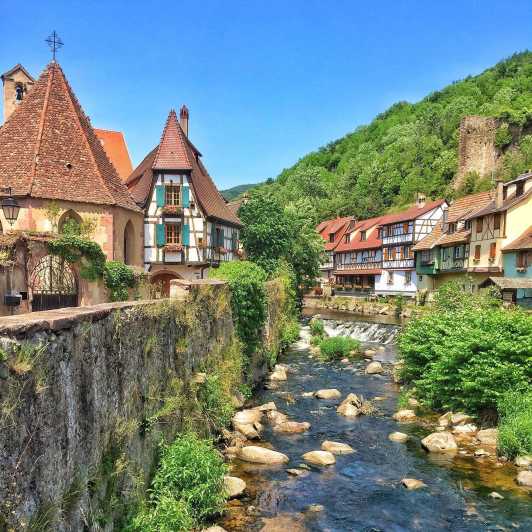
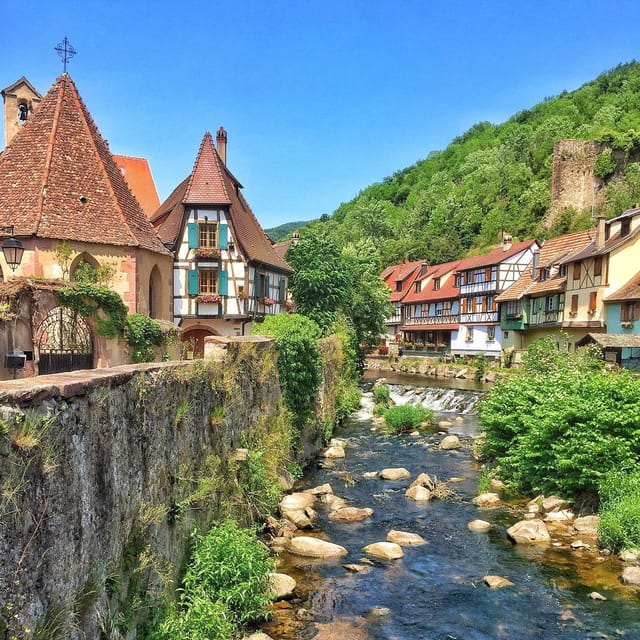
Kaysersberg receives about an hour of free time. It won the French Favorite Village program in 2017, and its appeal comes from the balance of medieval character, attractive streets, and a setting that feels less purely commercial than Riquewihr.
Use your hour to walk through the center and cross the small river area, then pause for the details you like best. The time is enough for an enjoyable introduction, but not for a slow meal and a thorough visit to every historic corner.
Kaysersberg can be a good stop for anyone who wants a little more room to wander. Some people would prefer a longer break here or at Eguisheim instead of giving so much time to the winery. That preference depends on your goal. This tour aims to show both the villages and the wine culture, not to offer the deepest possible visit to one town.
Eguisheim, the final village
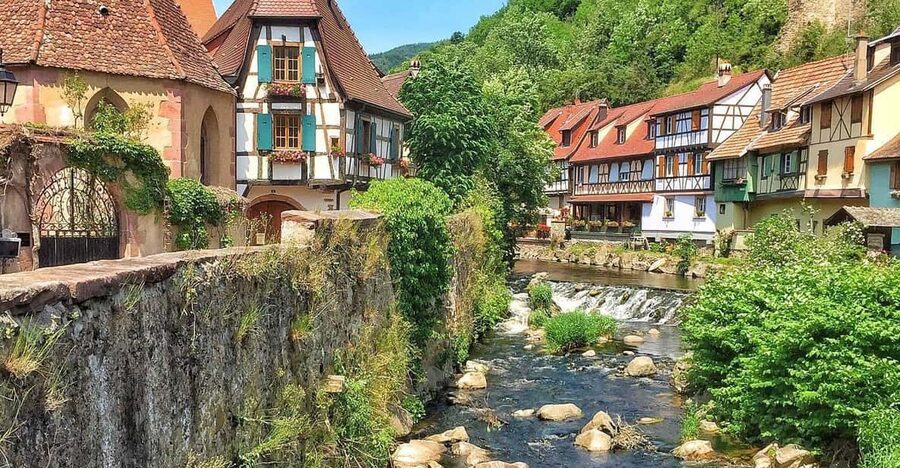
Eguisheim gets about 45 minutes, the shortest main stop. It was named the French Favorite Village in 2013 and is known for its circular medieval streets and strong fairytale appearance.
The short visit lets you see the central lanes and take photographs, but you will need to move with purpose. If you reach Eguisheim late in the afternoon, the light can be lovely, yet the limited time may feel frustrating if you want to stop for food or browse slowly.
This is the clearest weakness in the schedule. Kaysersberg and Eguisheim are not as long as Riquewihr, and some people would gladly move time from the wine tasting or another stop to one of them. Still, Eguisheim works well as a final visual burst before the ride back to Strasbourg.
What $147 buys you
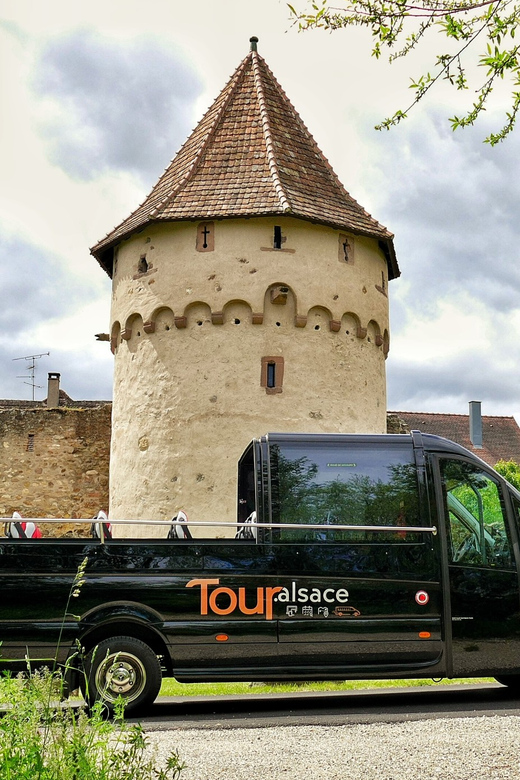
At $147 per person, this is not the cheapest way to see the Alsace villages. You are paying for a full day of transport, parking, a local wine tasting, audio commentary, Wi-Fi, USB charging, and a carefully arranged route through several villages.
The value is strongest if you do not have a car. Reaching four main villages plus Bergheim and Hunawihr by public transport in one day would be difficult, and arranging the connections yourself would take time. A rental car gives you more freedom, but it also brings driving, parking, navigation, and the question of who gets to taste the wine.
The tour is less valuable if you want deep visits, long meals, or complete control over your timing. You will follow a fixed schedule, and the day is designed for broad coverage. Think of it as a regional introduction with real walking time, not a slow village holiday.
The rating is 4.8 from 329 reviews, with 90 percent giving transport a perfect score. The strongest pattern is clear: people value the organization, the number of stops, the comfortable vehicle, and the freedom to explore without a guide beside them at every moment.
Who should book this day trip
I would choose this outing if you are staying in Strasbourg and want a single, efficient day in the Alsace countryside. It suits first-time visitors, couples, photographers, wine-curious travelers, and anyone who prefers a planned route but independent village time.
It is also a good choice for mixed-interest groups. One person can browse shops, another can take photographs, and another can listen to the audio commentary, then everyone returns to the same coach.
You should think twice if you have limited stamina, use a wheelchair, or need a flexible pace. The tour is not suitable for children under four, people with mobility impairments, or wheelchair users. Comfortable shoes and a hat are sensible, and you should be ready to walk on old village streets in changing weather.
The French-speaking driver may offer personal help and clear instructions, but the main spoken commentary is supplied through the audio guide. If you need a fully live tour in English or another language, check the arrangement carefully before booking. The audio guide covers Spanish, Chinese, English, French, German, Hebrew, Japanese, Arabic, Korean, Portuguese, Russian, and Italian.
Final decision: a strong overview with a busy clock
Book this tour if you want the big picture: four famous Alsace villages, two extra glimpses, a wine tasting, and a scenic ride from Strasbourg without the work of driving.
I like the generous independent time and the way the audio guide leaves you free to explore. The main caution is the pace, especially at Eguisheim and Kaysersberg. If you accept that this is a long overview rather than a leisurely stay in one village, $147 is a fair price for the access and convenience.
The tour operates in rain or shine. Cancellation is free up to two days in advance, and the provider can cancel if too few people book, with a full refund. Check the starting time and exact meeting details before you leave, then bring water, comfortable shoes, and a light layer for the open-roof coach.
FAQ
Where does the tour leave from?
The meeting point is Strasbourg Place de l’Étoile Gare Routière, 67100 Strasbourg, France. Hotel pickup and drop-off are not included.
How long does the experience last?
The trip lasts 630 minutes, or about ten and a half hours. Starting times depend on availability.
Which villages do you visit?
You have free time in Ribeauvillé, Riquewihr, Kaysersberg, and Eguisheim. The route also includes sightseeing in Bergheim and Hunawihr, including a photo stop at Hunawihr’s fountain.
Is lunch included?
No. Food and drinks are not included. The longest break is in Riquewihr, where you can arrange lunch on your own.
Is the wine tasting suitable for people who do not drink alcohol?
Yes. Non-alcoholic beverages are available during the wine tasting.
What languages are available for the audio guide?
The audio guide is available in Spanish, Chinese, English, French, German, Hebrew, Japanese, Arabic, Korean, Portuguese, Russian, and Italian. The driver speaks French.
Is the tour suitable for wheelchair users?
No. The experience is not suitable for wheelchair users or people with mobility impairments. Children under four are also not permitted.
What should I bring?
Bring comfortable shoes and a hat. Water and a light layer are also practical for a full day, especially when the coach roof is open or the weather changes.
More Food & Cooking Day Trips around France
- Bordeaux: St. Emilion Day Trip with Wine Tasting and Lunch
★ 4.9 · 251 reviews - Tours/Amboise: Chambord, Chenonceau Day Trip & Wine Tasting
★ 4.6 · 138 reviews - Provence Day Trip with Cassis Village Boat Ride and Local Wine Tasting from Aix
★ 5.0 · 104 reviews - Rome: Tuscany & Montepulciano Day Trip with Lunch & Wine Tasting
★ 4.5 · 5,232 reviews
More Wine Tasting Day Trips around France
- Loire Valley Wine and Castles Small-Group Day Trip from Paris
★ 5.0 · 613 reviews - Bordeaux: Vineyards Wine Tasting Half-Day Trip
★ 4.2 · 470 reviews - Marseille: Calanques Sailing Day Trip with Lunch and Wine
★ 4.8 · 411 reviews - From Paris: Small-Group Champagne Day Trip with Six Tastings
★ 4.9 · 289 reviews
Just added around France
- Luberon Market & Villages Day Trip from Aix-en-Provence★ 5.0 · 250 reviews
- Luberon Villages Day Trip from Aix en Provence★ 5.0 · 23 reviews
- Provence Day Trip with Cassis Village Boat Ride and Local Wine Tasting from Aix★ 5.0 · 104 reviews
- Provence Wineries and Luberon Villages Day Trip from Aix-en-Provence★ 5.0 · 178 reviews
- Provence in a Day Trip from Aix★ 4.5 · 136 reviews
- Cassis Half-Day Trip from Aix-en-Provence★ 4.5 · 91 reviews
- Toulouse: Carcassonne Day Trip by Coach with Audioguide★ 4.4 · 580 reviews
- Toulouse: Albi and Cordes/Ciel Day Trip with Audio Guides★ 4.5 · 486 reviews
Wine Tasting Day Trips, compared.
Tuscany Day Trip from Florence: Siena, San Gimignano, Pisa and Lunch at a Winery
Read our review →
Pisa, Siena and San Gimignano Day Trip with Lunch & Wine Pairing
Read our review →
Rome: Tuscany & Montepulciano Day Trip with Lunch & Wine Tasting
Read our review →
San Gimignano, Siena, Monteriggioni, Chianti Day Trip with Lunch & Wine Tasting
Read our review →
Florence: Pisa, Siena, S. Gimignano, Chianti Wine & Lunch
Read our review →
Loire Valley Castles Day Trip from Paris with Complementary Wine
Read our review →
Boston to Martha’s Vineyard Day Trip with Optional Island Tour
Read our review →
Day Trip to Kakheti Wine Region Including 9 Wine Tastings
Read our review →Browse the lists this tour appears in