
Review · JAPAN
Osaka: Nara and Uji Day Trip with Deer Park and Hot Spring
Nara’s deer are the main event, and they know exactly who is carrying deer crackers. Buy or accept a pack, hold it where eager animals can see it, and you may soon have a small crowd at your sleeves. I like that this trip pairs that playful park visit with Todai-ji’s Great Buddha and the lantern-lined Kasuga Taisha Shrine.
I also like the change of pace in Uji, where matcha sweets, noodles, temples, and the Tale of Genji create a very different afternoon. Ending at Genji no Yu hot spring is a smart way to settle tired legs, though the 10-hour schedule can feel tight if you want long visits inside every temple.
Key points to know before booking
- Deer crackers bring the action: The deer in Nara Park can be eager, so keep your hands moving once the crackers are gone.
- Three major stops in one day: You visit Nara Park, Todai-ji, Kasuga Taisha, and Uji, but this is a highlights tour rather than a slow cultural walk.
- Uji is made for matcha lovers: Look for matcha ice cream, cakes, souvenirs, and even green tea soba noodles.
- The hot spring is a real Japanese bath: Genji no Yu has three indoor baths and one outdoor bath, with no clothing worn in the bathing area.
- Guiding quality matters: Guides named Etta, Lucia, Ethan, Karin, Jack, and Nick Lee have received especially warm praise for clear explanations, humor, and organization.
- Admission is extra: Todai-ji, Byodo-in Temple, and the onsen are not included in the $57 price.
What this Osaka day trip is really like
This is a long shared coach trip built around variety. You leave from the Namba and Shinsaibashi area, spend the morning among Nara’s deer and temples, move to Uji for matcha and Heian-era culture, then finish with a bath before returning to Osaka.
The price is attractive because round-trip transport, the driver, guide, parking, and taxes are covered. You are paying separately for meals, drinks, and entrance fees, so the final cost will be higher than $57. Still, arranging Nara and Uji by public transport in one day would require several train connections and careful timing.
The trade-off is simple: you cover more ground with less planning, but you give up some freedom. If you want to sit quietly at one temple, browse every tea shop, or spend half a day in the onsen, this schedule will not give you that much room.
More hot spring day trips around Japan:
- Tokyo: Mount Fuji 5th Station & Onsen Day Trip
★ 4.3 · 75 reviews - Tokyo: Onsen, Arts, and Nature Day Trip to Fuji and Hakone
★ 5.0 · 66 reviews - Chiang Mai: Chiang Rai Temples, Karen Tribe and Hot Springs
★ 4.7 · 5,401 reviews
Meeting the coach near Nipponbashi
The meeting point is Harimaya Building, 1-chome-3-11 Nipponbashi, Chuo Ward, Osaka. Departure is scheduled for 8:40 a.m., and you should arrive at least 15 minutes early. Look for the guide holding a yellow flag.
That early arrival matters. The tour does not offer a refund for late arrival or a no-show, and the coach cannot wait indefinitely. The meeting point is in the Namba and Shinsaibashi area, so allow extra time if you are coming from another part of Osaka.
The ride to Nara takes about 70 minutes. On a larger departure, the guide can focus on commentary and group management. If fewer than 13 people join, the guide may also drive, which means explanations are limited to basic information.
The coach is air-conditioned, and transport is included both ways. Japanese tour vehicles can have compact seats, so anyone who needs more personal space should keep that in mind. Traffic and weather can change the timetable, and I would not schedule a flight, train, or other fixed activity immediately after the return.
Feeding deer in Nara Park
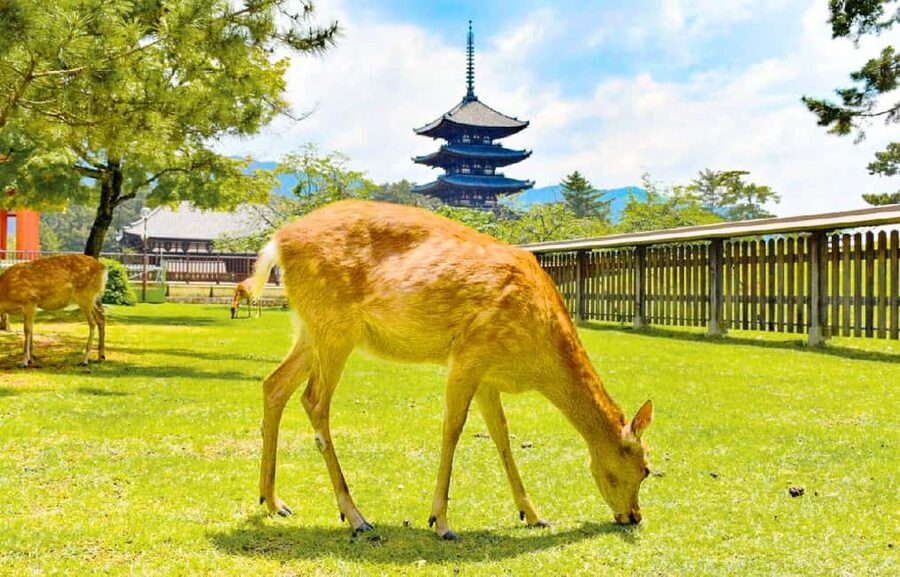
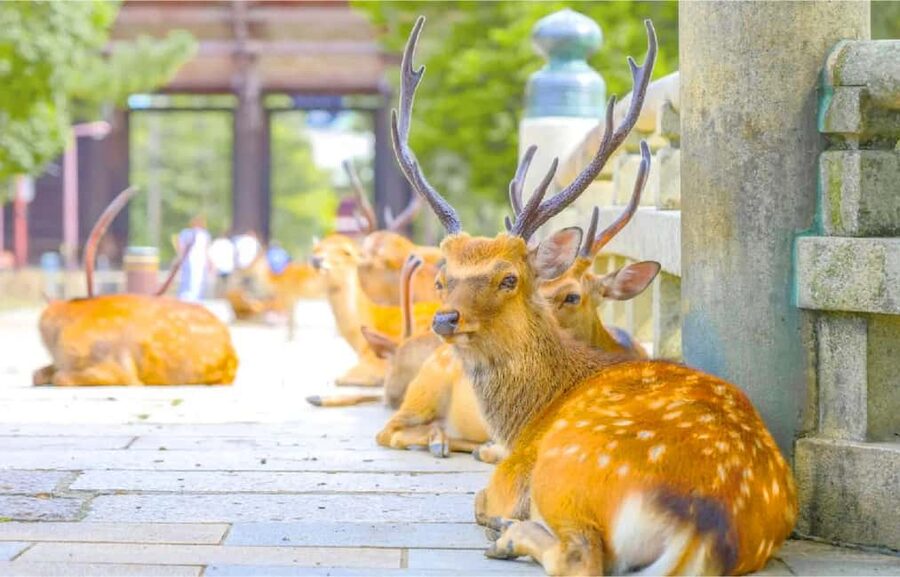
Nara Park is spread around the base of Wakakusa Mountain, with wooded paths, open areas, and several major sights close by. You receive a complimentary pack of deer crackers, called shika senbei, at the start of the visit.
The deer are accustomed to people and may approach as soon as they spot the crackers. That makes for a memorable first stop, but you need to pay attention. Feed one cracker at a time, keep the rest hidden, and show empty hands when you have finished. Excited groups may follow you, tug at clothing, or become pushy when they think more food is coming.
The maple forest is especially attractive in autumn, though the park is a pleasant setting in any season. The schedule gives you about two hours for Nara Park and its nearby sights. That sounds generous, but the walking adds up. Parking is not right beside every attraction, so wear shoes that can handle uneven paths and steady walking.
I like this part of the trip for its mix of nature and human history. The deer are not a staged animal show. They wander through a public park around shrines, temple grounds, and city streets. Just remember that the deer are wild animals accustomed to feeding, not tame pets.
Todai-ji and the Great Buddha
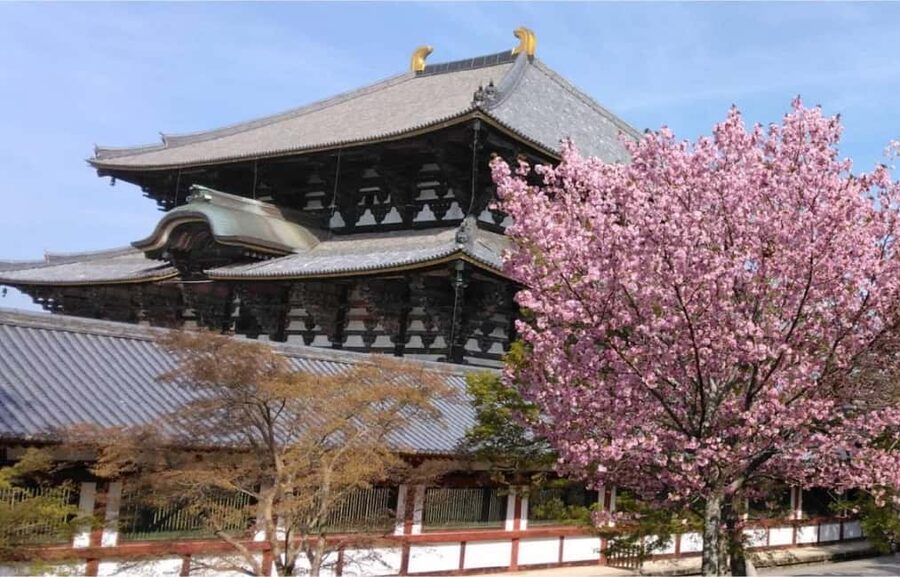
Todai-ji is the morning’s major cultural stop. The temple is famous for the Great Buddha of Nara, housed inside one of Japan’s best-known historic temple buildings.
The scale is the point. After the lively deer encounter, the temple gives you a very different experience: broad grounds, formal architecture, and a huge bronze Buddha that makes the visit feel larger than a quick photo stop. Your guide can provide basic context, while you have time to look around and take photographs.
Admission to Todai-ji is not included. Keep some money available for this and the other paid stops. The exact time inside the temple depends on the group schedule, and one of the clearest limitations of the day is that you may wish you had longer here.
If temple architecture or Buddhist art is your main interest, you might prefer a dedicated Nara visit. On this tour, Todai-ji is one important piece of a much broader day.
More spa and hot spring days around Japan:
- From Marrakech: Camel Ride, Quad Bike & Spa Full-Day Trip
★ 4.7 · 473 reviews - Materuni waterfalls coffee tour & Chemka hot springs Day trip
★ 5.0 · 131 reviews - Chiang Mai: Chiang Rai Famous Temples & Hot Springs Day Trip
★ 4.0 · 129 reviews - From Ponta Delgada: Lagoa do Fogo & Hot Springs Day Trip
★ 4.9 · 71 reviews
Lanterns and forest paths at Kasuga Taisha

Kasuga Taisha is a Shinto shrine known for its thousands of bronze and stone lanterns. The approach through the trees gives the shrine a quieter mood than the open areas around Todai-ji.
This is a useful contrast within the Nara portion. Todai-ji presents monumental Buddhist architecture, while Kasuga Taisha offers a Shinto setting shaped by lanterns, wooded paths, and shrine buildings. You do not need to be a specialist to appreciate the difference.
The visit involves walking, and the path from the parking area can take time. Comfortable shoes are not a minor suggestion here. If rain arrives, the forest and stone surfaces can also slow the group.
Because the itinerary includes two major Nara sights, you should treat the visit as an introduction. You will see the headline features and get orientation, but you are unlikely to study every building or spend long periods sitting in reflection.
Uji’s matcha streets and river-town character
After Nara, the coach heads to Uji, a place closely tied to Japanese tea culture and the Tale of Genji. The planned visit is about 90 minutes, enough for a focused walk and a snack, but not enough to explore every side street.
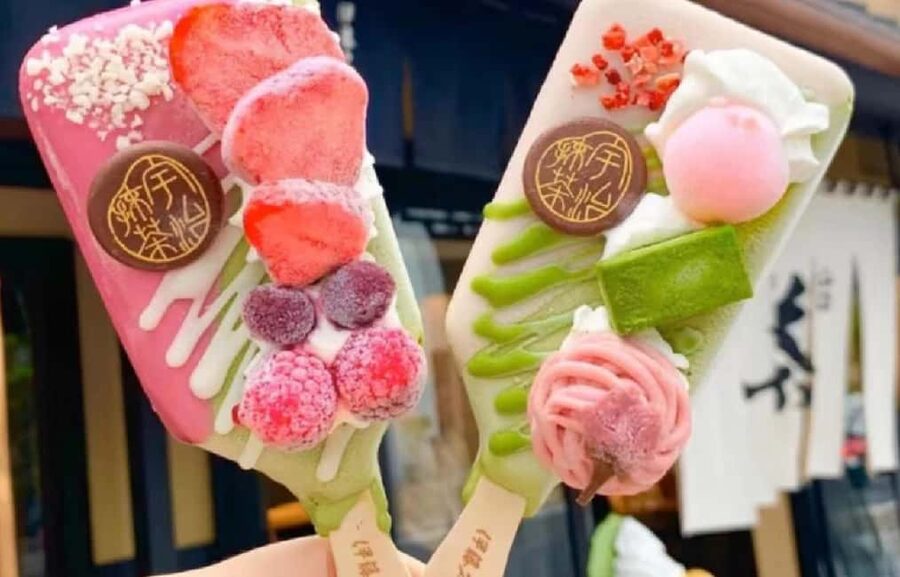
The main shopping area is lined with matcha ice cream, cakes, drinks, tea products, and even matcha-colored soba noodles. This is the part of the day where you can make your own choices. You might stop for a quick dessert, buy tea to take home, or choose a bowl of vegetarian soba if that suits you.
Uji also has a literary connection. The final ten chapters of The Tale of Genji are set in the area, giving the town a place in Japan’s classic literature as well as its tea culture. You do not need to know the novel to enjoy the streets, but the connection adds depth to what could otherwise feel like a food stop.
Guides have been especially useful here when they share eating suggestions or send locations through WhatsApp. Guides such as Etta, Karin, Watson, and Nick Lee have been praised for helping people find the matcha street and keeping the group organized. Still, the quality of explanations can vary by departure, especially when the guide is also driving.
Choosing between Byodo-in and the Tale of Genji Museum
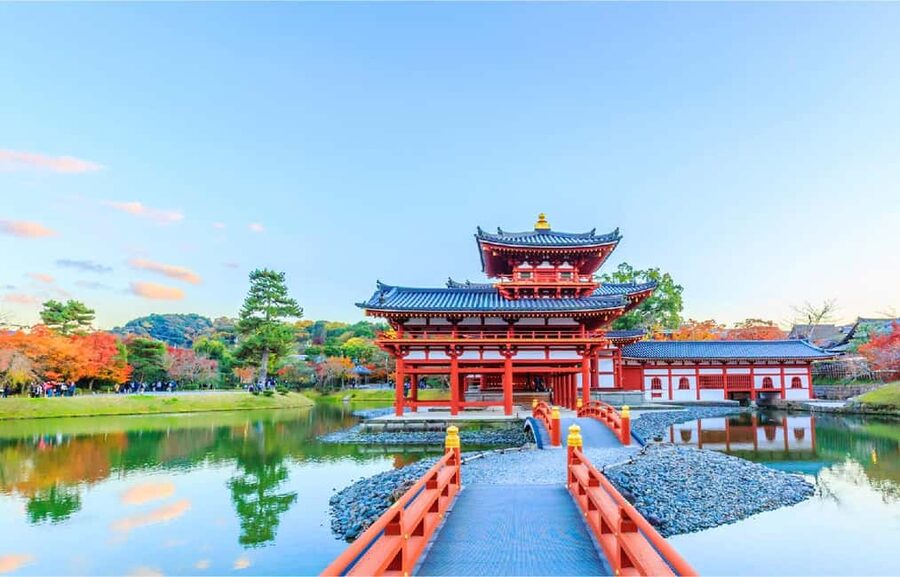
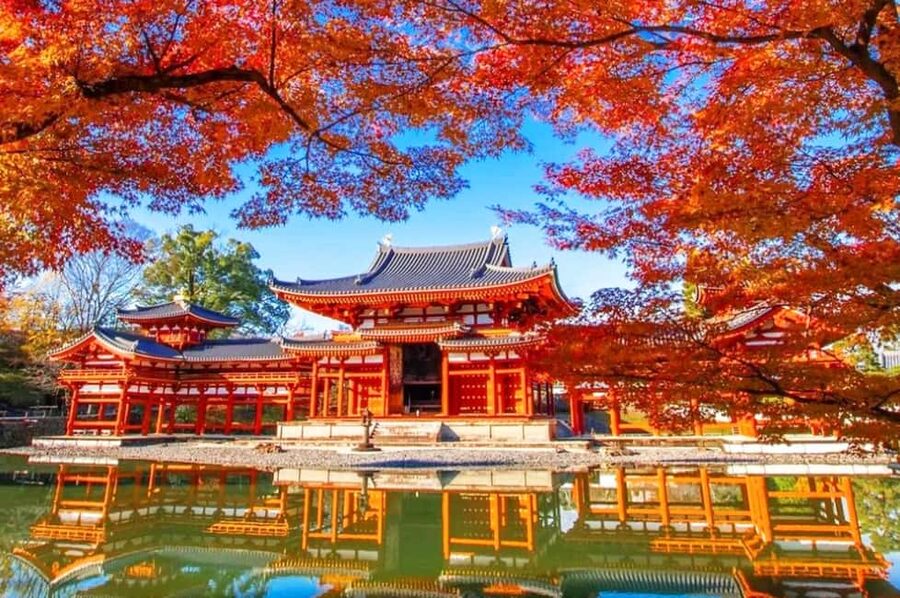
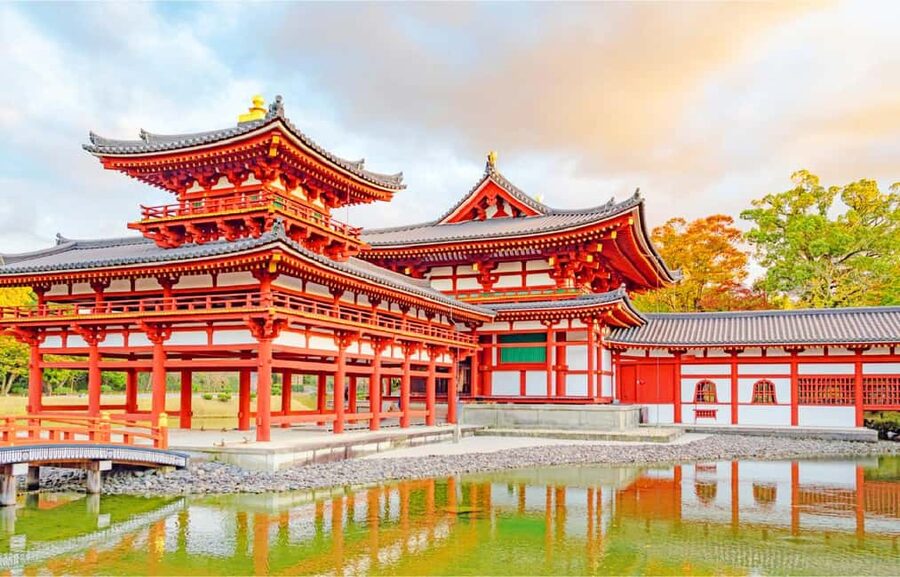
The Uji portion may include time around Byodo-in Omotesando and Byodo-in Temple, or the Tale of Genji Museum. Byodo-in is known for its Heian-era pond garden design and is one of Uji’s defining sights.
If you choose Byodo-in, expect an architectural and garden-focused visit. It is a strong choice for first-time visitors who want a classic Japanese temple setting and a clear connection to Uji’s past. The temple entrance is not included in the tour price.
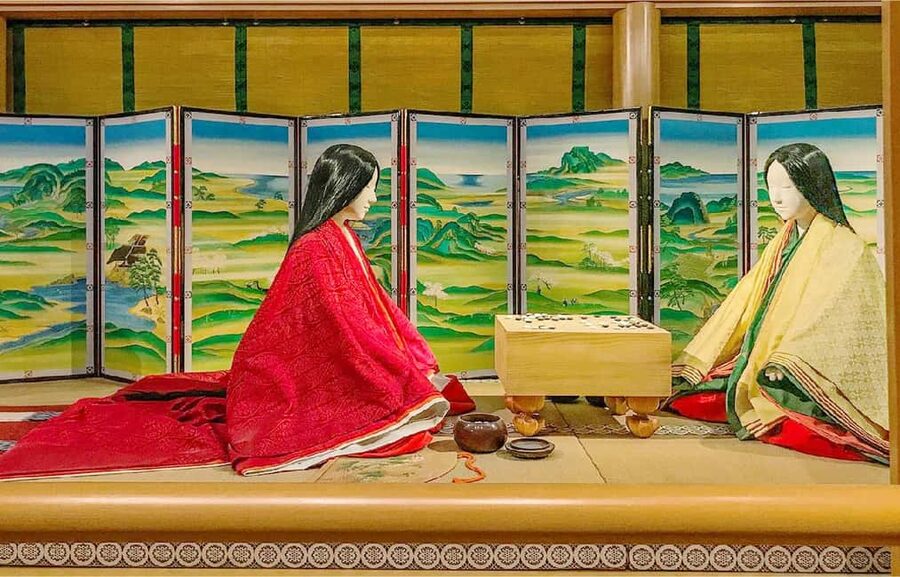
The Tale of Genji Museum takes a different approach. Multimedia displays and high-definition visuals introduce the story and appeal of the novel. I would choose the museum if you enjoy literature, visual exhibits, or want indoor time on a hot or rainy day.
The important point is to listen carefully to the guide’s instructions. With only about 90 minutes in Uji, you may not have time for every option. Spending too long at lunch or in shops can leave little time for the temple or museum.
Cooling down at Genji no Yu hot spring
The day ends at Genji no Yu, described as Uji’s only natural hot spring. Water is drawn from 1,111 meters underground, and the facility has three indoor baths and one outdoor bath in a traditional Japanese-style setting.
This is not simply a spa where you keep your swimsuit on. Japanese hot springs require bathing without clothing, and you wash before entering the shared baths. If you have tattoos, you may not be allowed to enter, so check this point before booking. One person on this outing missed the hot spring because of tattoos, which is a strong reminder not to leave the question until arrival.
The planned onsen visit lasts about one hour. That is enough for a first experience and a good reset after walking in Nara and Uji, but it is not a long spa treatment. Additional services may be available at the facility, though they are not part of the tour description or included price.
I like the placement at the end of the day. The itinerary asks you to walk, stand, and keep pace for hours. A hot bath gives the final section a calm purpose rather than ending with one more crowded attraction.
If you are uncomfortable with communal bathing, have a tattoo that cannot be covered under the facility’s rules, or simply do not want to bathe without clothing, the onsen may be a disappointment. The tour does not appear to offer an equal-length replacement activity, so consider that before booking.
How the guides shape the experience
The tour offers English, Japanese, and Traditional Chinese. It is a shared group with people from several countries, so explanations may be repeated in different languages.
The best guide reports focus on practical help as much as facts. Etta is repeatedly praised for energy, humor, clear English and Chinese explanations, useful tips, and sending location information by WhatsApp. Lucia is described as friendly and informative, while Karin is noted for keeping the group on time and suggesting places to eat.
Ethan, Jack, Watson, Hugo, Liao, Jessica, and Nick Lee also receive praise for friendliness, organization, and clear communication. You should not assume you will get a particular guide, but these names show what makes the trip work: someone who keeps a large group moving without making the day feel rushed or confusing.
On a small departure, the guide may also drive and provide only basic explanations. That is not necessarily a problem if you mainly want transport and an easy route, but it matters if expert commentary is your main reason for booking.
Is $57 good value?
At $57 per person, the tour offers a lot of transport for the money. You receive an air-conditioned coach, round-trip transfers from Osaka, guide and driver service, parking, and taxes. The route links two destinations that are possible by train but less simple to combine in one day.
You must add admission to Todai-ji, Byodo-in, and the onsen, plus meals and drinks. Matcha desserts and lunch in Uji are optional, so your spending can stay controlled if you choose.
The bigger cost is time. Ten hours is a full day, and the trip involves roughly 70 minutes to Nara and 80 minutes back from the final stop, along with walking and group departures. You pay for convenience and range, not for a relaxed pace.
I consider it good value for a first visit to Osaka when you want to see deer, temples, Uji, and a hot spring without arranging the transport yourself. It is less suitable if you already know Nara well or want an in-depth visit to one place.
Who should book this day trip?
You should consider it if you are staying in Osaka and want a broad introduction to Nara and Uji. It suits first-time visitors, small groups who do not want to manage train transfers, and anyone who likes combining famous sights with food and a bath.
Families may enjoy the deer, but adults should supervise children closely around the animals. The deer are eager, and the visit involves enough walking that everyone should wear comfortable shoes.
This also suits people who want a first onsen experience with some structure around it. The guide can explain the schedule and rules, but you still need to be comfortable with communal bathing and the tattoo policy.
You may want another plan if your priorities are photography, slow temple visits, extensive shopping, or a long spa session. The schedule is designed to show you several highlights, not to let you linger at each one.
Practical details that make the day easier
Arrive 15 minutes before the 8:40 a.m. departure and look for the yellow flag at Harimaya Building. Keep your phone charged if the guide uses messaging apps for meeting instructions and stop locations.
Wear walking shoes and bring weather-appropriate clothing. The tour can adjust for traffic or weather, and rain reduced the enjoyment of Uji for at least one departure, so avoid scheduling anything fixed after the expected return.
Keep small spending money available for temple and onsen admissions, food, and matcha treats. Since meals and drinks are not included, you control what and how much you buy.
Finally, be realistic about the group format. You may receive excellent commentary and lively help from guides such as Etta or Lucia, but multilingual explanations and different group sizes can affect the pace.
Should you book it?
Book this trip if you want maximum variety with minimum planning. The deer, Great Buddha, lanterns, Uji matcha, and hot spring make a satisfying day, and the transport is worth a lot when you are unfamiliar with the area.
Skip it if you want to linger. Nara and Uji each deserve more than a few hours, and the temple admissions are extra. For most first-time visitors with only one open day from Osaka, though, this is a practical and well-priced introduction, provided you accept the early start, shared coach, walking, and fast pace.
FAQ
Where does the tour depart from?
The meeting point is Harimaya Building at 1-chome-3-11 Nipponbashi, Chuo Ward, Osaka, in the Namba and Shinsaibashi area.
What time should I arrive?
Departure is at 8:40 a.m. You should arrive at least 15 minutes early. The guide will be holding a yellow flag, and late arrivals or no-shows are not eligible for a refund.
How long does the tour last?
The full activity lasts about 10 hours, including the coach journeys between Osaka, Nara, Uji, and Osaka.
Which languages are available?
The live tour guide service is available in English, Japanese, and Traditional Chinese. The shared group may include people from several countries.
Are admission fees included?
No. Admission to Todai-ji, Byodo-in Temple, and the Uji onsen is not included. Meals and drinks are also separate.
Can I enter the hot spring if I have a tattoo?
You may not be allowed to enter if you have a tattoo. Check the facility’s rules before booking, since one participant missed the hot spring because of tattoos.
Do I wear a swimsuit in the hot spring?
No. The bathing area requires you to bathe without clothing, according to the tour information.
What happens if the group has fewer than 13 participants?
The tour guide may also serve as the driver and provide only basic explanations. Vehicle seats in Japan may also be compact, and the schedule can change because of traffic or weather.
Just added around Japan
- From Tokyo: Mt Fuji and Hakone Private Day Trip★ 4.5 · 75 reviews
- Tokyo: Mount Fuji 5th Station & Onsen Day Trip★ 4.3 · 75 reviews
- Tokyo: Onsen, Arts, and Nature Day Trip to Fuji and Hakone★ 5.0 · 66 reviews
- Tokyo: Mount Fuji and Hakone Private Sightseeing Day Tour★ 4.9 · 76 reviews
- Tokyo: Nikko World Heritage Private Day Trip Hotel Pick-up★ 4.8 · 145 reviews
- Tokyo Private Day Trip With English Speaking Driver★ 4.9 · 34 reviews
- From Tokyo:Mount Fuji&Hakone Customize Full Day Private Tour★ 4.8 · 27 reviews
- Tokyo → Nikko:Private Customizable Day Trip (English Driver)★ 4.9 · 26 reviews
Hot Spring Day Trips, compared.
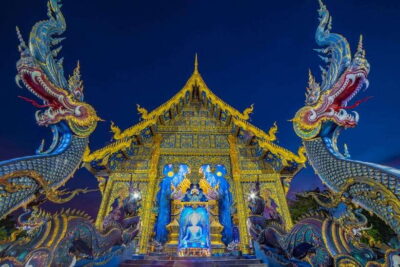
Chiang Mai: Chiang Rai Temples, Karen Tribe and Hot Springs
Read our review →

Krakow to Zakopane: Funicular, Tasting and Thermal Baths Day Trip
Read our review →
Krakow: Zakopane, Gubałówka, and Thermal Baths Day Trip
Read our review →
Krakow: Zakopane, Gubałówka & Thermal Baths – Full-Day Tour
Read our review →
Materuni waterfalls coffee tour & Chemka hot springs Day trip
Read our review →
Chiang Mai: Chiang Rai Famous Temples & Hot Springs Day Trip
Read our review →
Browse the lists this tour appears in