
Review · TBILISI
Tbilisi: Vardzia, Khertvisi, Rabati & Borjomi Day Trip
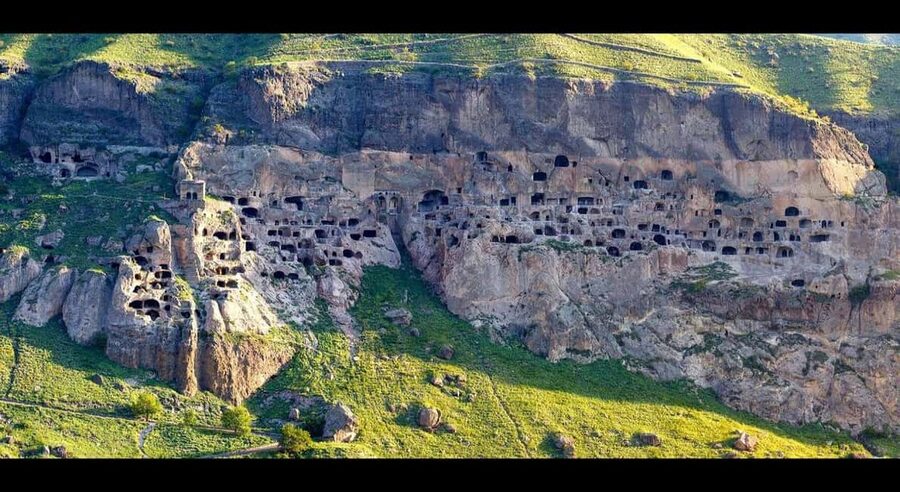
Vardzia is the star here: a 12th-century cave city cut into a cliff above the Mtkvari River, with chapels, frescoes, and dozens of rock-carved rooms. I like that this trip pairs it with Khertvisi’s fortress walls and Rabati’s many-era architecture, rather than treating Vardzia as a quick stand-alone stop. I also like the chance to taste Borjomi’s famous mineral-water setting and hear local stories from guides such as David, Timur, or George.
The catch is the pace. Four major stops in 14.5 hours means a very early start, a long ride, and limited time at each site. A previous report also raised concerns about risky driving, although other feedback praised David’s smooth driving and the clean, comfortable minibus. I would confirm the driver’s style at the start and settle in for a full day.
Key points at a glance
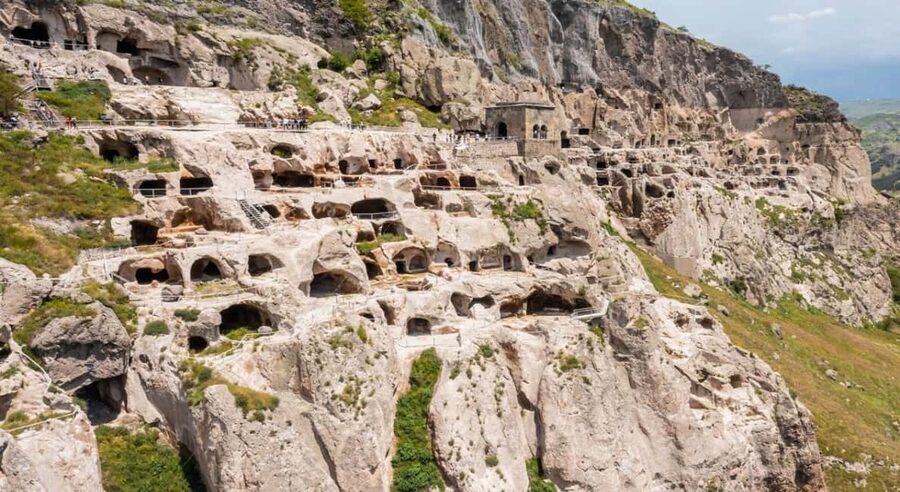
- Vardzia’s 13 rock-cut levels: You get 75 minutes to see the cave city, Church of St. George, medieval frescoes, and Mtkvari River views.
- Rabati’s many centuries in one complex: The restored fortress-city brings together buildings from the 9th through 19th centuries.
- Khertvisi is a short but meaningful stop: Fifteen minutes is enough for photos and an introduction, but not a full exploration.
- Borjomi adds nature to the history: You get an hour in the famous mineral-water town and its mountain air.
- The price is low for a full day: At $34 per person, transport and guiding are included, but entrance fees are extra.
- This is an active day: Uneven surfaces, stairs, and a very long schedule make it unsuitable for children under six and people with mobility impairments.
Why this Georgian day trip works
This is a big slice of southern Georgia served in one long day. You leave Tbilisi for the Samtskhe-Javakheti region, where mountain scenery, fortresses, religious sites, and old trade routes come together.
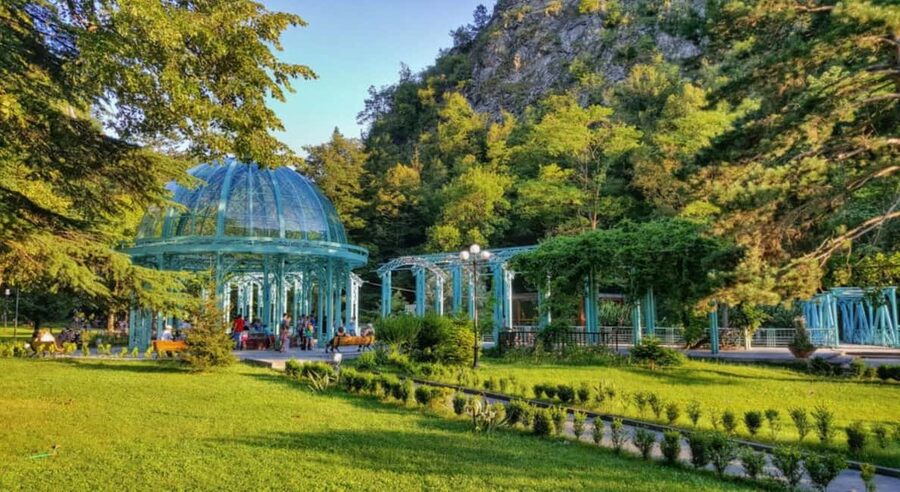
I like the variety. Borjomi gives you fresh air and mineral-water culture. Rabati shows how several religious and political eras can occupy one fortified site. Khertvisi supplies a compact fortress stop. Vardzia then provides the grand finale, with its cliffside rooms and painted church.
The tour costs $34 per person, which is strong value if you want transportation and an English-speaking guide without arranging four separate visits. You also get a professional driver, a comfortable minibus, historical facts, legends, and local stories. The low price does not cover the entrance fees at Borjomi, Vardzia, and Rabati, so keep extra money ready.
The main trade-off is time. You spend much of the day on the road, and each stop has a firm limit. This suits you if you would rather see the region’s headline sights in one outing than move slowly through one town.
A few more day trips around Tbilisi worth a look
- Tbilisi: Day Trip to Kazbegi, Gudauri, Gergeti, and Ananuri
★ 4.9 · 3,203 reviews - Day Trip to Kakheti Wine Region Including 9 Wine Tastings
★ 5.0 · 2,774 reviews - Day Trip to Kazbegi and Gudauri
★ 5.0 · 2,009 reviews
The road from Tbilisi to Borjomi
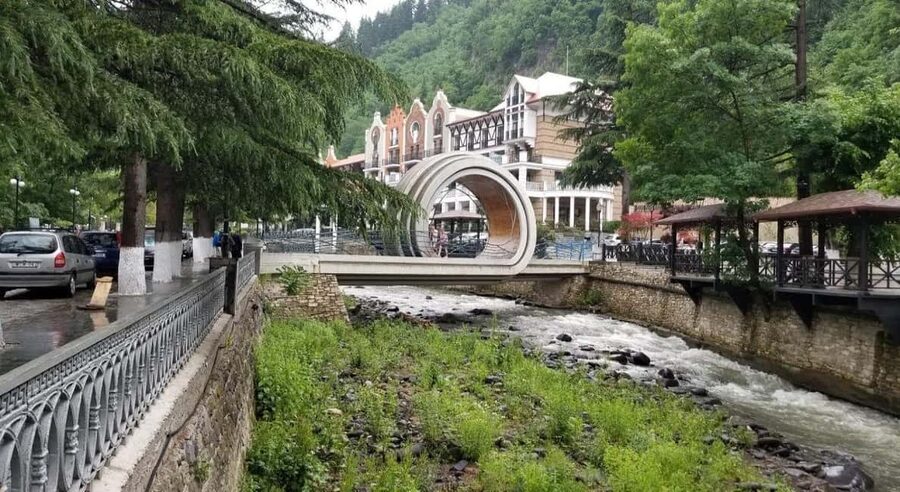
The meeting point is at 2 Abano Street in Tbilisi. From there, you travel by minibus toward Borjomi, a town known for healing mineral waters and mountain air.
Borjomi is not only a quick photo background. It gives the trip a change of mood before the fortresses and caves. You can expect about an hour for a guided visit, free time, and photographs. That is enough to get a feel for the place, pause in the fresh air, and learn why its water has drawn people for generations.
I would bring your own water even though Borjomi is famous for water. The practical instructions specifically recommend water, sunscreen, comfortable shoes, and a camera. Depending on the day and the exact stop, you may be walking outdoors in bright sun, so a hat would also be sensible, although it is not listed as required.
The visit is described as including an entrance fee, and that fee is not included in the tour price. The exact amount is not provided, so check before departure if you are keeping a tight budget.
Rabati Fortress and Akhaltsikhe’s many eras
Rabati is the first major historical stop in the stated sequence. You have about an hour for a photo stop, guided visit, and free time.
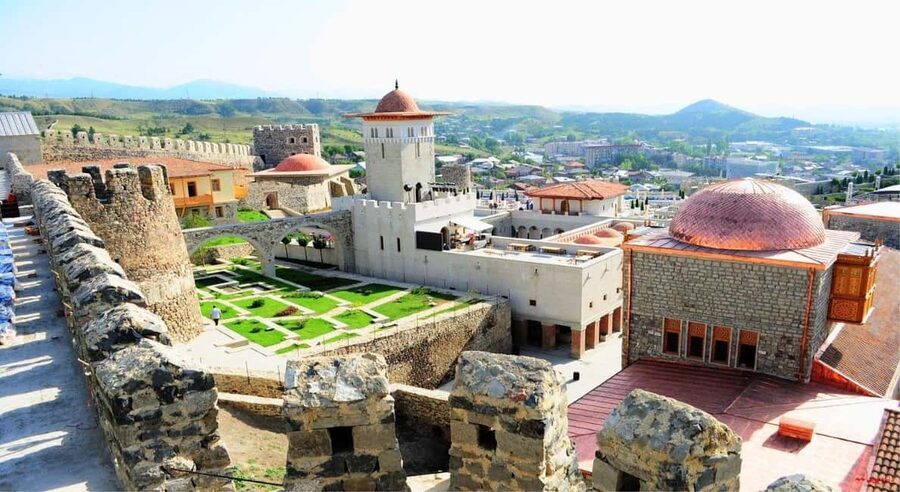
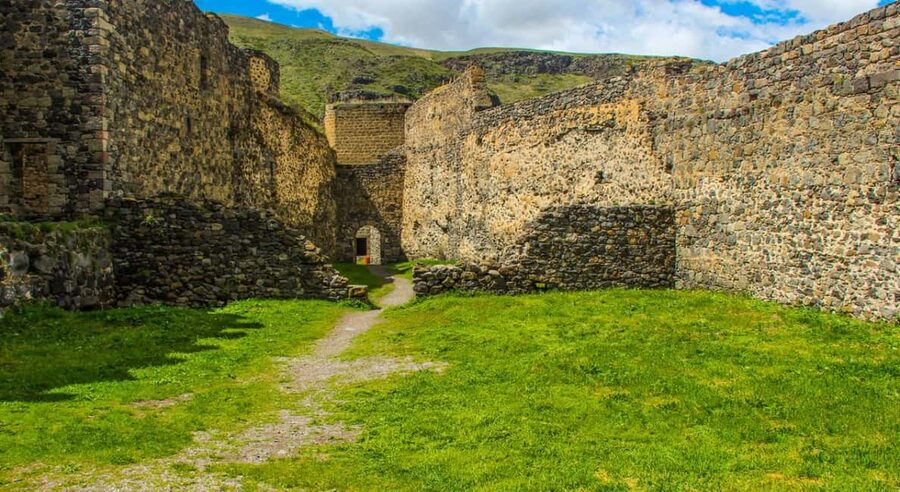
The complex covers a long span, from the 9th to the 19th centuries. That makes it different from Vardzia and Khertvisi. Instead of one concentrated monument, Rabati feels like a fortified town shaped by changing rulers, faiths, and building styles.
You can expect restored walls, towers, religious and civic buildings, a historical museum, and broad views from Kyzylkaia Boulevard. The restoration gives the site a polished appearance, which some people will appreciate and others may find less raw than a crumbling ruin. I would treat Rabati as an architectural and cultural overview, not as a single untouched medieval fortress.
The hour goes quickly. Use the guided portion to understand the layout, then save free time for photographs and the museum. If you stop to admire every building, you may not have time for the views. An entrance fee is separate here too.
The guiding matters at Rabati because the site spans so many periods. Without context, the mixture of structures can feel confusing. Guides including George have been praised for giving detailed explanations in English, and George has also provided information in Russian on some departures. The available language for this experience is English, so you should not assume Russian-language guiding will be available every time.
Khertvisi Fortress in just 15 minutes
Khertvisi comes next and receives a much shorter visit, about 15 minutes. That sounds brief, and it is. You should think of this as a focused photo and orientation stop rather than a full castle visit.
The fortress sits at the meeting point of the Mtkvari and Paravani rivers. Its location explains much of its importance. Fortifications here could watch movement through the surrounding valleys, and the site formed part of Georgia’s defensive network.
The stated dates run from the 10th through the 14th centuries. Your guide can connect the walls and position to the wider story of Georgian fortification. You will have time to take photographs, hear the main facts, and look across the river valleys, but not to wander at leisure.
This stop works because it breaks up the journey to Vardzia and gives you a clear example of defensive architecture. It may disappoint you if you want to climb every wall or spend time exploring interior spaces. The schedule simply does not allow that.
Keep your camera ready before you arrive. With only 15 minutes, gathering bags, walking to the best viewpoint, and returning to the minibus can consume much of the stop.
Same base, a completely different day out:
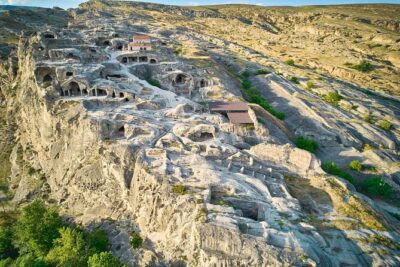
- Day Trip to Mtskheta Gori and Uplistsikhe
★ 5.0 · 1,801 reviews - Day Trip to Armenia Including Homemade Lunch
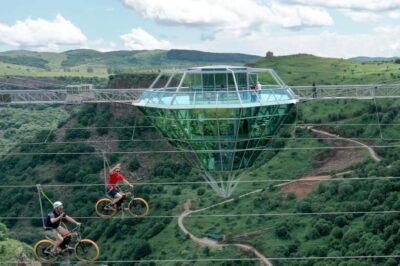
★ 5.0 · 1,162 reviews - From Tbilisi: Diamond Bridge and Dashbashi Canyon Day Trip
★ 4.9 · 740 reviews - From Tbilisi : Mtskheta, Jvari, Gori & Uplistsikhe Day Trip
★ 4.8 · 432 reviews
Vardzia, the day’s main event
Vardzia is the reason many people will choose this excursion. The cave city dates from the 12th century and contains more than 500 chambers spread across 13 levels carved into living rock.
The site is connected with Queen Tamar and Georgian religious life, although the supplied tour information focuses on the cave complex, the Church of St. George, and its medieval frescoes. Your guide is expected to explain the history, legends, and local stories as you move through the site.
You receive about 75 minutes, including a break, photographs, guided touring, and free time. That is enough for a strong first look, but it is not generous if you move slowly or want to examine every chamber. The cave city is not a flat museum. Expect uneven surfaces and walking that may feel demanding, especially after several hours on the road.
The best part is the sense of scale. Rooms, passages, and openings are cut into the cliff, while the Mtkvari River valley spreads below. The Church of St. George adds a spiritual center to what might otherwise seem like a remarkable engineering project. Its frescoes help you understand that Vardzia was not simply a defensive hideout. It was a working religious and communal center.
Wear shoes with a firm sole. Flip-flops and thin city shoes are poor choices for uneven ground. Sunscreen is useful because parts of the visit are outdoors, while water will help during the walking sections.
Vardzia is also the place where the tour’s limited time matters most. If this is your main goal, stay close to the guide at the beginning so you do not miss the historical explanation. Use the final free minutes for photographs and the panoramic views.
What the guide adds to the day
The experience includes an expert English-speaking guide, and the strongest praise has focused on the human side of the trip. David has been described as giving detailed information at every stop while driving safely and smoothly. Timur has been praised for his command of Georgian history and culture, along with his cheerful style. George has been noted for thorough explanations and a clean, comfortable minibus on a small-group departure.
That variation matters. The exact guide can shape the mood of a 14.5-hour day. A good guide turns a fortress wall into a clue about rivers, trade, faith, and defense. A weak explanation would leave you with little more than photographs.
The tone may be lively. One account describes a guide who joked often and made the long day more enjoyable. That can be welcome on a road-heavy trip, though you may prefer a quieter style. The strongest practical advice is to listen early, ask questions, and tell the guide if you need clarification in English.
There is one safety concern to keep in mind. One account described risky driving, while another specifically praised smooth and safe driving. That is a mixed signal, not a reason to reject the trip automatically, but it is worth acknowledging. If you feel uncomfortable, speak up politely and avoid treating fast driving as part of the experience.
Transport, group size, and the long day
The tour uses a comfortable minibus and includes a professional driver. A small group of seven people has been reported on one departure, which suggests that some groups may be intimate rather than packed into a large coach. The exact group limit is not stated, so conditions can vary.
A minibus is useful on Georgian roads and at smaller historic sites. You get a more personal setting than on a full-size coach, and it is easier to hear the guide. The downside is that a long ride in a small vehicle can feel tiring, especially if you prefer extra legroom.
The total duration is 14.5 hours. That figure should guide your decision more than the attractive $34 price. You will be away from Tbilisi for almost a full waking day, with several hours spent traveling between sites.
The schedule includes photo stops, guided visits, and free time rather than long restaurant breaks. The supplied details do not specify meals, so do not assume lunch is included. Bring water and ask about food arrangements at the start of the day. A small snack may be useful, provided you follow the rule against drinks in the vehicle.
Smoking is not allowed in the minibus, and drinks are also prohibited inside it. These rules are basic but important on a long shared ride.
Who should book this tour?
I would choose this trip if you have limited time in Georgia and want to see several major places in Samtskhe-Javakheti without hiring a car or planning the route yourself.
It is especially suited to you if you enjoy:
- Medieval churches, fortresses, and archaeological sites
- Mountain scenery and river valleys
- Guided historical explanation
- A full schedule with several different stops
- Small-group minibus travel
- Walking on uneven historic ground
I would hesitate if you want a slow, relaxed day, dislike long road journeys, or need generous time at each monument. The 15-minute Khertvisi stop is brief, and 75 minutes at Vardzia may feel tight for anyone who wants a careful visit.
The tour is not suitable for children under six or people with mobility impairments. Uneven surfaces are part of the experience, particularly at Vardzia. The schedule and walking also require a reasonable level of stamina.
Free cancellation is available up to 24 hours before departure, and you can reserve now and pay later. Those terms are useful if your Tbilisi plans are still shifting, but they do not change the basic nature of the trip: this is a long, active day.
Is $34 good value?
At $34, the tour offers a lot for the money. You receive transport, a professional driver, an English-speaking guide, and visits to four distinctive places. Organizing that route independently would require transport planning across a large region, plus navigation and site research.
The price needs one adjustment in your thinking. Entrance fees for Borjomi, Vardzia, and Rabati are not included. The exact costs are not given, so the final amount will be higher than the headline price.
Even with those extra fees, the tour can be good value if your priority is convenience and coverage. You are paying less for lingering at one site and more for reaching several places in one day. I would compare it with the cost of private transport before booking, especially if you are traveling with a larger group.
My recommendation
Book this day trip if Vardzia is high on your Georgia wish list and you want Borjomi, Khertvisi, and Rabati added without arranging the logistics yourself. The combination is unusually varied, and the guides named in the feedback, especially David, Timur, and George, have helped make the history accessible and the long day enjoyable.
Skip it if you need a gentle pace, dislike uneven paths, or want a deep visit at each fortress. Bring good shoes, water, sunscreen, and patience. With the right expectations, this is an inexpensive and memorable way to reach some of Georgia’s most striking historic sites beyond Tbilisi.
FAQ
How long does the tour last?
The tour lasts 14.5 hours, including travel from Tbilisi and the return to 2 Abano Street.
Where does the tour start and finish?
It starts and finishes at 2 Abano Street in Tbilisi.
Which places does the tour visit?
The tour visits Rabati Fortress, Khertvisi Fortress, Vardzia cave city, and Borjomi.
Is an English-speaking guide included?
Yes. The experience includes a live English-speaking guide. Guides named in the available information include David, Timur, and George, but the assigned guide can vary.
Are entrance fees included in the $34 price?
No. Entrance fees for Borjomi, Vardzia, and Rabati are not included.
Is the tour suitable for children?
Children under six are not allowed. The tour is also not suitable for people with mobility impairments because it involves walking on uneven surfaces.
What should I bring?
Bring comfortable shoes, a camera, sunscreen, and water. Smoking and drinks are not allowed in the vehicle.
Just added around Tbilisi
- From Tbilisi: Guided Day Trip to Ananuri, Gudauri, & Kazbegi★ 4.7 · 341 reviews
- From Tbilisi: Kakheti & Sighnaghi Guided Day Trip with Wine★ 4.3 · 103 reviews
- From Tbilisi to Armenia: Akhtala, Haghpat & Sanahin Day-Trip★ 4.8 · 276 reviews
- From Tbilisi: Mtskheta, Jvari, Gori & Uplistsikhe Day Trip★ 4.8 · 153 reviews
- From Tbilisi : Mtskheta, Jvari, Gori & Uplistsikhe Day Trip★ 4.8 · 432 reviews
- From Tbilisi: Day Trip to Armenia with Homemade Lunch★ 4.9 · 345 reviews
- From Tbilisi: Kakheti Wine, History & Traditions Day Trip★ 4.8 · 22 reviews
- From Tbilisi: Kazbegi, Gudauri & Ananuri Day Trip★ 4.9 · 26 reviews
Tbilisi Day Trips, compared.
Tbilisi: Day Trip to Kazbegi, Gudauri, Gergeti, and Ananuri
Read our review →
Day Trip to Kakheti Wine Region Including 9 Wine Tastings
Read our review →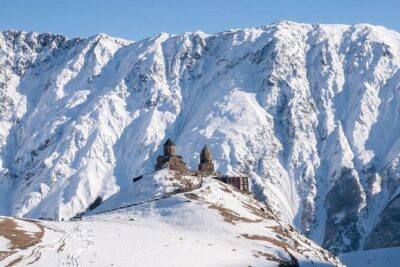
From Tbilisi: Diamond Bridge and Dashbashi Canyon Day Trip
Read our review →
From Tbilisi : Mtskheta, Jvari, Gori & Uplistsikhe Day Trip
Read our review →
From Tbilisi: Day Trip to Armenia with Homemade Lunch
Read our review →Browse the lists this tour appears in