
Review · JAPAN
Kyoto: Miyama Village, Amanohashidate & Ine Bay Day Trip
Ine Bay is the real surprise here: traditional boat houses sit directly over the water, with fishing boats stored below and homes above. I like the chance to pair this quiet coastal village with Amanohashidate, a pine-covered sandbar famous across Japan, then finish among the old thatched houses of Miyama. The day also gives you a comfortable bus instead of a puzzle of rural train and bus connections.
The tradeoff is distance. You spend roughly six hours on the road, and the stops are short, especially Miyama’s 40 minutes. I also like the guides who keep the schedule moving, including Liu San and Cave on recent departures, but you should budget extra for the Amanohashidate viewpoint ride and any optional boat trip.
Key points to know before booking
- Three very different settings in one day: fishing village, sea view, and mountain hamlet.
- Ine’s 230 boat houses: See homes built with boat storage on the lower level.
- Amanohashidate viewpoint ride costs extra: The cable car or ropeway gives the classic Flying Dragon View.
- Miyama is brief but atmospheric: Forty minutes is enough for photos and a short look around, not a slow village visit.
- Long-distance comfort matters: The air-conditioned bus makes this practical when public transport would be awkward.
- Early start, firm departure: Meet at 7:05 AM at Nipponbashi Station Exit 2 for a 7:20 AM departure.
Why this northern Kyoto day trip is worth considering
Kyoto is often reduced to temples, bamboo, and crowded central streets. This outing takes you far beyond that familiar circuit, into areas where the pace is slower and the scenery changes sharply from stop to stop.
You begin in Osaka and travel north for about two and a half hours before reaching Ine. From there, the route links three places that are difficult to combine efficiently on your own in a single day. The bus does the heavy lifting, while you get short periods to walk, take photographs, and find something to eat or drink.
At $63 per person, the price is appealing for a 10-hour trip with round-trip transport, a driver, parking, and a multilingual guide. The value depends on how you feel about bus time. If you want a relaxed, in-depth visit at each place, this is too compressed. If you want to see remote parts of northern Kyoto without arranging several connections, the price is sensible.
The guide is an important part of the experience. The group can include English, Japanese, and Traditional Chinese speakers, so explanations may be delivered in more than one language. Liu San has been especially well regarded for switching smoothly between languages, explaining each stop, and reminding everyone when it is time to return to the bus. Cave has also led departures in English and Mandarin. Your guide and vehicle are confirmed by email the evening before, so check your spam folder.
A few more day trips around Japan worth a look
- From Tokyo: Mount Fuji Customizable Private Day Tour
★ 4.9 · 1,070 reviews - Nara Half Day Trip Walking Tour (Private Option Available)
★ 5.0 · 937 reviews - Tokyo: Mt. Fuji, Kamakura, Big Buddha, & Lake Ashi Day Trip
★ 4.5 · 867 reviews
Ine Bay and the boat houses above the sea
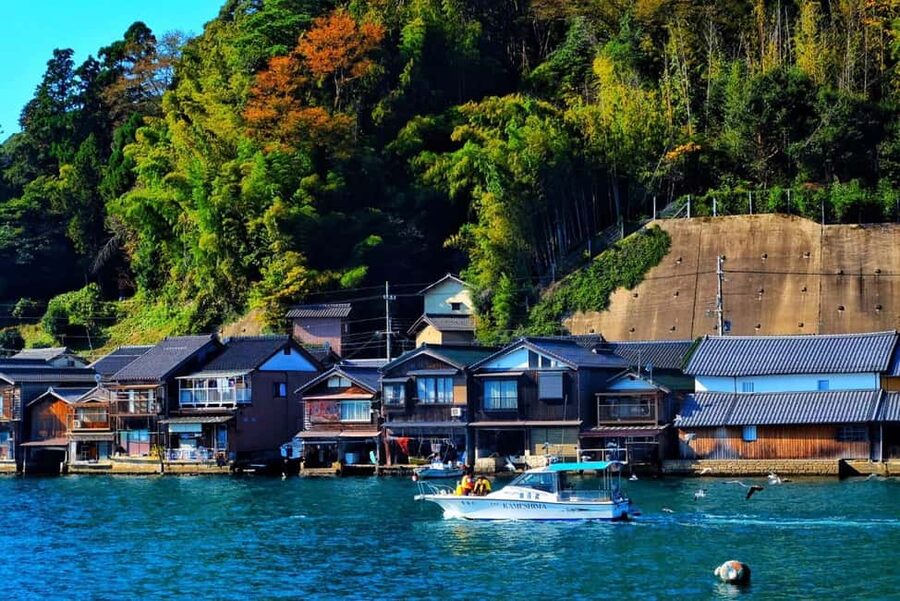
After the long first drive, Ine gives you a clear change of mood. This is a small fishing village on the coast, known for about 230 funaya, or boat houses, built along the bay.
The design is wonderfully practical. Fishing boats sit on the lower level, close to the water, while the living space is above. From the lane, you can see how the buildings face the bay and how closely daily life remains tied to the sea. You may also get a look inside a preserved boat house, depending on the tour arrangements and opening access.
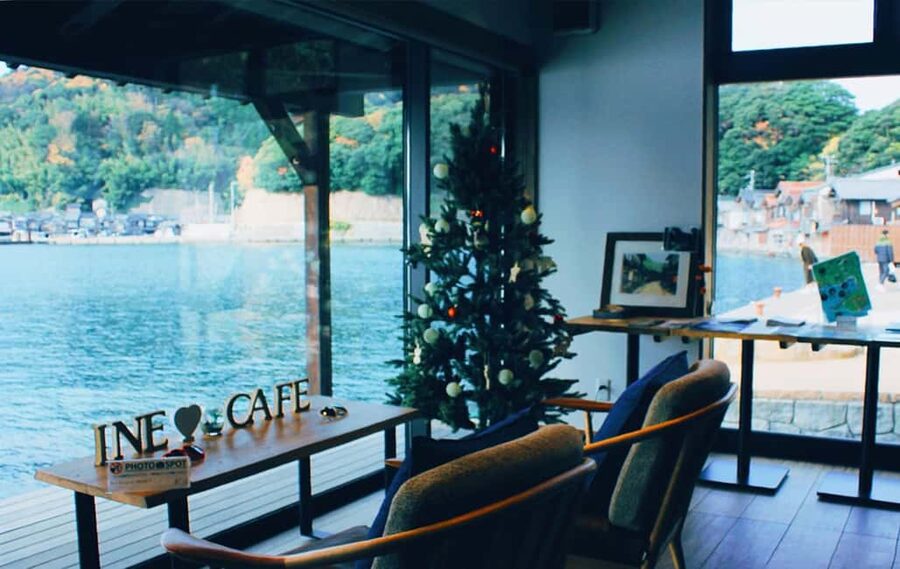
The scheduled stop is about 40 minutes, so use it carefully. Walk the waterfront, photograph the row of houses, and take in the broad bay view. A seaside café offers coffee and a place to pause, but do not expect time for a long meal here.
Some departures include the chance to take a paid boat ride around Ine Bay. The ride can add a different angle on the boat houses and may include the entertaining sight of seabirds following the boat. It is not included in the $63 price, so bring cash and confirm the day’s options with your guide.
The bay area also comes with a small safety note: eagles are present, and you should not feed animals. Keep food packed away and follow local instructions. That rule is easy to respect, especially when you are there to look at the buildings and water rather than stage a wildlife encounter.
Ine is one of the strongest reasons to choose this excursion. It feels unlike central Kyoto, and the boat houses are not a decorative reconstruction made for sightseeing. They are part of a working coastal community. The short visit is the weakness. You get a taste, not a full exploration.
Amanohashidate, the bridge to heaven
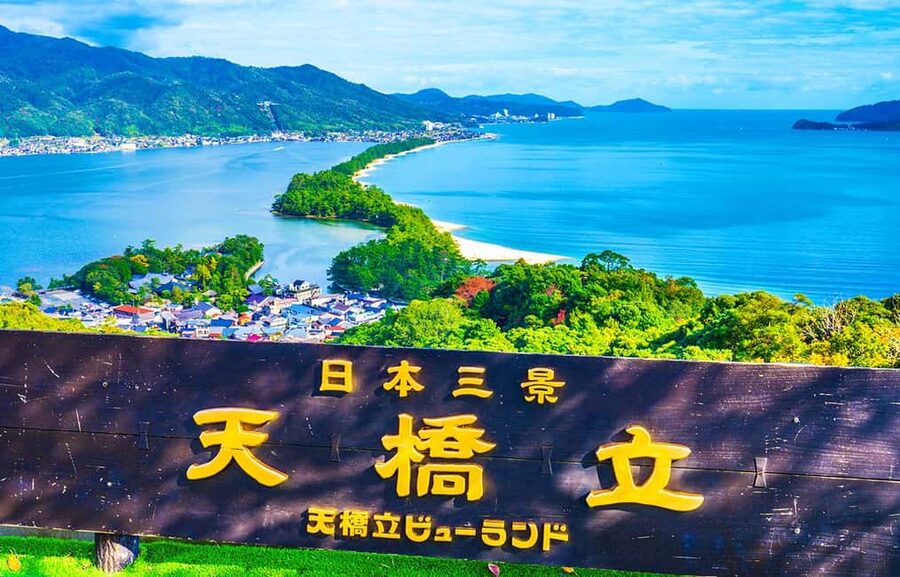
A 40-minute drive brings you to Amanohashidate, one of Japan’s three celebrated scenic views. The name means bridge to heaven, and the reason becomes clear from above: a long sandbar crosses the bay, covered with more than 8,000 pine trees.
The sandbar stretches about 3.6 kilometers. You can walk along sections of it, but the tour does not give you enough time to treat it as a full hiking route. Instead, the main goal is the view from above, followed by a short look at the nearby religious and seaside sights.
The cable car or ropeway to View Land is self-paid. From the top, you get the famous Flying Dragon View, with the pine-lined sandbar appearing to curve across the water. The ride is one of the most worthwhile add-ons of the day, but it is important to know that it is not covered by the advertised tour price. One recent passenger estimated the combined cost of the boat ride and chairlift at about AUD 50, though prices can vary.
Try the local viewing custom known as matanozoki: bend forward and look at Amanohashidate upside down between your legs. The sandbar is said to resemble a dragon rising into the sky when viewed this way. It is a simple, playful moment, and it gives you a different relationship with the viewpoint than merely taking another photo.
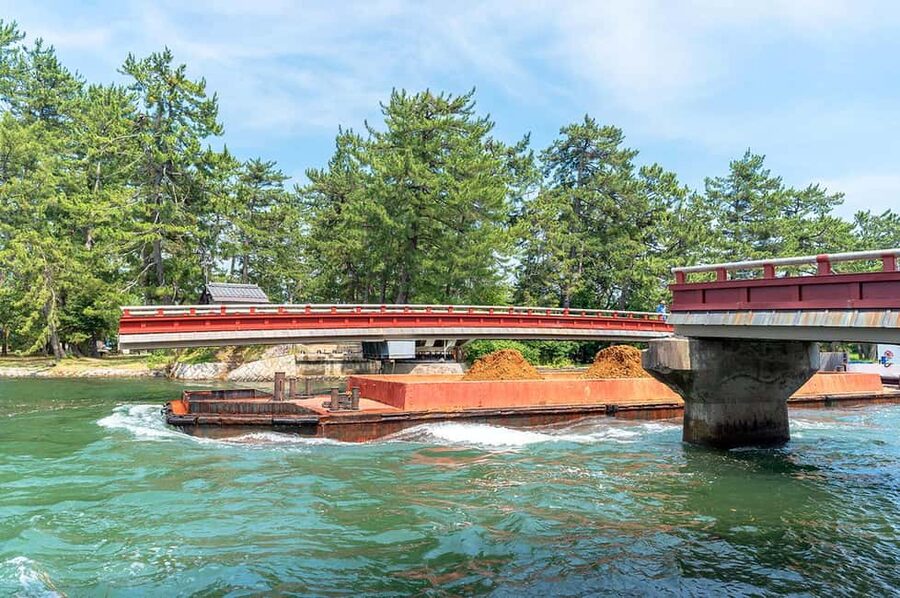
At ground level, Chion-ji Temple and Monju-do Hall add cultural interest. They are connected with prayers for academic success, so students and families often find them meaningful. You can also see the rotating bridge, which turns to allow ships through. It is a small piece of working infrastructure, but it is fun to watch when the timing is right.
Amanohashidate Shrine and the Isoshimizu Spring offer another brief stop. The spring is listed among Japan’s top 100 natural waters. If you visit, cleanse your hands before making a wish, following the local custom.
There is also free time around Amanohashidate Beach and nearby cafés. This is where the schedule can feel tight. You need to decide whether the viewpoint, temple, beach, café, and bridge matter most to you. You will not have time to linger at every one.
Still, this is probably the visual high point of the outing. The view from above gives you a strong sense of place, while the temple and bridge prevent the stop from being only a photo break.
Miyama Kayabuki no Sato and its thatched roofs
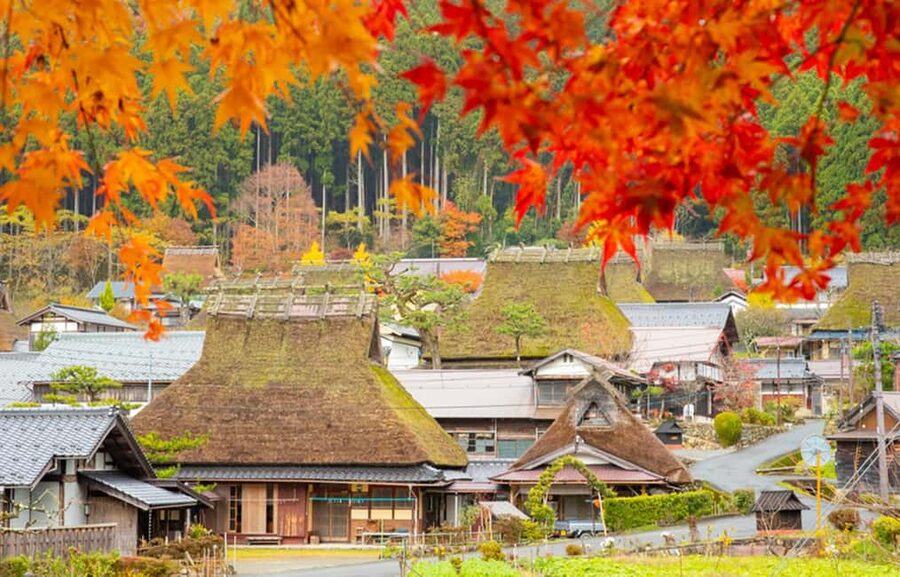
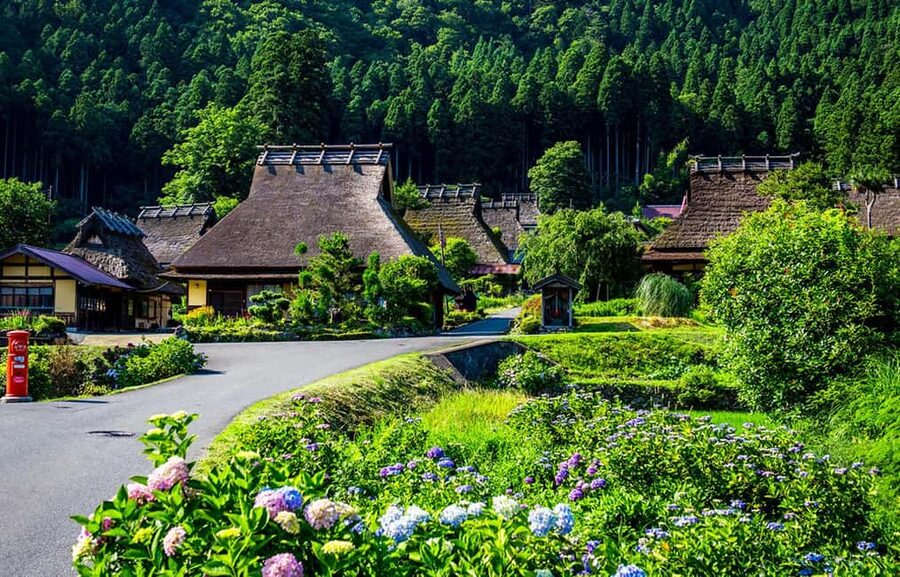
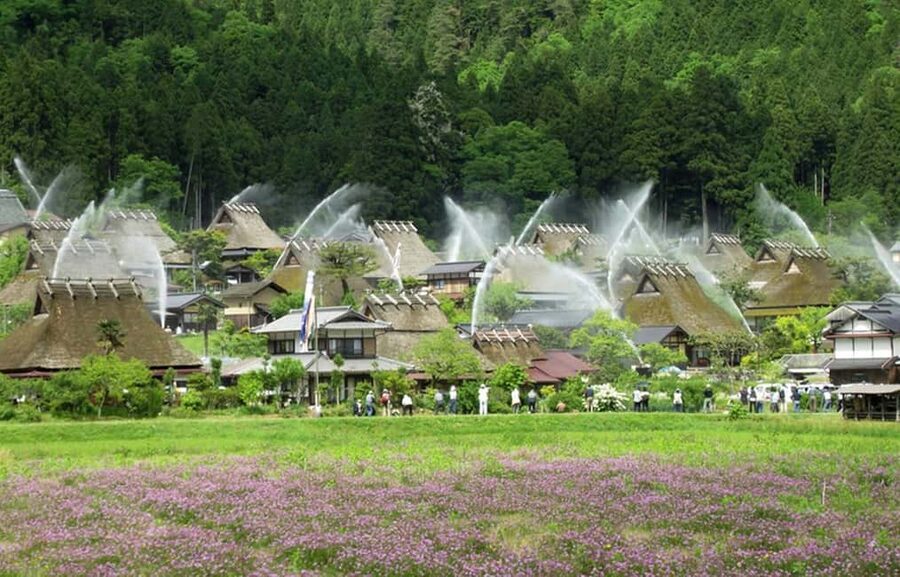
The final major stop is Miyama Kayabuki no Sato, a mountain village with more than 40 traditional thatched-roof homes. These houses follow Edo-period forms and make the village look like a rural scene from another era.
Look closely at the roofs and you can see practical responses to weather. Crossed roof beams and snow-cutting rods reflect the need to manage heavy winter conditions. The architecture is not just attractive; it records how people adapted buildings to a demanding climate.
A preserved thatched house and small displays of rural objects help explain how the homes worked. You can also stop at Café Gallery Saika for local ice cream and a view across the village. One departure included a taste of a fermented soba drink, so you might find a local specialty available during your visit, though food and drinks are your own expense.
The scheduled time is only about 40 minutes. That is enough to walk through the central area, take photographs, visit a display, and perhaps buy a snack. It is not enough for a long village walk or a slow café break. Several passengers have specifically wished for more time here, and I agree that Miyama is the stop most affected by the tight schedule.
The short visit still has value because Miyama is so different from Ine and Amanohashidate. After the sea and open bay, the mountain setting gives the day a quiet final note. If Miyama is your main reason for booking, look for a longer dedicated visit instead. If you want a broad sampler of northern Kyoto, 40 minutes gives you a useful first look.
Same base, a completely different day out:
- Mt Fuji Private Day Trip from Tokyo with English speaking driver
★ 5.0 · 846 reviews - Nagano: Snow Monkeys, Zenkoji Temple & Sake Day Trip
★ 4.9 · 833 reviews - From Tokyo: Mt Fuji, Arakurayama and Kawaguchi Lake Day Trip
★ 4.3 · 794 reviews - Tokyo Private Day Trip – Enjoy Your First-Time Visit to Tokyo!
★ 5.0 · 793 reviews
What the long bus rides are really like
The transport is both the tour’s advantage and its limitation. The outbound journey to Ine takes about two and a half hours, followed by shorter drives between the sites and a return journey of about two hours. In total, you should expect roughly six hours in the vehicle.
The bus is air-conditioned and described as clean and comfortable. That matters in hot weather, when walking around exposed waterfronts and viewpoints can become tiring. It also lets you rest between stops rather than study rural timetables or change trains and buses several times.
The vehicle type depends on the group size and cannot be selected in advance. The driver, parking, and transport are included, so there are fewer costs to track during the day.
Traffic, bad weather, Japanese holidays, and peak-season crowds can delay the return. Do not schedule a flight, long-distance train, dinner reservation with a strict cancellation rule, or another important activity soon after the stated arrival time. The tour is built around rural roads, not a guaranteed minute-by-minute return.
The early meeting time is firm. Arrive at Nipponbashi Station Exit 2 by 7:05 AM for the 7:20 departure. The bus does not wait for late arrivals. That means this is not a good morning for a last-minute breakfast or a relaxed start.
Food, money, and what to bring
Lunch is not included. You will have chances to find snacks, café items, or a simple meal around the stops, but the schedule may not allow a long restaurant visit. Bring cash because some scenic attractions, cafés, and other local businesses may not accept cards.
Wear comfortable shoes. You will walk on village lanes, around the seaside area, and near temple grounds. Sunglasses, a camera, and weather-appropriate clothing are sensible. Northern Kyoto can feel different from central Osaka, and the day includes outdoor time at every stop.
The cable car or ropeway at Amanohashidate is extra. An optional Ine boat ride may also cost extra. These are the two expenses most likely to surprise you, so include them when comparing the tour price with other options.
The activity is not suitable for people with mobility impairments. Even without a stated accessibility assessment, the combination of bus steps, walking, viewpoints, village paths, and optional rides makes comfortable movement important.
Who will get the most from this outing
I would choose this trip if you are staying in Osaka and want to see places that are hard to reach by public transport in one day. It suits solo visitors, couples, and families who prefer a guided route and do not mind a full schedule. A family with a young child can manage it, but warm weather and the long bus rides should be considered.
It is also a good fit for photographers. Ine offers repeating waterfront lines, Amanohashidate provides the broadest view, and Miyama supplies close details such as roofs, beams, and old tools. The guide may also help with group photographs. Liu San, in particular, has been praised for taking good pictures.
I would hesitate if your priority is slow travel. You will not have hours to sit in Ine, walk the full Amanohashidate sandbar, or study every corner of Miyama. The multilingual format may also mean that explanations take longer at some stops, though it helps make the tour accessible to a mixed-language group.
The overall rating is 4.6 from 98 reviews, and the most consistent praise centers on the guides, comfortable bus, careful timing, and the chance to reach three beautiful locations in one day. The main criticism is equally clear: the driving distances limit time on site, especially in Miyama and sometimes Amanohashidate.
Should you book it?
Book this tour if you want breadth and convenience more than depth. For $63, you get a long day through three parts of northern Kyoto that would be difficult to connect independently from Osaka. Add the viewpoint ride and perhaps the Ine boat trip, and you can turn the day into a strong scenic outing.
Skip it if you dislike early starts, long bus rides, or fixed group schedules. If you do book, arrive early, bring cash, wear good shoes, and decide before departure which optional rides matter most. Keep your evening open in case traffic delays the return.
FAQ
Where does the tour start?
It starts at 1-chōme-3-6 Nipponbashi, near Nipponbashi Station Exit 2 in the Namba Shinsaibashi area of Osaka.
What time should I arrive?
Arrive by 7:05 AM. Departure is scheduled for 7:20 AM, and the bus leaves on time without waiting for late arrivals.
How long does the tour last?
The stated duration is 10 hours, including transport from Osaka and the return journey.
Which languages are available?
Guiding is available in English, Japanese, and Traditional Chinese. The guide may give explanations in multiple languages during the shared group tour.
Is lunch included?
No. Lunch and personal expenses are not included, so bring money for food, drinks, and other purchases.
Is the Amanohashidate cable car included?
No. The cable car or ropeway ride to View Land is self-paid.
Is an Ine Bay boat ride included?
The tour information does not include a boat ride in the base price. An optional paid boat ride may be available, so confirm the day’s arrangements with the guide.
What should I bring?
Bring comfortable shoes, sunglasses, a camera, cash, and clothing suited to the weather.
Can I cancel the booking?
You can cancel up to 24 hours in advance for a full refund. You can also reserve now and pay later.
Just added around Japan
- From Tokyo: Mt Fuji and Hakone Private Day Trip★ 4.5 · 75 reviews
- Tokyo: Mount Fuji 5th Station & Onsen Day Trip★ 4.3 · 75 reviews
- Tokyo: Onsen, Arts, and Nature Day Trip to Fuji and Hakone★ 5.0 · 66 reviews
- Tokyo: Nikko World Heritage Private Day Trip Hotel Pick-up★ 4.8 · 145 reviews
- Tokyo Private Day Trip With English Speaking Driver★ 4.9 · 34 reviews
- Tokyo: Mount Fuji and Hakone Private Sightseeing Day Tour★ 4.9 · 76 reviews
- From Tokyo:Mount Fuji&Hakone Customize Full Day Private Tour★ 4.8 · 27 reviews
- Tokyo → Nikko:Private Customizable Day Trip (English Driver)★ 4.9 · 26 reviews
Japan Day Trips, compared.
Nara Half Day Trip Walking Tour (Private Option Available)
Read our review →
Tokyo: Mt. Fuji, Kamakura, Big Buddha, & Lake Ashi Day Trip
Read our review →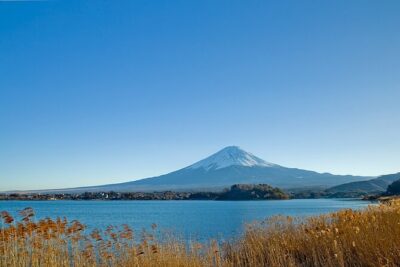
Mt Fuji Private Day Trip from Tokyo with English speaking driver
Read our review →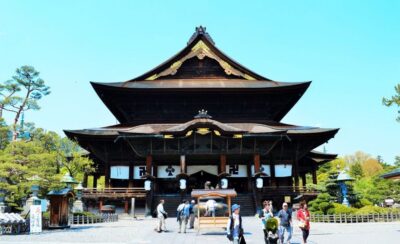
Nagano: Snow Monkeys, Zenkoji Temple & Sake Day Trip
Read our review →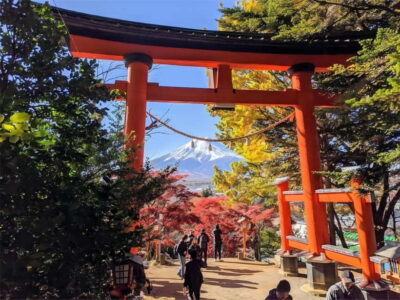
From Tokyo: Mt Fuji, Arakurayama and Kawaguchi Lake Day Trip
Read our review →
Tokyo Private Day Trip – Enjoy Your First-Time Visit to Tokyo!
Read our review →
Mt. Fuji Day Trip from Tokyo with English Speaking Driver Guide
Read our review →Browse the lists this tour appears in